


Over the past week, air temperatures have broken records in the UK, Belgium, Germany, France, Italy, Spain, Greece and Poland, exceeding +40°C
Overcrowded hospitals and a rising death toll from the heat have highlighted the human cost of climate change.
However, these scorching temperatures, which neither machines nor people can withstand, also come at a specific cost to the economy – a cost that is only now being calculated, and decisions are being made on how to address it.
“Electricity prices are rising because cooling systems are overloaded, whilst power stations are cutting back on production or shutting down altogether. Across much of the continent, trains are suffering severe delays or being cancelled. Workers are sweating on the job throughout the day after sleepless nights. The European economy is showing signs of being seriously affected by the current temperatures,” writes the Financial Times in an article specifically devoted to the economic consequences of the scorching heat.
The article also quotes a report by Allianz, one of the largest insurance companies, which was published shortly before the start of the current heatwave sweeping across Europe. It warned that “extreme heat is becoming a structural economic risk, and Europe is highly vulnerable to this problem.”
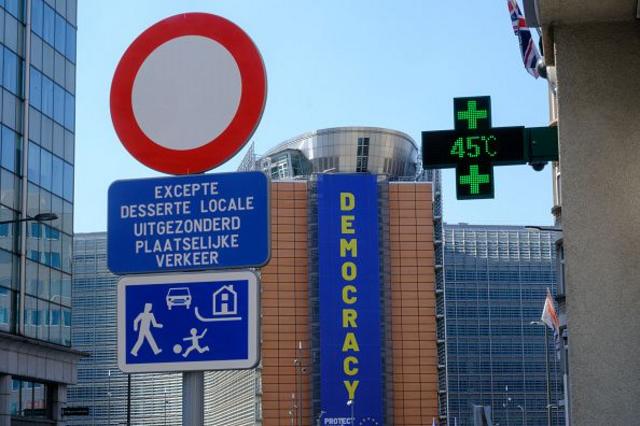
Photo: Thierry Monassat/Getty Images
A telling sign of this vulnerability was the shutdown of the air conditioning on the lower floors of the European Commission building in Brussels last Friday.
Staff at the Berlaymont received a text message stating that the air-conditioning system on floors 1–7 would be switched off “due to extreme weather conditions”.
It is worth noting that the European Commission’s senior management offices are located on the upper floors, whilst rank-and-file staff work predominantly on the lower floors.
Earlier last week, the Commission issued advice to its staff, including avoiding going outside during the hottest part of the day, drinking water regularly and starting work earlier.
According to Politico, this advice angered staff, but when the air conditioning on the lower floors was switched off, some of them described it as ‘shameful’ and ‘feudalism’. One staff member from the ‘lucky’ upper floor of the building, where the air conditioning had not been switched off, told the publication that even so, the temperature inside the room was nearly 26 degrees.
The European Parliament also faced power cuts due to excessive energy consumption by the cooling system.
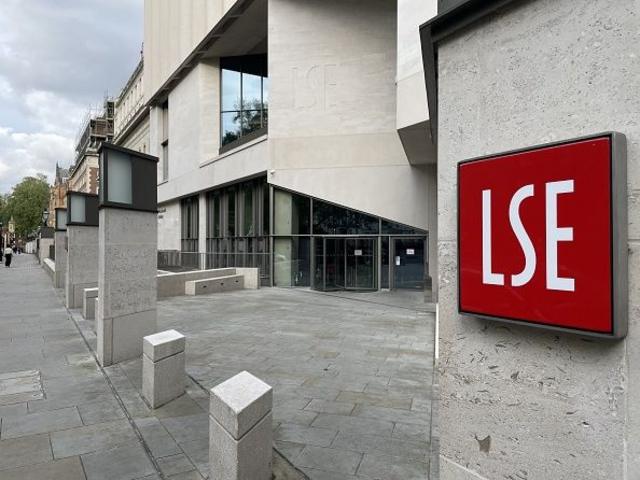
Photo by Burak Bir/Anadolu via Getty Images
However, climate issues know no borders, and in Britain, which voted to leave the EU exactly 10 years ago, air temperatures also broke all known records – to such an extent that the organisers of a conference in London entitled ‘Extreme Heat: Improving Governance and Strengthening Action Worldwide’ were forced to cancel the event.
According to The Independent, the event, which was due to take place on Wednesday at the Shaw Library at the London School of Economics as part of Climate Action Week, was cancelled after the Met Office issued a red alert due to weather conditions in Greater London.
“The venue, like most buildings in London, has no cooling systems, and we cannot risk the well-being of the speakers or guests by exposing everyone to very unpleasant conditions indoors, not to mention the sweltering journeys to the venue,” wrote the Zurich Climate Resilience Alliance in a social media post.
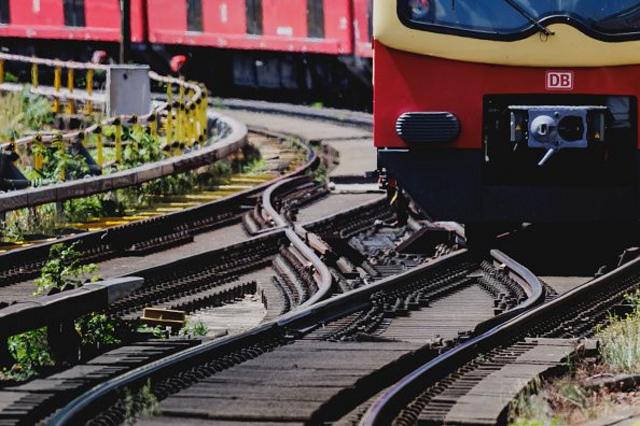
Photo credit: Florian Gärtner/Photothek via Getty Images
In Germany, where a record temperature of +41.3°C was reached on 26 June, the national railway operator Deutsche Bahn, once a symbol of German reliability, announced that passengers with tickets for the coming days could return them for a full refund to avoid travelling in the heat.
“Anyone who does not wish to travel in these extreme weather conditions can get a refund,” the company said in a statement.
Train operators – not only in Germany but across Europe – have been forced to slow down and cancel services as tracks warp and overhead power lines sag in the heat.
In Belgium, too, a number of train services have been cancelled – not only because of hot tracks, but also because it has emerged that one in five trains in the country lacks air conditioning.
Debate over overheated air-conditioning
The heatwave has sparked a new debate about the lack of air conditioning in homes and offices across Europe, where, unlike in the US and Asia, air conditioning is rare.
‘Americans and Europeans have different views on many issues, from healthcare policy to gun etiquette. But every summer a quieter rift emerges when they visit each other’s continents,” writes The Economist half-jokingly, devoting an entire article to the heated debate over air conditioning.
As DW reports, citing data from the US Department of Energy, only around one-fifth of households on the continent have air conditioning. Whilst in the US around 90 per cent of people have air conditioning at home, in Europe – which has a similar climate – this figure stands at only around 20 per cent, although it varies from country to country. In Spain, around half of households have central air-conditioning systems, whilst in Germany the figure is only around 6 per cent.
As Tagesschau explains, this is because almost no one used to install air conditioning in homes, as hot days were rare, but this has now become an additional problem in extreme situations.
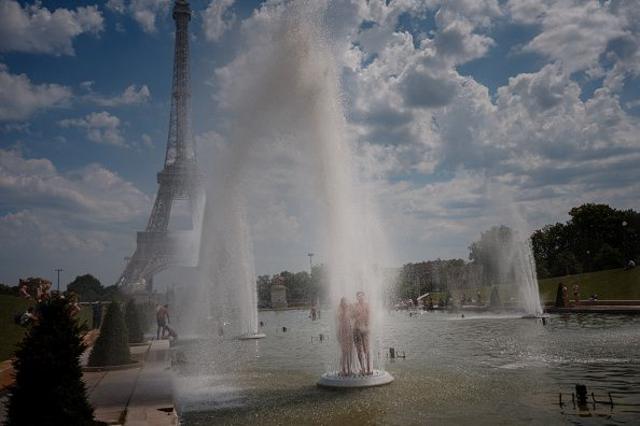
Photo by Dimitar Dilkov/AFP via Getty Images
In most of wealthy, old Europe, solutions to the heat are fairly low-tech: close the curtains, switch on a fan and keep plenty of ice-cold water to hand. And most European homes – with the exception of those in southern countries – were built to retain heat, not to protect against the heat.
In Europe, air conditioning is still viewed either as an unnecessary luxury or as a scourge. “Fiery northern Protestants regard buying an air-conditioner for a few hot days a year as a costly ecological sin,” writes The Economist.
Furthermore, installing air-conditioning in old European buildings can be a complex task from both a regulatory and a technical perspective.
Whilst cooling technologies are easily integrated into new residential and commercial developments, retrofitting existing infrastructure will be more difficult. Major refurbishment or new-build projects may allow for the installation of new systems, but historic towns across Europe often face additional regulatory and aesthetic hurdles.
Furthermore, many tenants are prohibited from installing air-conditioning units in their rented homes due to restrictive regulations, or are unwilling to make significant investments in someone else’s property. As a result, people in countries where around half the population rents their homes – such as Germany, Denmark and Austria – may face an even more complex dilemma when it comes to air conditioning.
But the heatwave that swept across Europe last week may force Europe to rethink its traditions.
Cool energy
According to the UN Intergovernmental Panel on Climate Change, extreme heat is increasing faster than climate models predicted. But this is particularly true in Western Europe.
A recent analysis by ClimaMeter, a European research partnership studying extreme weather events, showed that in June 2026, temperatures were 2–4 degrees Celsius higher than under similar conditions at the end of the 20th century.
However, the current climate situation is not only causing a sharp increase in demand for cooling. It also means that more electricity is required. And in this regard, the situation has been very tense over the last few years due to rising electricity and heating prices for Europeans in particular, as well as Russia’s war against Ukraine and changes in the global energy market.
“Americans are about a third wealthier than Europeans, and, moreover, electricity in their homes costs about half as much. Even middle-class Europeans are concerned about a sudden rise in energy prices due to an unexpected geopolitical crisis, such as a war in Iran,” notes The Economist.
38 per cent of people who took part in a recent pan-European survey said they could not afford to cool their homes.
A study conducted by Italian researchers in 2020, which examined how global warming is driving the increased use of air conditioning in countries with temperate climates, showed that low-income populations will be disproportionately affected and may become yet another source of wealth inequality on the Old Continent.
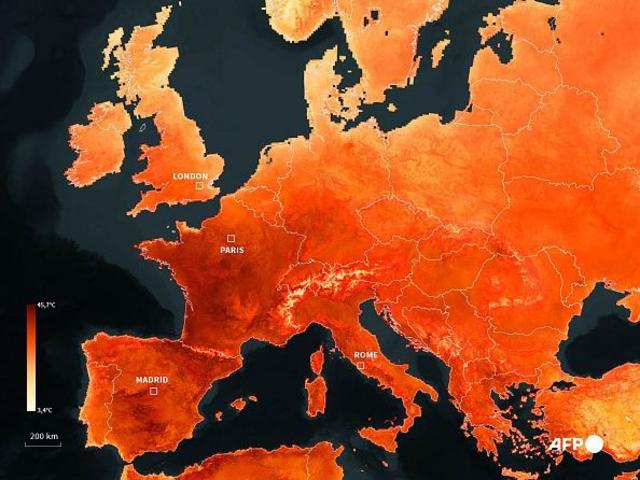
Photo by Sabrina BLANCHARD and Sylvie Hasson/AFP via Getty Images
The question also arises as to whether there is sufficient affordable energy capacity to provide not only heating but also cooling in Europeans’ homes and workplaces. Here, according to The Economist, Russia’s war against Ukraine has led to positive changes in Europe:
‘Because of the war in Ukraine, many Europeans have not only cut back on their use of Russian gas but have also reduced their dependence on it overall. The countries that have decarbonised the fastest have benefited the most. They are probably best equipped to provide Europe with the massive expansion of energy capacity it will need in the future.”
However, the latest Eurostat data show that, whilst energy consumption for heating buildings fell slightly in 2024, 15.3 per cent more energy was used for cooling compared with the previous year.
Heat pumps are a way of heating and cooling a home and can help reduce overall carbon emissions from households, but they are significantly more expensive than other systems.
Green and water-based infrastructure also helps to cool cities and reduce the urban heat island effect, but by definition these are designed for public spaces.
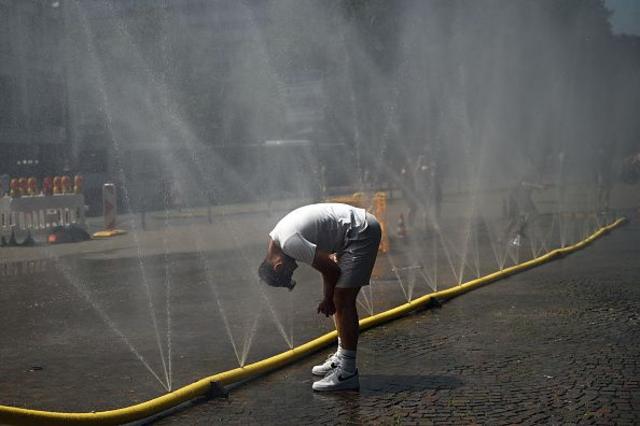
Photo by Ina Fassbender/AFP via Getty Images
There are concerns that more electricity for a greater number of air-conditioning units in homes, offices and businesses may only exacerbate environmental problems. At the same time, observers note that the EU has already begun to gradually move away from one of its key programmes — the European Green Deal — a package of measures to reduce emissions causing global warming, with the aim of improving economic performance in a challenging energy and trade environment that works against European goods and manufacturers.
However, according to the Financial Times, concerns on this matter are ‘largely misplaced’. Yes, it is true that air conditioning will mean households use far more electricity, but they will not necessarily pay more.
The sun is part of the problem, but it is also a source of energy, and it is entirely clean. And the solution to the fact that it is effectively unusable in winter and at night is batteries. In the last hellish week alone, batteries have already provided 1 GW of peak power in Britain. The country has also launched demand-response schemes, where consumers are paid ‘to delay switching on their kettles’. Overall, as the FT reports, in conditions of extreme heat, the energy system will undoubtedly require far greater flexibility than before.
A striking example of the fact that the situation can no longer remain unchanged, and that the approaches which have worked well until now no longer do so, was the shutdown of three French nuclear reactors after the temperature of the river water used to cool the reactors exceeded the regulatory maximum.
France must allow its reactors to compete with Spanish solar power stations. This means accelerating the roll-out of battery storage, upgrading the grids and adding significantly more renewable energy, say the authors of The Economist.
A heatwave for the economy
Accurate calculations of the economic losses caused by the heat are still to come, and experts are currently working only with preliminary estimates.
According to economists at the Allianz insurance group, quoted by the FT, previous heatwaves have reduced Europe’s annual GDP by as much as 0.5 per cent and by more than 1 per cent in southern regions. These are significant figures for a region whose economy is estimated to grow by 1.1 per cent (and 0.9 per cent in the eurozone) this year. Every tenth of a percentage point therefore counts.
The current heatwave could have even worse consequences due to what Allianz calls the ‘non-linear economic transmission of heat stress’, whereby losses rise sharply once a ‘critical threshold of around 30°C’ is crossed. According to the company’s economists, for every degree of temperature rise in the 30–35°C range, hourly productivity falls by approximately 3 per cent. Meanwhile, energy consumption rises by around 1.2 per cent for every degree above 30°C, driving up business costs.
“Taken together, this threatens a combination of reduced productivity, lower capital investment and a fall in government tax revenues: an unwelcome prospect for Europe, which is already grappling with a crisis of confidence in its economic competitiveness,” writes the FT.

Photo credit: NICOLAS TUCAT/AFP via Getty Images
Meanwhile, the authors of The Economist draw attention to the broader context – from East to West:
“Europe must electrify its industry to compete with China, and expand its automotive hubs – which are minuscule compared with those in the US – to ensure that the artificial intelligence revolution does not turn it into a vassal.”
A study by Allianz also provides an insight into the scale of the medium-term threat: economists analysed a scenario in which the five hottest years between 2014 and 2024 would occur between 2026 and 2030. This would lead to cumulative GDP losses of between 5 and 7 per cent in France, Germany, Italy and Spain, Europe’s largest economies.
Other estimates are beginning to emerge. However, as the FT notes, ‘most importantly, the economic consequences of extreme heat must now be a matter of serious concern for every government, investor and corporate leader’.
All the more so as it seems unlikely that the temperature records set during this heatwave will remain records for long.