

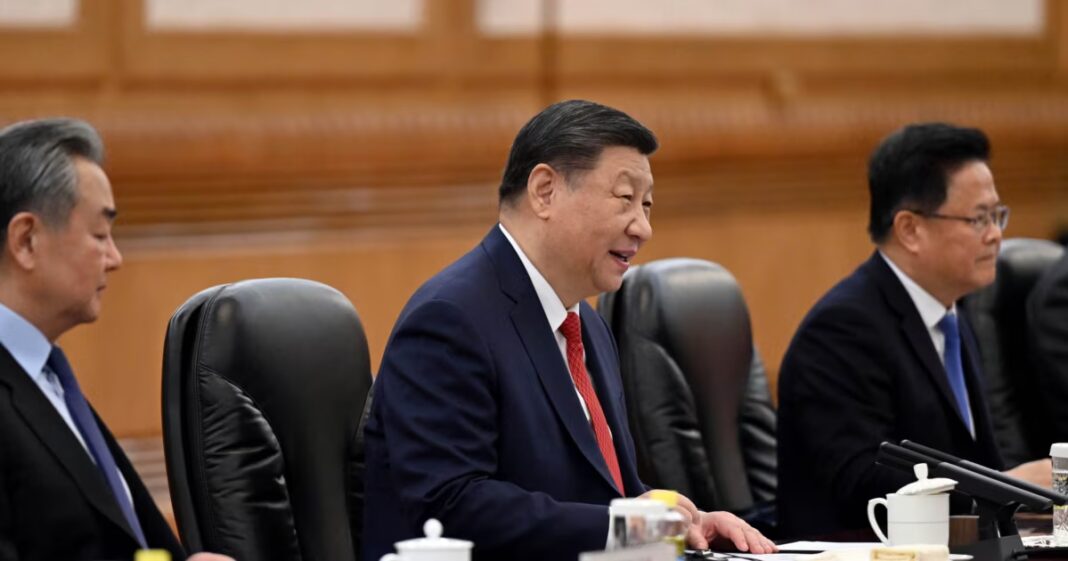

In Beijing’s most high-profile statement yet on the US blockade of Iranian ports, Chinese leader Xi Jinping told Saudi crown prince Mohammed bin Salman on 20 April that “the Strait of Hormuz should remain open to navigation”.
Speaking to the Saudi leader by phone while China continues to step up its diplomatic efforts during the US-Israeli war with Iran, Xi said that restoring the important waterway would be in the “common interests of countries in the region and the international community”.
Xi’s comments came after the U.S. Navy intercepted and seized an Iranian cargo ship travelling from China on April 20. According to the non-profit group Global Fishing Watch, the vessel remained in Chinese waters until the end of March before returning to Iran due to an extended parking period at Port Klang in Malaysia.
Asked to comment on the seizure at a press conference on 20 April, a Foreign Ministry spokesman expressed “concern about the forced interception of the vessel in question” and reiterated Beijing’s official stance on promoting de-escalation.
Xi Jinping’s telephone conversation with the Saudi Crown Prince came after a series of international meetings between Beijing and its allies. On 15 April, Chinese Foreign Minister Wang Yi met with his Russian counterpart Sergei Lavrov to discuss the wars in Iran and Ukraine, as well as closer cooperation between Beijing and Moscow.
Since the United States announced the blockade of Iranian ports on 12 April, Wang has also communicated with his counterparts from Iran and Pakistan, as well as the United Arab Emirates’ special envoy to China.