

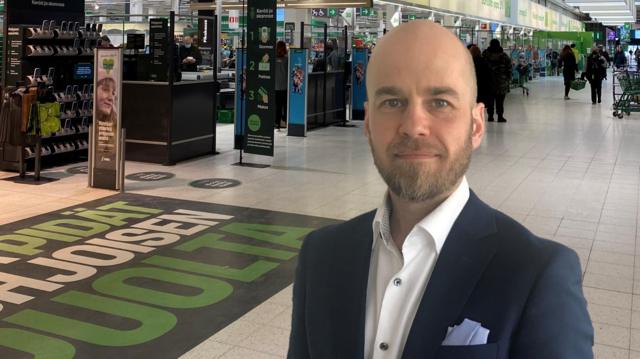

If Russia ever decides to violate Finland’s borders, Janne Ahtoniemi knows exactly what to do.
And no, he is not a soldier. Janne is the head of risk management at the supermarket chain S Group. His frontline is not the battlefield, but shop shelves and logistics.
“Our job is to prepare for everything,” he says. And he adds: in the event of an invasion or other large-scale threat, S Group has a detailed action plan. The main goal: to provide groceries for 5.6 million Finns.
And it’s not just about retail. Key companies (defence plants, transport firms, IT companies) also have their own scenarios in case of crises: war, the elements or cyberattacks.
“Reliability of supply here is not an accident. It is the result of decades of preparation and training,” Ahtoniemi explains. And emphasises: companies know their role and are prepared to invest in security of supply.
Total defence strategy
The four Scandinavian countries – Finland, Sweden, Norway and Denmark – have long lived by the principle of “total defence”. The idea is simple: the army and the civilian sector work in close co-operation.
After Russia’s full-scale invasion of Ukraine in 2022, Finland took it a step further: businesses were brought into the system. It’s now called “integrated security.”
The border with Russia stretches 1,340 kilometres, and the Finns’ approach is logical.
Last year, the government formalised the new course in the document “Strategy for the Security of Society”, which has become the main reference point for everyone.
Critical companies join “preparedness committees” together with local and central government and regularly participate in national exercises.
Preparations cover not only traditional warfare, but also cyberattacks, food and water disruptions, and threats to the financial system.
“Participating in exercises is a serious investment,” Ahtoniemi says. His company is working with the National Strategic Stockpile Organisation.
Author photo, AFP via Getty Images
S Group’s competitor, supermarket chain Kesko, is following a similar pattern.
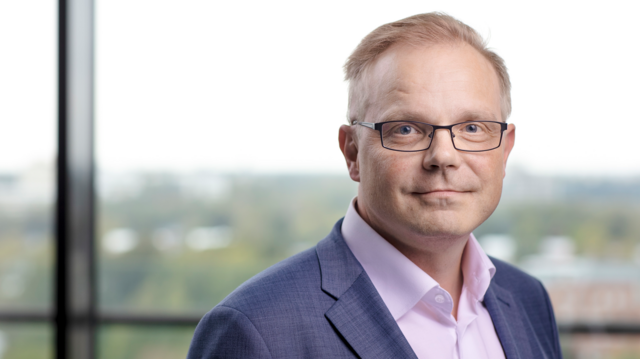
“We want Finnish society to work every day, no matter what the circumstances,” explains Kesko CEO Jyrki Tomminnen.
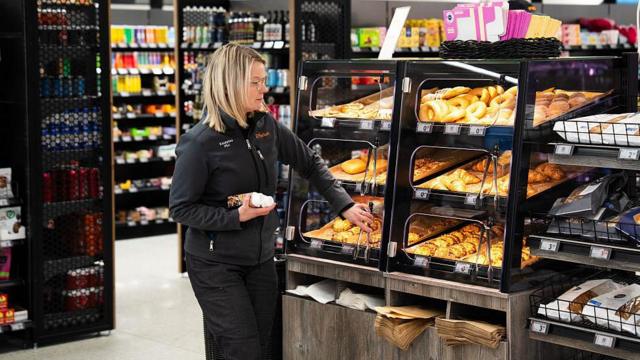
All supermarkets are required to keep strategic stocks of key products (flour, sugar, vegetable oil) in specially equipped warehouses and underground bunkers with backup power.
Author photo, Kesko
Every Finn is part of defence
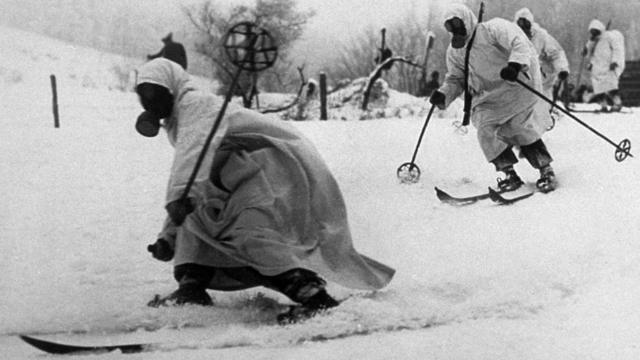
The country’s defence is not just a business matter. Every adult Finn is also getting involved.
“And it’s not theory, it’s practice,” says philosophy professor Frank Martella of Helsinki’s Aalto University. He’s also a naval reservist, and in case of an emergency, he can be called up for a speciality or assigned other tasks.
“When something happens, I will be told what to do,” he adds.
Author photo, Getty Images
Why Finns are so disciplined
Psychologist Jennifer De Paola from the University of Helsinki explains it simply: Finns trust the government and value unconditionally.
In research, she asked 10- to 12-year-old children to draw happy and unhappy people and explain why. The result was unambiguous: happiness for Finnish children is a sense of security, and unhappiness is the lack of it.
This persists into adulthood: Finns value reliability and trust more than many other nations.
“We really trust our institutions: the government, ministries, politicians. Corruption is very low here,” Professor Martella points out.
High levels of social equality also increase trust. “The more trust between people, the stronger the society,” he adds.
Secrecy is part of the strategy
Trust is high in Finnish society, but secrecy is also important.
Ahtoniemi does not disclose details of S Group’s war plans, calling them “confidential information”.
The situation is similar at Kesko: “We do not disclose our emergency preparedness plans,” says a company spokesperson.