

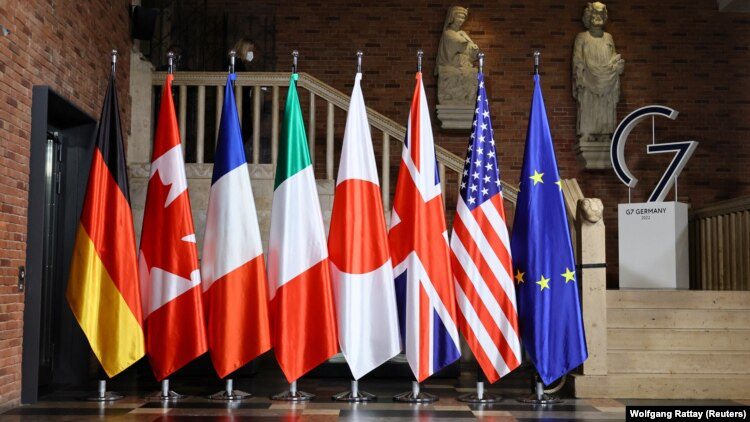

The foreign ministers of the Group of Seven (G7) countries have reaffirmed their “unwavering support” for Ukraine in defence of its territorial integrity and right to exist, as well as its freedom, sovereignty and independence, and noted the “urgent need for an immediate ceasefire”. This was stated in a ministerial statement released following their meeting in Canada on 11-12 November. Ukrainian Foreign Minister Andriy Sibiga also attended the meeting.
“We agreed that the current line of contact should be the starting point of negotiations. We remain committed to the principle that international borders should not be changed by force. We are raising the economic costs to Russia and exploring the possibility of taking action against countries and organisations that help finance Russia’s military efforts,” the statement said.
The ministers said they condemned the provision of military assistance to Russia by North Korea and Iran, as well as China’s supply of arms and dual-use components, “which crucially makes it possible for Russia to wage war.”
“We noted ongoing discussions on a wide range of financing options, including further coordinated use of immobilised Russian sovereign assets in our jurisdictions to support Ukraine. We strongly condemned Russia’s recent direct attacks on energy infrastructure and reaffirmed our support for Ukraine’s energy security,” the statement said.
The day before, Ukrainian Deputy Foreign Minister Serhiy Kislitsa said in an interview with the Times that peace talks between Russia and Ukraine this year had ended without much progress, so it was decided to stop them.
According to him, Kiev had been actively working since the summer of 2025 to get Ukraine’s international partners to increase pressure on Russian President Vladimir Putin to agree to a personal meeting with President Vladimir Zelensky. “In a dictatorship, it is impossible to have fruitful discussions with negotiating groups representing the dictator. They have a very tough mandate and they have to defend the position they have been ordered to defend,” Kislitsa said, referring to the negotiation process of the Ukrainian and Russian delegations in Istanbul.
The Russian Foreign Ministry said on 12 November after the release of Kislitsa’s interview that the Kremlin was ready to resume talks with Ukraine in Turkey, stressing that the peace process had been halted by Kiev.
The talks in Turkey were held in three stages – in May, June and July. One of the key positions of the Ukrainian side was an unconditional ceasefire and a halt to strikes on civilian infrastructure. The delegation headed by Russian presidential aide Vladimir Medinsky actually rejected the ceasefire.