


Georgia’s anti-corruption bureau will cease to exist from 2 March 2026 and its functions will be fully transferred to the State Audit Service, Parliament Speaker Shalva Papuashvili said on 17 November.
In addition, the Personal Data Protection Service will be cancelled from the same day.
“The Anti-Corruption Bureau today essentially performs the functions of collecting and monitoring the declarations of officials, parties and non-governmental organisations. As a result of consultations with the government, there is a common vision that these functions in the constitutional system of public administration are better suited to the State Audit Service as a higher and more independent constitutional body,” Papuashvili said.
The functions of the personal data protection service will also be transferred to the State Audit Service. “As an independent constitutional body, the audit service has a much higher level of institutional independence, which fully complies with international standards,” the Speaker stated.
In addition, the institution of the Business Ombudsman will be transferred to the Ministry of Economy of Georgia from 1 January 2026, which, according to the Speaker of the Parliament, “will ensure a faster response to business needs and better coordination at the political level.”
“The changes will bring the management system in line with the institutional framework established by the Constitution, ensure optimisation of state resources – by about GEL 20 million per year, simplification of structural functions, more precise responsibilities and efficient management,” Papuashvili said.
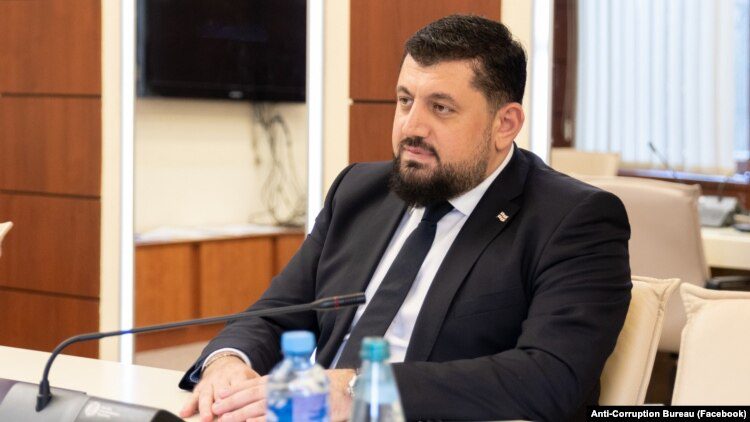
According to the Georgian service of Radio Liberty, media reports last week that the head of the anti-corruption bureau Razhen Kuprashvili was leaving his post were not confirmed by the agency. He later told journalists that he will remain in his post as long as the agency exists.
The Anti-Corruption Bureau of Georgia was established in 2023. Its creation was part of the recommendations in the 12-point plan of the European Commission and was aimed at strengthening anti-corruption mechanisms in Georgia.
The text of the European Commission’s 2025 EU enlargement report, released on 4 November, gives the worst marks to Georgia, which, like Moldova and Ukraine, applied for membership in 2022 and was granted candidate status a year later.
The report notes that “Georgia has experienced a serious democratic retreat, with a rapid breakdown of the rule of law and a serious restriction of fundamental rights.” In the European Commission’s assessment, institutions designed to support the rule of law in Georgia have been used for partisan purposes.”
The EU cancelled visa-free travel for Georgian officials and diplomats earlier this year due to the country’s change of course to pro-Russian, harassment of media and civil society organisations. Last year, Georgia passed both anti-LGBT legislation and a law on so-called foreign agents – similar to the one the Kremlin uses to stifle free speech and civil society – despite sharp criticism from the EU.
Protests in Tbilisi have been ongoing since autumn 2024, when the ruling Georgian Dream party won parliamentary elections. Opposition supporters do not consider the current government legitimate, accusing it of authoritarianism and pro-Russianism. Georgian authorities accuse the EU of supporting the protests.