

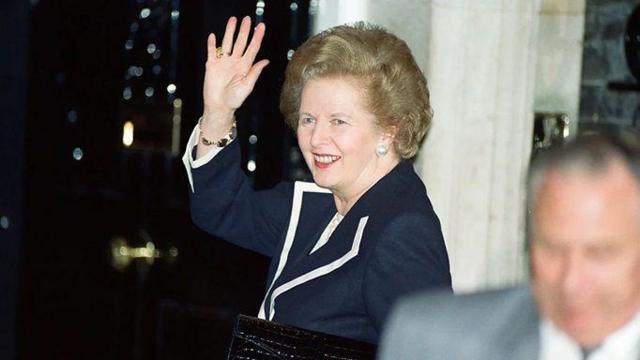

She was Britain’s first female Prime Minister and held the post for 11 years – longer than any prime minister of the twentieth century. She was nicknamed “The Iron Lady” for her intransigence. Some were fascinated by her political style, others were irritated.
In November 1990, the world witnessed the end of the Margaret Thatcher era.
The Iron Lady resigned and tearfully left the premier residence in Downing Street, betrayed by her own party.
What could shake her power?
Last Exit
When Thatcher stepped for the last time on the threshold of the British prime minister’s residence on 28 November 1990, she was blinded by the camera flashes of journalists from around the world.
“We are leaving Downing Street after eleven and a half remarkable years and handing over the country in a much better state, you against the establishment, the unions, Labour and, perhaps most fiercely of all, against our own government. But the final blow was delivered by their own colleagues.
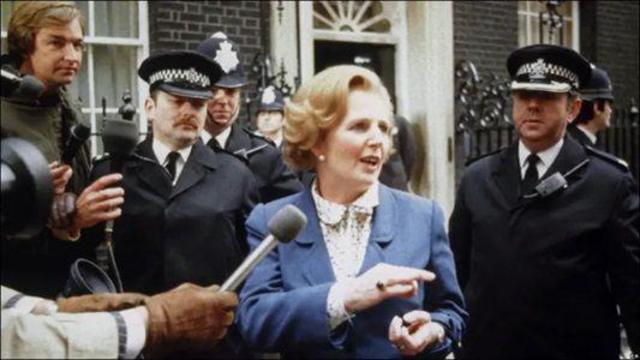
Getty Images photo
One of her ministers, Chris Patten, told the BBC in 2005 that Thatcher recognised that a little fear in politics is useful if you want to get things done.
She was able to start meetings with glib assessments – and immediately challenged her colleagues to see if anyone could refute her words.
Patten admitted: “It always felt like there was an anaconda in a chandelier hanging over you – you just make a mistake and it’s all over.”
Thatcher emphasised: as a man of science, she first gathers facts and only then draws conclusions.
“A prime minister must be able to scare. There is no point in being weak in the chair.”
The beginning of the end
Winning the 1987 election was a rare achievement – Aran’s third term”
Few expected Lord Geoffrey Howe to play a fateful role in toppling the Iron Lady. He was known as a quiet, gentle and polite man.
Howe himself admitted that he preferred “annoying repetition” to shouting – which sometimes annoyed the prime minister.
Thatcher underestimated him – and in vain.
Their relationship soured in 1989 during a government reshuffle. Thatcher dismissed him from the post of Foreign Secretary and appointed Deputy Prime Minister – this position was perceived by colleagues as a formality, which could not help but offend Howe.
On 30 October 1990 Thatcher uttered the famous “No, no and no again!” – was her response to Europe’s proposals for deeper integration.
For Howe, it was the last straw. He resigned – and so struck the decisive blow.
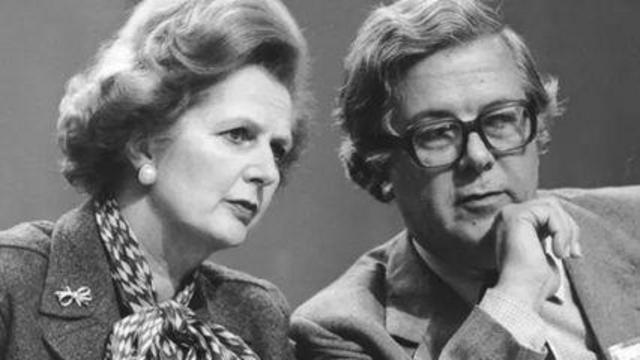
Getty’s photo in
Back in London, Thatcher said: “I will fight. And I will fight to win.”
But ministers saw the situation differently. She decided to call them one by one for a chat. As they waited for their turn, they whispered – and realised it was time to make a decision.
Thatcher later recalled that each of the ministers entered the cabinet with almost identical words: ‘If you decide to go to the polls, I will support that. But you can’t win. So you’d better give up your seat.”
She decided to “sleep” on that thought. And in the morning, at a cabinet meeting, she announced her resignation.
According to senior official Caroline Slocock, the scene was full of tears. Thatcher could barely speak.
Male ministers were also wiping their eyes – although some, as colleagues later noted, were not without a share of e was the worst.”
“The Iron Lady” died on 8 April 2013 – after suffering a stroke. She was 87 years old.