

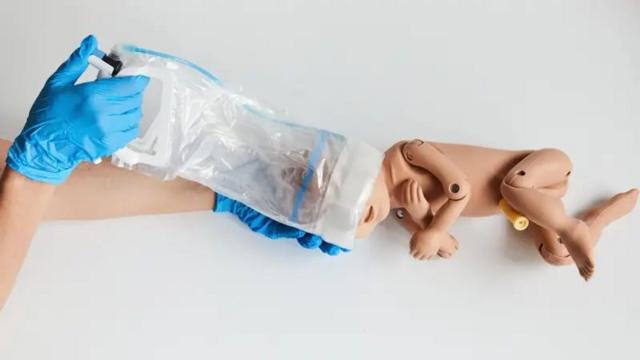

A new device with the potential to revolutionise the approach to difficult births was invented not by an obstetrician or a medical engineer, but by a car mechanic from Argentina.
His invention has already helped deliver hundreds of babies in Europe and, according to experts, could be the first major innovation in obstetrics since the 1950s.
The most surprising thing is that the inspiration for this development came from a simple trick involving a wine bottle.
Today, OdonAssist helps doctors in cases where labour slows down or stops.
The device is designed to reduce the risk of injury to the mother and baby associated with the use of forceps and vacuum extraction, as well as to help avoid caesarean sections in some complex cases.
Following trials in Argentina, the device, named after its inventor Jorge Odon, began to be used in European hospitals.
According to British health authorities and the manufacturer MNHI, OdonAssist has already delivered around 300 babies in 40 clinics across five countries.
And this story began one August morning in 2006.
An idea that came in the middle of the night
At the time, Jorge Odon ran a car repair workshop in Buenos Aires. Ideas often popped into his head unexpectedly, but they usually concerned cars, brakes or other technical matters.
But on that day, everything was different.
“Marcelo, look, listen,” he said to his wife, waking her in the middle of the night.
“This could help make childbirth easier,” Odon later recalled in an interview with BBC News Mundo.
At the time, he could not have imagined that this idea would turn into a medical device that doctors around the world would be using two decades later.
“I hardly felt a thing”
OdonAssist is an inflatable device designed to assist during vaginal births in cases where labour slows down or stops for specific reasons.
The MNHI (Maternal and Child Health Innovations) website, which manufactures the device, describes it as “a gentle alternative to traditional metal forceps and vacuum extractors”.
“The device is based on a soft air cuff that we place around the baby’s head,” British doctor Emily Houghton explained to the BBC.
Once inflated, the cuff gently supports the baby’s head and helps it move through the birth canal, complementing the woman’s efforts during pushing.
“It is this cuff that helps the doctor carefully guide the baby during delivery,” said the obstetrician-gynaecologist, who is leading clinical trials of the device at Southmead Hospital in Bristol, UK.
When the baby’s head emerges, the device is removed and the baby takes its first independent breath.
One of the women who gave birth with the help of OdonAssist, Ella Redford, told the BBC: “After a long and difficult labour, I was given an epidural and felt almost nothing.”
“It was just brilliant. If I had to choose again, I would definitely go for it again.”
In her view, this approach seems far more logical.
“It’s much smarter to inflate that cuff and gently push the birth canal tissues away from the baby than to pull it by the head.”
Dr Hotton shares this enthusiasm.
“This is the first innovation in obstetrics since the 1950s,” she emphasised.
It all started with a trick

Odon himself admits that his invention was not based on personal experience and did not stem from concerns about the risks of childbirth.
Nevertheless, the problem remains serious. According to the World Health Organisation (WHO), in 2023 around 260,000 women died during pregnancy, childbirth or shortly afterwards.
According to the UN, in the same year, around one million babies died on their first day of life.
And the path to the invention did not begin in a hospital at all.
It all started with a trick that one of my colleagues showed to another. He had to get the cork out of a wine bottle. I thought: now he’s just going to break it, Odon told the BBC.
But something else happened.
‘He took a small bag, put it inside the bottle, blew air into it, pulled it out — and pulled out the cork. I was amazed by this mechanism of gripping and extracting air.
How did he go from a wine cork to the idea of helping with childbirth?
Odon himself explains it this way: “To be honest, it was a miracle. None of my relatives or acquaintances had any problems during pregnancy.”

Photo credit: Getty Images
A few days later, Odon, together with his partner, engineer Carlos Modena, was already demonstrating his idea to a doctor in Buenos Aires.
Soon, the prototype found its way to obstetrician-gynaecologist Mario Merialdi, who was then head of the World Health Organisation’s Department of Reproductive Health.
From the garage to the WHO
Merialdi recalls seeing the device for the first time during a break at a WHO congress in Buenos Aires.
“Two things struck me: the simplicity of the design and its safety,” the doctor, who now heads the MNHI, told the BBC.
According to him, the device is so simple to use that not only doctors but also midwives can operate it.
“This helps ensure access to medical care even in regions with underdeveloped healthcare systems.”
Speaking about safety, Merialdi noted that the soft materials help to reduce the risks associated with the use of forceps, vacuum extraction or caesarean section.
“So far, none of the babies born using this device have had bruises, haematomas or other injuries that sometimes occur during such procedures,” he said.
What are the risks of traditional methods
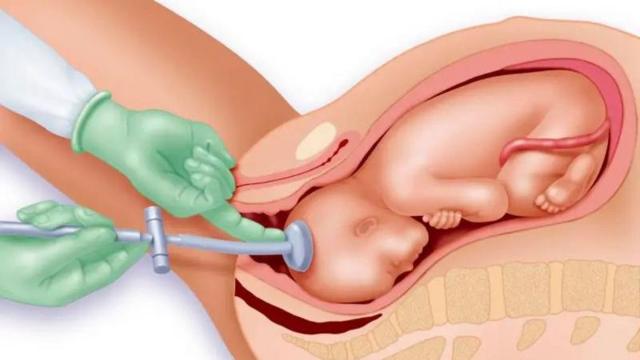
Photo credit: Getty Images
Merialdi emphasises that forceps, vacuum extraction and caesarean sections are considered safe procedures.
However, like any medical intervention, they are not without risks.
Some injuries do occur. In most cases, they resolve within a few days, but in rare cases, the consequences can last a lifetime,” said the doctor.
According to the US National Library of Medicine, in Canada, severe birth trauma to a newborn occurs in approximately one in every 105 deliveries involving forceps.
It is not only babies who suffer.
According to the Cleveland Clinic — one of the leading medical centres in the US — around 10% of women who give birth with forceps suffer serious tears to the vagina or rectum.
The risks are also highlighted by the results of a study conducted in Mexico in 2012. It covered 467 forceps deliveries. The researchers found that tears occurred in 38.5% of mothers, and various complications or injuries were recorded in more than half of the newborns.
In 2025, OdonAssist received the European CE Kitemark certification, which confirms its safety for use in European hospitals.
However, unlike forceps or vacuum systems, the device cannot be reused.
“It is single-use because it needs to be sterilised using gamma radiation,” explained Merialdi.
According to him, the soft materials help prevent injury, but reusing the device would increase the risk of infection.
The cost of a single device is $335, reports MNHI.
The inventor, who was considered an eccentric
Today, Jorge O’Don takes pleasure in seeing the results of his work.
“Not a single child was harmed during testing in Argentina and Europe,” he emphasises.
Dr Emily Hotton admits that she, too, is impressed by the simplicity of the idea.
“It’s incredible that we didn’t think of this sooner.”
From this summer, the device will be offered to all expectant mothers at Southmead Hospital in Bristol.
“It’s strange that we’re still using methods that seem so outdated today,” says Bristol resident Georgia Jacobs, who also gave birth with the help of OdonAssist.
As well as in the UK, Spain, France, Italy and Germany, the device has long been in use in Ethiopia.
According to Merialdi, the results there have been no less successful.
Odon himself admits that for a long time he had doubts about his own idea.
“When you invent something, you start to think you’re a bit mad. How did it even occur to me, when the problem has existed for so many years? Why didn’t any of the doctors think of this before?”
A few years ago, he sold his car dealership and retired. Odon now lives in Uruguay, but he hasn’t given up on his passion.
“A mechanic, a carpenter, a bricklayer… We’re all creative people,” he says.
Additional material was provided by Jasmine Ketiboua-Foli.