



Jenny Evans made the difficult decision to sue a famous man who she says sexually assaulted her. But soon after, confidential details of the case appeared on the columns of a British newspaper.
Evans was only 19 at the time, and she wondered: could her friend have betrayed her? Was she being spied on?
Without her knowledge, Jenny finds herself at the centre of a corruption scandal that eventually leads to the ousting of some of the most powerful players in the British press and police force.
Instead of hiding, Jenny channelled her anger into studying journalism to uncover the truth herself.
Warning: the article contains details of sexual assault.
Jenny grew up in Abergavenny, Monmouthshire, in south-east Wales. She tried acting at free theatre classes.
At 18, she was cast in a play called Twin Cities, and soon after, in 1997, she found herself partying with a film crew in London.
Jenny, now in her 40s, told the Lives Less Ordinary podcast that at the end of the evening she found herself in the company of a celebrity unrelated to the film and his friend.
She asked them for their phone to call a taxi, but they refused. “He put his hand on my chest and pushed me so that I lost my balance. Then he and his friend attacked and raped me,” she said.
When the men bored her, a celebrity friend called her a taxi. Jenny was nauseous and shaking as the taxi driver named Ken kept telling her, “I think you were raped. Let me take you to the police station.” But she couldn’t speak.
She was “too shocked and scared” to go to the police and report it at the time – a feeling that lasted a long time.
Photo by Jenny Evans
Jenny wrote a letter to a friend about it and told her brother and mother.
She shut down, and it wasn’t until her 24-year-old brother died and she was 23 that she decided to try to “start life again.”
She was studying at Central School of Language and Drama and one night, as she was dancing with friends in the student bar, a friend dropped the latest issue of The Sun on the table.
It stated that a well-known man who had sexually assaulted her had been arrested after other women made similar allegations. It was the first time she realised that the cruelty of this man and his friend might not be random but systematic.”
This made her feel “a moral obligation to report him” but she also realised that most victims “don’t want to go to the police and tell about these experiences”.
She was questioned twice by police and then, four days later, her boyfriend, reading the newspaper, suddenly said: “I didn’t know there were two of them.”
The boyfriend knew what had happened to her, but Jenny never told him the details.
Jenny’s name wasn’t mentioned in the paper, but they published the full confidential report she wrote at the police station just a few days ago.
“It was horrible,” Jenny said.
Photo by Jenny Evans
She tried to find out who might have sold the story to the newspaper.
Jenny told the detective about her case, and he never got back to it.
“I was so young and naive that I didn’t push it,” she said. “Paranoid,” she began bugging her house, closing windows and checking the phones of friends and relatives to see if they were talking to reporters.
Police then told her they had enough evidence to charge the man with two counts of sexual assault, but neither case resulted in formal charges.
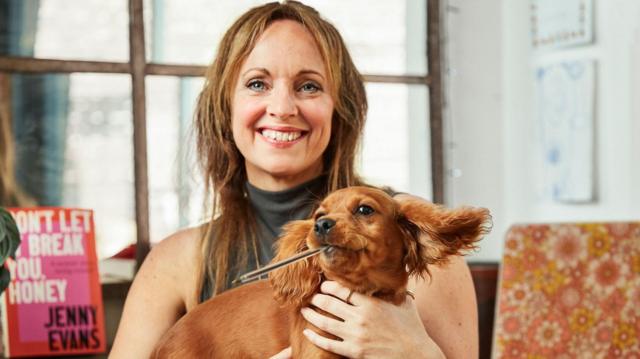
Photo by Josh Adam Jones
At the time, the celebrity accused of abuse said that “it’s all fiction and that women just want money. And fame.”
In court, Jenny’s friend handed over a letter she wrote to her after the rape as proof that Jenny had not gone to the police. Thought it would discredit her.
She says any sexual assault case is hard to win, but if the rape happened several times in one evening, the lawyers could prove that “you made it up”
She didn’t want to be questioned about the details described in the letter, so the charges were dropped. A now-defunct newspaper published an article with confidential details of the case, and Jenny says her fear turned to anger.
So she decided to study journalism to find out how it happened.
A few years later, investigative journalist Nick Davies published an article about phone hacking and illegal access to voicemail.
At the time, in 2007, newspaper reporter Clive Goodman and private investigator Glenn Mulcaire were arrested. Were convicted of phone hacking, and although their papers said it was just one case of fraud, Nick was convinced the problem was deeper than that
. He instructed Jenny to find out the truth about the questionable news gathering methods of former and current reporters.
Jenny found her name in his diaries, there was an incorrect phone number listed, and she realised her story had been leaked to the press in another way.
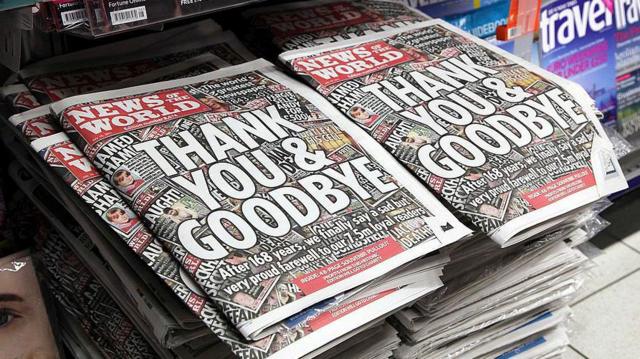
Photo provided by: Getty Images
The News of the World newspaper was shut down in 2011 after it emerged that reporters were hacking into the phones of crime victims, celebrities and politicians.
“I was overwhelmed with emotion,” says Jenny.
“They kind of.
Jenny’s case was never solved because of corruption in the Metropolitan Police, but after hiring a lawyer she received an apology and “tens of thousands of pounds” in compensation.
The BBC has contacted London police for comment
. Now Jenny wants people, “especially young women”, to know that when you feel “disempowered and powerless, the true strength lies in learning to ask questions” .”