

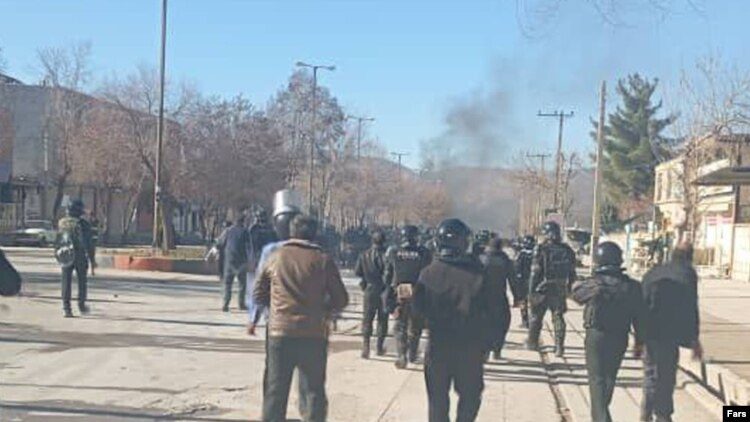

Several people died during a fifth day of protests in Iran, state media and human rights groups said, as anger grows over the country’s economic woes despite promises by the Islamic republic’s leaders to resort to “new solutions” to improve the situation.
As evidenced by videos and social media posts, markets in Tehran were closed again on 1 January and traders took to the streets to protest against inflation. Local media also reported on the unrest, adding that demonstrations were also taking place in other parts of Iran.
Fars news agency, close to the Islamic Revolutionary Guards Corps, reported protests in the city of Lordegan in southwestern Iran, saying there had been clashes with security forces. The agency cited” an informed source” who said “two people were killed.”
Human rights group Hengaw also reported fatalities in Lordegan, saying security forces opened fire on protesters, killing and wounding several of them.
The group also reported that a protester was killed in Isfahan province in central Iran on 31 December.
Meanwhile, the Islamic Revolutionary Guard Corps said on January 1 that a member of the Basij paramilitary unit had been killed in the western city of Kuhdasht a day earlier. Iranian authorities have yet to confirm these reports, and Radio Liberty Iranian Service was unable to independently verify them.
Iranian President Massoud Pezeshkian called on citizens to show solidarity instead of joining the protests. He also promised that the government would take “new decisions” that would improve the economic situation. Pezeshkian sought to influence Iranians, who have been hit by inflation of more than 50 per cent in the fall of the rial, which trades at around 1.4 million per dollar in unofficial markets, down from around 800,000 a year ago. Official exchange rates are better, but they are out of reach for many Iranian citizens and businesses.
The poor state of the economy, brought on by international sanctions imposed on Tehran over its nuclear programme, may not have been the only factor behind the renewed protests in Iran as US President Donald Trump received Israeli Prime Minister Benjamin Netanyahu at his Mar-a-Lago residence in Florida on December 29.
Asked whether he would support new Israeli military strikes against Iran if it continued its missile or nuclear programme, Trump answered in the affirmative.