

The start of a new year may seem like the perfect time to make a fresh start – to let go of the worries and pressures of the previous 12 months and see the world differently. But it’s much easier to promise yourself that you’ll think about things differently this year than it is to actually do it.
Fortunately, science offers many methods for improving your emotional state.
We’ve put together nine practical tips – like how to curb anger or use gadgets wisely.
Stop striving for perfection
Perfectionism is often seen as a positive trait. But as the famous aphorism goes, “the best is the enemy of the good”. In addition, being a perfectionist can also be bad for your health.
There is growing evidence that perfectionist thinking is linked to depression and anxiety, as well as a whole list of other conditions including: social anxiety disorder, obsessive-compulsive disorder (OCD), eating disorders, chronic fatigue syndrome, insomnia and even suicide risk.
In fact, according to some experts, the more perfectionism you have, the more psychological disorders you have.
Why it happens.
Perfectionists set unrealistic standards for themselves, and when they inevitably fail, they feel much more guilt, shame and anger than other people. They berate themselves for mistakes and never feel good enough.

Photo provided by Getty Images
How do you get out of this vicious cycle?
How do you get out of this self-destructive mindset? According to experts, one of the best defences against anxiety and depression is self-compassion.
In other words, try to be kind to yourself.
Take the time to criticise yourself if you make mistakes.
Create a suitable environment: if you have children, try to create an atmosphere in your family where imperfections are not only accepted, but even welcomed. After all, it is imperfections that make us human.
Build friendships
Friendship is extremely important to our health. It can affect everything from immune strength to heart disease risk.
Surrounding yourself with good friends can even prolong your life.
However, sometimes it’s worth considering what kind of friend you are to others. People with fickle commitments (called “ambivalent relationships”) can do more harm to others than those who engage in consistently unpleasant behaviour.
One step you can take is to discuss good news more often.
Try asking about the details, discussing the significance of the event, and genuinely cheering others on. Celebrating success in this way can improve both your mood and your relationships.
New hobby
It’s never too late to start a new hobby.
Last year, I went to my first life drawing class as part of an experiment to find out what hobby best helped me build social connections.
As I have no artistic talent (take my word for it), I was nervous at first, but quickly realised that my skill level didn’t matter.
Within two hours, my brain was resting. It turns out that drawing – if it forces us to focus on the world around us – can improve mood and well-being. Also, during my tea break, I made a friend with whom, under normal circumstances, our paths would never have crossed.
Anne Mackowski, the artist who led the session, said that for some, her classes become “a little family.”
If you’re more interested in movement, team sports offer the benefits of social interaction as well as the release of endorphins.
In fact, sports can make physical activity seem easier – thanks to a phenomenon psychologists call “shared intention.”
It’s a state where people come together for a common goal or action. It helps us feel closer to each other and we feel much better. There is further communication.
Use your anger for good
Anger has tremendous destructive power. When emotions run high, we often do things we later regret. However, scientists say that if you identify this negative energy in time, it can be redirected to useful things.
It is important not to suppress anger (which triples the risk of heart attack), but to transform it. Anger can add strength in sports, make you more persistent, or even stimulate short bursts of creativity.
To master this art, you must learn to control your anger.
Use the techniques of psychological distance and patience so that anger does not turn into uncontrolled aggression, but becomes a tool to achieve your goals.
Appreciate what you have
This is an old idea, but it has a solid scientific basis. The habit of devoting a few minutes each day to making a list of three things you are grateful for has an extremely positive effect on our well-being.
Studies of this exercise have shown that people who wrote down three good things a day for a month showed higher levels of happiness and reduced symptoms of depression. The trials also confirmed that the practice is beneficial for people from all walks of life – from teenagers in urban slums in Kenya to elderly women in Switzerland.
The main secret to the method’s effectiveness is its focus on positivity: it helps you consciously look for good moments throughout the day.
To try it, take time each evening to reflect on your day and write down three things that went well or made you happy. It can be anything, even something small or seemingly unimportant.
But the key element is to reflect on why these things made you feel positive.
Make your phone work for you.
Screen time shows that I pick up my phone about 105 times a day. Ex Research shows that these habits can have consequences for memory, concentration, sleep, mental health and more.
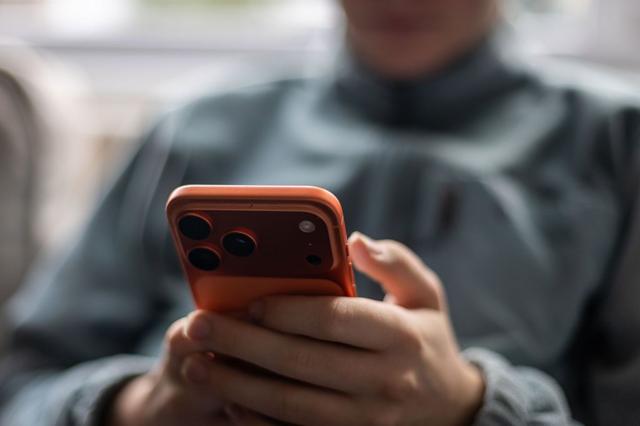

Photo provided by: Getty Images
However, our fixation on our phones can also have benefits. For example, one study found that using a screen to take notes improved performance on complex memorisation tasks. This suggests that a notes app gathering dust on your device can help “unload” your brain from certain types of cognitive work.
Reducing the damage to your phone isn’t that hard either. Even the sound of notifications can interfere with simple tasks almost as much as a regular phone call. If you don’t like it, use the “batch delivery” feature of notifications (“scheduled reporting”) instead of receiving them in real time – such tools are available on both iPhone and Android.
But if you really want to completely disconnect from your screen, try leaving your phone in another room. Start with small steps.
Love the frowny winter days
When the evenings are long and the temperature drops, people often notice their mood worsening. Studies show that many people become sad and lethargic during the winter months, after all, the shortening daylight hours are a sign.
However, changing your attitude towards this time of year can help. Researchers suggest that being able to notice and appreciate the positive aspects of winter, such as the natural beauty it brings, can help overcome ‘winter moping’.

Photo provided by: Getty Images
One study involving 238 people in Norway found that those who looked forward to winter activities such as skiing or cosy evenings with loved ones
There’s even evidence that humans have an evolutionary tendency to seek the company of others more often in cold weather. Our cinema preferences change in winter too, for the same reasons: emotional attachment apparently, we satisfy our evolutionary need for emotional warmth when it’s freezing outside.
Sing to feel better
Have you ever felt the pure, unbridled excitement of singing when no one can hear you? Or a heightened sense of connection with others when singing in a group? Researchers say that singing is a “cognitive, physical, emotional, and social act,” so the benefits of this ancient human practice are multifaceted.
Singing activates a vast network of neurons in both hemispheres of our brain, especially in areas responsible for speech, movement and emotion. Combined with an emphasis on breathing, this makes singing an effective stress reliever. And singing in a group promotes even higher levels of psychological well-being than singing solo.

Photo courtesy of Getty Images
Singing your favourite song at full lung capacity can help your heart, boost your immune system and even reduce pain. The process of singing itself is aerobic exercise, which can be compared to brisk walking. So not only is it a good workout, but it’s also a way to get a rush of endorphins – the ‘happy hormones’. Studies have even shown that singing helps the brain to recover.
So whether you like to quietly hum along or happily hum tunes in the shower, do it knowing that you’re getting great benefits from it.
Make time for sleep
In many countries, a small break during the day is part of everyday life. For example, in Spain, an afternoon siesta is a common tradition, and in Japan, workers often practice an afternoon nap known as “beruni”.
Studies show that the habit of sleeping during the day helps maintain brain volume for longer, which can slow down brain aging by a siesta years.
This is extremely important as reduced brain size is linked to diseases such as Alzheimer’s and vascular dementia.
A short nap of five to 15 minutes can instantly improve mental performance, and the effect is invigorating. It lasts up to three hours after waking up.
How can you make sure your afternoon nap gives you energy and doesn’t leave you even more tired than before?
The key is timing. Try to sleep for no more than 20 minutes. If you exceed this limit, you will fall into a deep sleep and will likely wake up feeling broken and disorientated.
The best time for a short nap is between 2pm and 4pm.
It is during this period that the circadian rhythm declines and your body temperature begins to drop. It is still rising in the morning, which keeps you energised.
If you go to bed too late, it can disrupt your night’s sleep.