

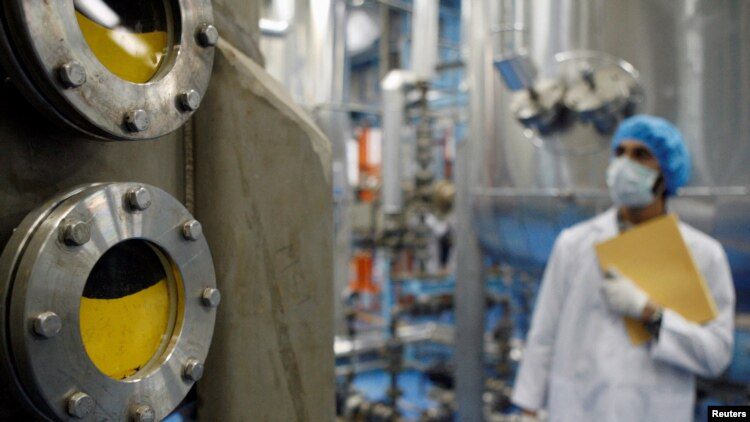

Iranian Foreign Minister Abbas Araqchi said Iran is not enriching uranium anywhere in the country following devastating airstrikes by Israel and the United States in June, although it reserves the right to do so.
Speaking at a legal forum on 16 November, Araqchi said all of Iran’s enrichment plants are under IAEA safeguards and monitoring.
“There is no undeclared nuclear enrichment in Iran … Enrichment is not yet taking place because our enrichment plants have been attacked,” he said, according to state news agency IRNA.
Israeli and US strikes in June hit key military and nuclear targets. Reports varied on the extent of the damage.
Iran announced in October that it henceforth “does not consider itself obliged” to abide by restrictions on the development of its nuclear programme, as the landmark 2015 nuclear deal with major world powers officially expired. At the same time, Tehran, which says it has never sought and will never seek to turn its nuclear programme into a weaponised one, said the country was “determined to remain committed to diplomacy”.
Meanwhile, the IAEA said Iran had more than 400 kilograms of uranium enriched to 60 per cent purity before the June strikes. It is unclear how much of the highly enriched material – current nuclear weapons include uranium-235 enriched to about 93.5 per cent – survived.
But recent satellite imagery analysed by experts at the Washington-based Center for Strategic and International Studies (CSIS) shows that while there is little activity at the three sites – Isfahan, Natanz and Fordow – that were the targets of the strikes, Iran has stepped up construction at the Picaxe Mountain site near Natanzu.
It was originally thought to be a place to make centrifuges, but recent developments suggest Tehran may be expanding its original plans for the site, says Joseph Rogers, deputy director of the CSIS Project on Nuclear Issues.
Foreign Minister Araqchi told a forum on 16 November that Tehran was ready to resume nuclear talks with the West, but only on the basis of mutual respect.
In September, US Secretary of State Marco Rubio urged Iran to “accept direct negotiations in good faith, without delay or entanglement.”
Britain, France and Germany initiated renewed sanctions against Iran from 28 September for failing to take the necessary steps to “resolve concerns” about allowing authorised IAEA inspectors to regain access to Iranian nuclear sites. The countries also noted Tehran’s failure to prepare and hand over to the IAEA a report “on its stockpile of highly enriched uranium”.
European nations renewed sanctions after accusing Iran of violating a 2015 agreement aimed at preventing it from developing nuclear weapons. The sanctions were lifted as part of the agreement.