

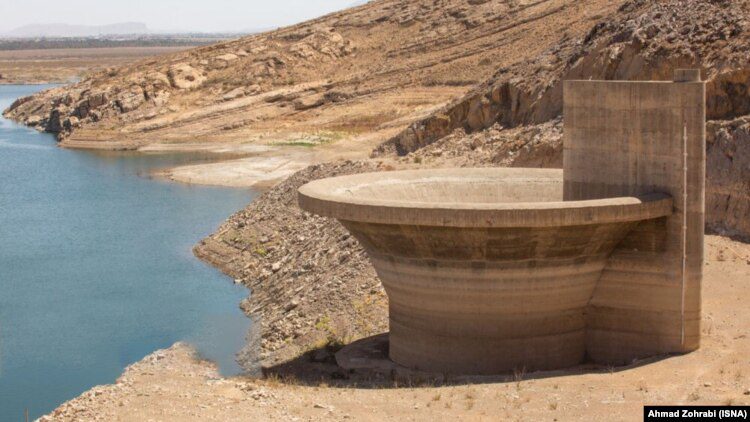

Iranian officials have warned of reduced drinking water supplies in parts of Tehran as the country grapples with a deepening water crisis caused by years of drought.
The warnings on 8 November came a day after the country’s president, Massoud Pezeshkian, said the Iranian capital may have to be evacuated if the situation continues to deteriorate.
“Water rationing should have started much earlier. Currently, 62 per cent of Tehran’s water comes from underground sources and the level of these aquifers has declined,” Reza Hajikarim, chairman of Iran’s Water Federation, said on state television.
Energy Minister Abbas Ali Abadi signalled that officials would move to ration water supplies in some areas of Tehran, probably on a rotating basis.
“This will help avoid waste, although it may cause some inconvenience,” Abadi said on state television.
Issa Bozorgzadeh, a water industry official, said the situation has reached such a level that “we are forced to impose restrictions on water consumption.”
“If consumption is not reduced by 10 per cent, Tehran’s uninterrupted water supply will be disrupted,” he added.
Iran’s water crisis is mainly due to decreased rainfall and drought, now in its fifth year.
However, some experts also blame over-reliance on aquifers and years of waste and mismanagement, especially in agriculture.