

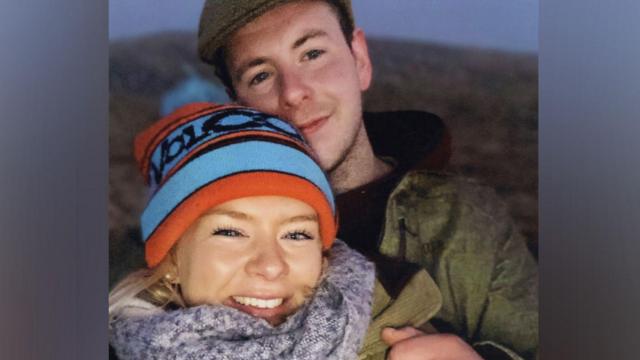

What would you do if a loved one suddenly confessed that he or she had killed another person?
It seems like the answer is obvious – you’d have to do the right thing, calmly and without hesitation.
But Netflix’s new documentary series based on true events, Should I Marry a Murderer? (Should I Marry a Murderer?), shows otherwise: real life is more complicated.
When feelings arise, simple solutions disappear. What looks black and white at first glance suddenly becomes a difficult choice with no obvious right answer.
Deadly mystery and love on Tinder
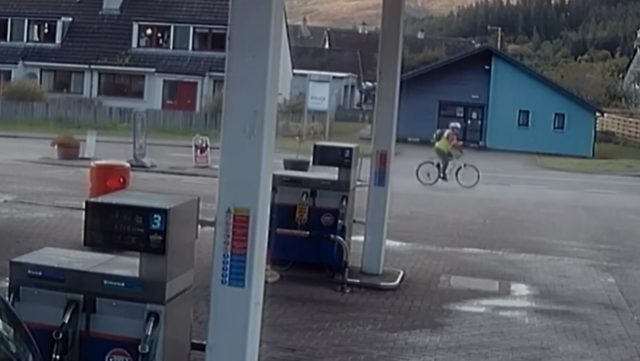
In 2017, in Scotland, drunk driver Alexander McKellar – who went by the name Sandy – hit cyclist Tony Parsons to death.
Along with his twin brother Robert, he decided to cover up the crime and hid the body.
The remains couldn’t be found for three years – until McKellar’s new girlfriend, doctor Caroline Murged, learnt the truth and led police to the shallow grave.
When director Josh Allot first heard the story, he simply couldn’t believe it was real.
“I thought it was the plot of a feature film. It doesn’t happen like that in real life,” he admits.
Series producer Claire Beavis adds: the case was already a big hit in Scotland at the time, but the public version almost missed the main point – the voice of Murged herself and her experiences.
Author photo, Netflix
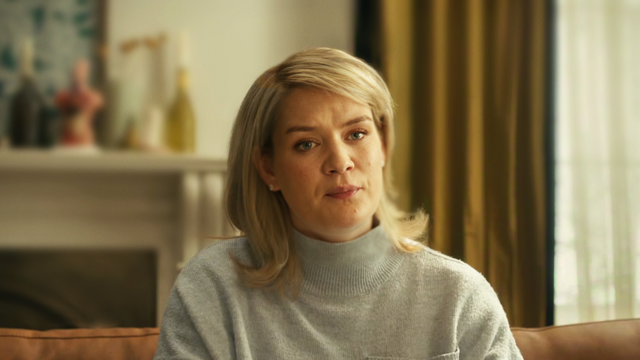
The series begins with Caroline Murged going through a difficult break-up.
In the autumn of 2020, she meets McKellar on Tinder. Their relationship develops very quickly – so much so that within weeks they are engaged.
After the engagement, she asks him a question: is there something in his past that could ruin their future?
And he confesses: a few years ago, he and his brother hit a cyclist but didn’t call for help.
It would later become clear that Tony Parsons’ injuries were so severe that he could only live for 20-30 minutes without medical attention. So death was not instantaneous – but there was almost no chance of survival.
After the accident, the brothers fled, and then returned in another car and transported the body to the estate, where it was buried.
Love, fear and impossible choices
This confession puts Murged in a difficult position: love on the one hand and moral duty on the other.
For the director, it is this internal tension that became the heart of the story.
“This dilemma is so powerful that everyone unwittingly tries it on themselves. What would you do in her shoes? It’s a real nightmare,” he says.
Author photo, Netflix
Murged reports the crime to the police. But what happens next is what makes this story special.
, Instead of ending the relationship, she stays with McKellar – and at the same time secretly co-operates with the police.
He has no idea that she has reported the crime.
For nearly three years, she records his confession on her phone.
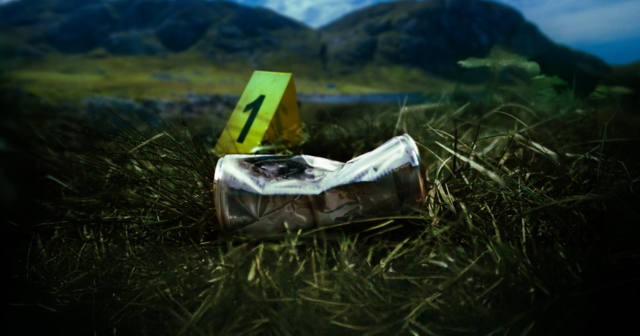
One day she even returns with him to the burial site. There, she discreetly leaves the Red Bull can as a landmark for investigators to later point out where to find the body.
Author photo, Netflix
The brothers were arrested in December 2020 but were quickly released on bail. Charges were not filed until a year later.
Murged thought it would be over quickly. But the opposite happened: the case dragged on and these men actually reappeared in her life.
“She went without defence for almost a year,” says the filmmaker.
He adds that Murged is an intelligent and educated woman, an up-and-coming pathologist with a serious medical background. But meeting Mackellar shatters her usual life.
In the series, Murged tells how she tried to cope with fear and pressure. She began to use alcohol and drugs – to somehow withstand what was happening.
The authors of the series, in their own words, are not trying to judge anyone. They show how complicated things can be. And how one crime can break the life not only of the victim, but also of those who happened to be around.
Author photo, Netflix
The coldness of the system
Separately, the series shows how the police worked with Murged after her confession. And this, according to the authors, is as important as the crime itself.
The director says: law enforcers just didn’t understand how to deal with her. And adds – if there had been more support and humanity, some of the difficult decisions could have been avoided.
Producer Claire Beavis agrees: it’s not a unique story, but rather a typical situation for people who get caught up in the criminal system.
“Justice moves very slowly and that slowness makes a real difference to people’s lives,” she says.
Police Scotland and victim support services refused to attend the shooting.
Muirhead has made complaints against the police, but after five years, most have not been upheld. The police, however, say there was sufficient support.
Murged later confessed: she believed the system would protect her, but she was left virtually alone with the situation.
She hopes her story will help change the approach – to better protect victims and witnesses, and pay more attention to their psychological state.
In July 2023, Sandy McKellar pleaded guilty to involuntary manslaughter.
His brother avoided a murder charge because the court accepted his plea of not guilty. But both agreed they covered up the crime and obstructed the investigation.
McKellar was eventually sentenced to 12 years in prison and his brother to five years and three months.