

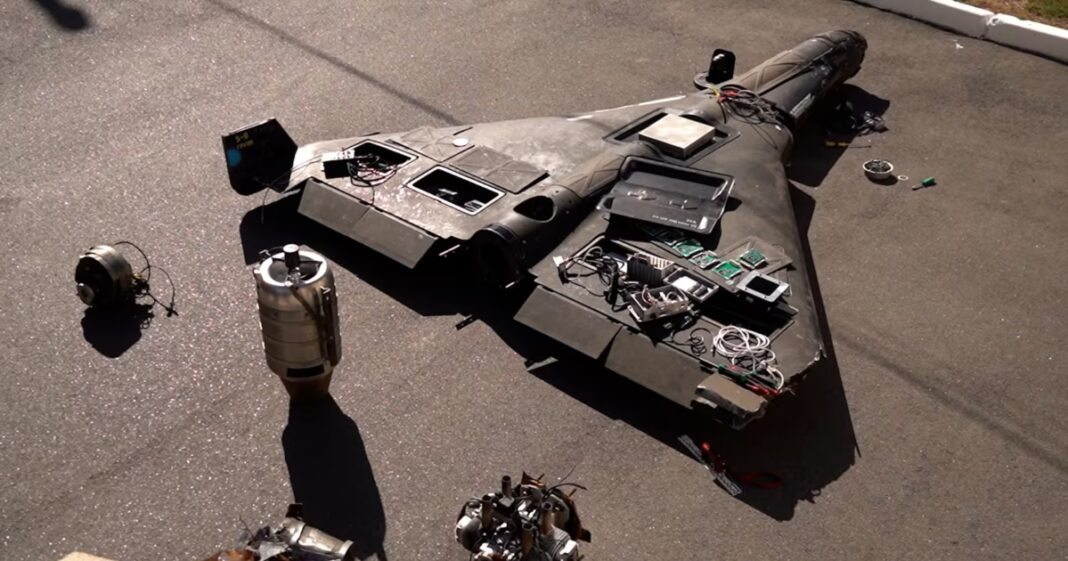

In mid-October, during service disruptions to Starshield — the military version of the Starlink service operated by the US company SpaceX — the proportion of Russian jet-powered drones shot down by Ukrainian forces fell slightly but remained relatively high. This is stated in a report by the US Institute for the Study of War (ISW).
Analysts believe that, in order to maintain and improve the effectiveness of interceptions in the long term, Ukraine needs new jet-powered interceptor drones.
‘Between 14 and 24 October, when Starshield experienced operational disruptions, the proportion of Russian jet-powered UAVs intercepted by Ukrainian forces fell from 77 per cent to approximately 74 per cent. Ukraine employs a comprehensive air defence system to counter Russian jet-powered drones. Interceptor drones have proved to be the most effective; for these to operate, Starshield must primarily provide communication at the speeds required to intercept Russian jet-powered drones,” the report states.
The ISW noted that the Ukrainian military is also using other methods to combat such drones, including F-16 fighter jets. This “places an additional burden on the Ukrainian air force’s maintenance system, which is already struggling, and diverts aircraft from other combat missions”.
Furthermore, analysts point out that special firing positions – turrets – have been set up in Kyiv and the Kyiv region to combat jet-powered drones. “However, deploying such fixed systems across the country will require considerable time and resources, and these measures alone are insufficient.”
“Supplementing the Ukrainian air defence system with interceptor drones is the best chance of creating a reliable protective shield that will, in the long term, enable the interception of the majority of Russian jet-powered drones,” the report states.
Disruptions to the Starshield satellite system – the military version of SpaceX’s Starlink, on which Ukraine relies heavily for protection against Russian air strikes – have left the country particularly vulnerable. The disruptions first came to light on 14 October.
According to statistics from the Ukrainian Air Force, a significant proportion of the drones used in Russia’s combined attacks are now jet-powered aircraft controlled online: they do not fly according to pre-set coordinates, but are constantly monitored by an operator from the rear.
Reports of Starlink restrictions emerged against the backdrop of a statement by US President Donald Trump regarding an agreement with Russian leader Vladimir Putin to temporarily exempt Russian diesel fuel from sanctions and supply it to the global market, as well as Trump’s demands that Ukraine cease strikes on Russian oil refineries.
On 24 October, Ukrainian Defence Minister Yevhen Khmara told Radio Free Europe that Starshield’s operational speed had been restored: “The Ministry of Defence’s monitoring systems are recording a return to normal speed for Starlink/Starshield. We are recording speeds of over 400 km/h, and the connection is stable.”