


The Kremlin continues to discuss the upcoming elections in Ukraine in order to promote its false claim that the current Ukrainian government is illegitimate by insisting on means to control Ukrainian politics, the American Institute for the Study of War (ISW) wrote in a report.
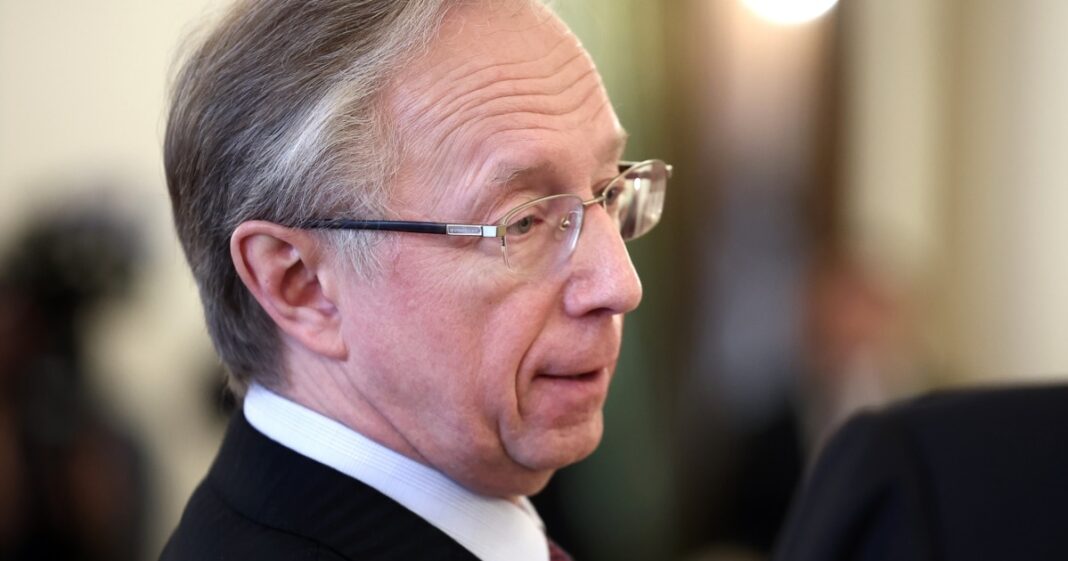
The analysts drew attention to a statement by Russian Deputy Foreign Minister Mikhail Galuzin, who in an interview with the Russian state-run TASS news agency on 15 February repeated his claim about the alleged “illegitimacy” of Ukrainian President Volodymyr Zelensky and said that Russian leader Vladimir Putin’s March 2025 proposal for a temporary UN external administration to govern Ukraine was still an option.
Galuzin argued that a UN administration would allow for “democratic” elections and a government with which Russia could sign a peace treaty and “legitimate” documents on future bilateral co-operation.
ISW noted that the Kremlin’s calls for UN governance in Ukraine are a rejection of Ukraine’s sovereignty and legitimacy, recalling that UN Secretary General António Guterres and the White House rejected such proposals when Putin first presented them in March 2025.
The Kremlin’s proposal for UN election oversight is an attempt to give Russia, a permanent member of the UN Security Council, veto power over any resolution that does not establish a UN system of governance, which would ensure Russia’s desired outcome of a pro-Kremlin political agreement in Kiev.
Analysts noted that the Kremlin continues to signal that it will reject any election results that do not result in the formation of a pro-Russian government in Ukraine.
In addition, ISW said, the Kremlin’s statements about the need to allow “Ukrainian citizens residing in Russia” to vote in the upcoming Ukrainian election likely “seeks to use ‘Ukrainians,’ or at least those whom Russians recognise as Ukrainians… to enable massive Russian interference in the election.”
Earlier, President Volodymyr Zelenskyy said that Ukraine would be ready to hold elections, but after two months of ceasefire on the front. He said this during a discussion after his speech at the Munich Security Conference on 14 February.
“I am very honest. Give us two months of ceasefire and we will go for elections. That’s it… Give us a ceasefire, give us security, infrastructure, maybe not two months, but we need many days to prepare. Then give us the opportunity, our soldiers, to vote as they can, I mean, protect our lives, our country, and at the same time vote. This is something difficult,” he said.
He also added that Ukraine could also “declare a ceasefire for the Russians if they hold elections in Russia.”
11 February Zelensky denied his intention to announce an election and referendum on territorial integrity on 24 February, as reported by the FT.
In an interview with Politico on 14 February, Zelensky said that 90% of Ukrainians do not support holding elections during the war. He did not specify what data he was referring to. However, according to a poll by the Kiev International Institute of Sociology (KMIS) published in early January 2026, only 10 per cent of respondents were actually in favour of holding elections before the ceasefire.
April 2026 will mark seven years of Zelensky’s tenure, with the maximum five-year term of the presidency. But elections during martial law are prohibited by Ukraine’s constitution.
Also, Ukrainian officials say there are problems for holding elections – the absence of a ceasefire, the unresolved issue of how servicemen, internally displaced persons and several million Ukrainian refugees abroad will vote.
Ukraine is also discussing the possibility of holding a referendum on a possible peace agreement, which could include territorial compromises.
ISW analysed statements by the Russian Foreign Ministry regarding the elections in Ukraine and the UN external governance