

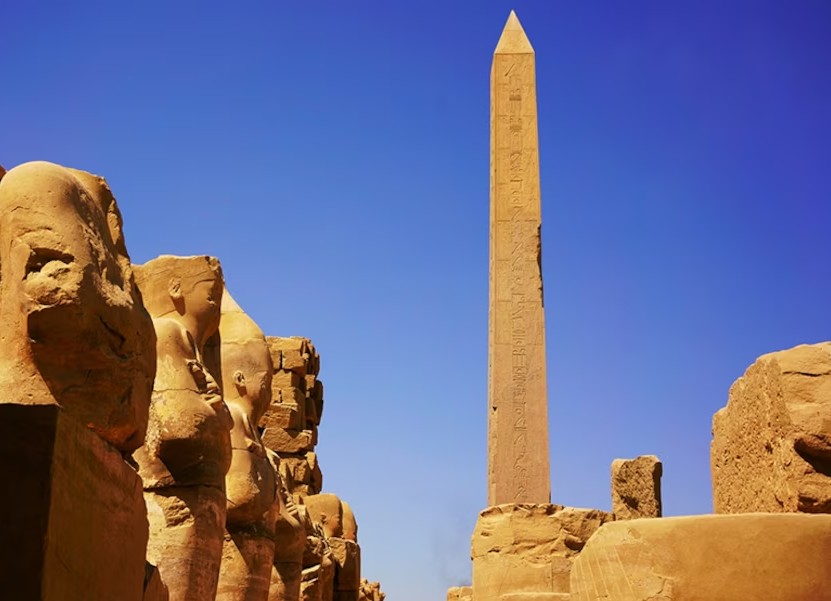

The ancient heritage of Egypt continues to attract researchers, historians, and travelers who are interested in the origins of civilization and monumental architecture. Among the most impressive surviving structures is the Obelisk of Hatshepsut at Karnak—an exceptional example of ancient engineering, political symbolism, and religious devotion. Today, platforms such as Archaeological Paths https://archaeologicalpaths.com make it possible to explore such monuments in a structured and accessible way, connecting modern audiences with ancient history through curated archaeological content.
The historical significance of the Hatshepsut Obelisk
The Obelisk of Hatshepsut was erected during the reign of Pharaoh Hatshepsut, one of the most influential female rulers of Ancient Egypt. It was created as part of the grand Karnak Temple complex, dedicated to the god Amun-Ra. Standing nearly 30 meters high and carved from a single block of pink granite, the monument was designed to demonstrate both divine legitimacy and royal power.
Hieroglyphic inscriptions on the obelisk highlight the pharaoh’s achievements and her dedication to the gods, reinforcing her authority in a male-dominated political structure. The monument also reflects the advanced understanding of engineering and logistics in ancient Egyptian society, as transporting and erecting such a massive stone structure required immense coordination and skill.
Architectural features and engineering mastery
The construction of obelisks in ancient Egypt was not only a religious act but also a demonstration of technological capability. The Hatshepsut Obelisk showcases precise stone carving, careful alignment, and remarkable structural balance that has allowed it to survive for thousands of years.
Its polished granite surface and detailed inscriptions required highly skilled artisans and engineers. The monument was originally part of a pair, positioned to frame the entrance of the temple. While one obelisk remains standing today, its counterpart has been lost over time, making the surviving structure even more valuable for archaeological study.
Key characteristics of the Hatshepsut Obelisk include:
- carved from a single block of pink granite
- height of approximately 30 meters
- detailed hieroglyphic inscriptions
- religious dedication to Amun-Ra
- originally part of a symmetrical pair
- located within the Karnak Temple complex
These features make it one of the most important surviving examples of New Kingdom monumental architecture.
The cultural legacy of the Hatshepsut Obelisk
Beyond its architectural value, the Hatshepsut Obelisk represents a powerful cultural symbol. It reflects the authority of one of Egypt’s few female pharaohs and highlights the role of monumental architecture in reinforcing political and religious identity.
The obelisk continues to inspire archaeologists and historians who study the development of ancient engineering techniques and statecraft. It also serves as a reminder of how civilizations use architecture to communicate power, belief systems, and cultural identity across generations.
The Obelisk of Hatshepsut remains one of the most remarkable achievements of ancient Egyptian civilization. Its scale, precision, and symbolic meaning continue to fascinate researchers and visitors alike. Through platforms such as Archaeological Paths, modern audiences can better understand and appreciate the complexity of ancient monuments, ensuring that their legacy remains accessible for future generations.
Archaeological Paths as a bridge between travel and knowledge
Archaeological Paths functions not only as a tour organizer but also as an educational platform dedicated to making archaeology more accessible. By integrating professional expertise into travel programs, the company helps participants gain a deeper understanding of ancient Egypt.
The combination of field experience and historical explanation allows travelers to connect physical monuments with the broader story of human civilization. This makes each journey both informative and intellectually engaging.
Conclusion
Egypt tours offered by Archaeological Paths provide a unique way to explore one of the world’s greatest ancient civilizations. By combining archaeological insight, structured itineraries, and on-site interpretation, these journeys go far beyond traditional tourism. They allow travelers to not only see Egypt but to understand its history, significance, and lasting legacy in a meaningful and immersive way.