

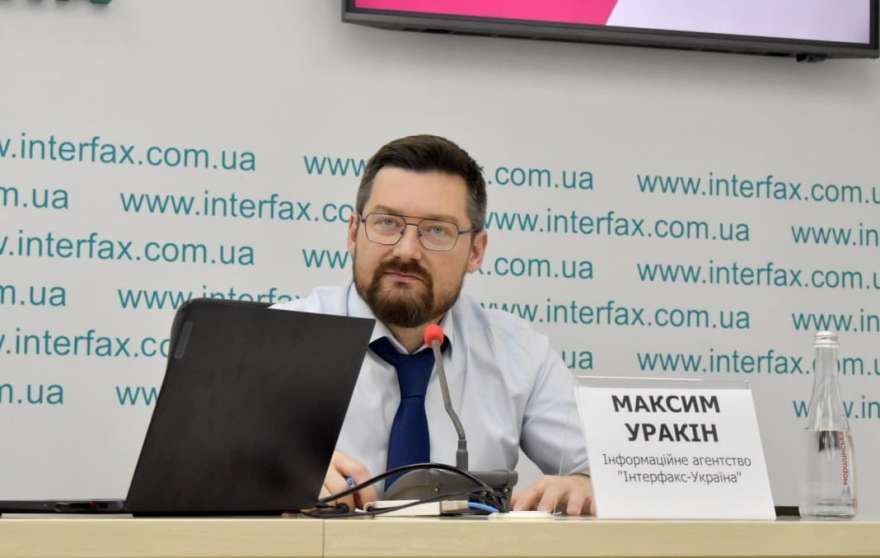

This article presents key macroeconomic indicators for Ukraine and the global economy as at the end of February 2026. The analysis is based on the latest data from the State Statistics Service of Ukraine (SSSU), the National Bank of Ukraine (NBU), the International Monetary Fund (IMF), the World Bank, as well as leading national statistical agencies (Eurostat, BEA, NBS, ONS, TurkStat, IBGE). Maksym Urakin, PhD in Economics and founder of the Experts Club information and analytical centre, presented an overview of the current macroeconomic trends that shaped the situation in Ukraine and globally at the start of 2026.
Ukraine’s macroeconomic indicators
As at the end of February 2026, the Ukrainian economy remained in a state of managed macro-financial stabilisation; however, compared with January, the balance of risks had become less favourable. Following the start of the NBU’s cycle of cautious monetary policy easing, inflation had accelerated slightly once again, international reserves had fallen from historically high levels, and the foreign exchange market required significant intervention by the regulator. At the same time, the overall macro-financial situation remained under control thanks to high reserve levels, external support, sustained demand for hryvnia-denominated instruments and the adaptability of the business sector.
The Ukrainian economy ended 2025 with positive, albeit moderate, growth. According to estimates by the National Bank of Ukraine, real GDP grew by 1.8% in 2025. This signalled a continuation of the recovery trend, but growth rates were significantly lower than would have been required for post-war reconstruction. The main constraints remained the consequences of the war, labour shortages, damage to energy infrastructure, weak external demand for some Ukrainian exports, and a high level of uncertainty surrounding investment.
For 2026, the NBU also forecast economic growth of 1.8 per cent. This assessment reflected a cautious scenario: domestic demand and budgetary expenditure were supporting economic activity, but energy risks, military losses and limited export opportunities provided no grounds for expecting an imminent acceleration.
‘February 2026 showed that Ukraine is not yet in a phase of full-scale recovery, but rather in a phase of maintaining macroeconomic stability. The positive indicators rely to a large extent on external financing, budgetary demand, the NBU’s policy and business adaptation. This creates a stabilising effect, but does not yet form a sufficient domestic foundation for long-term growth. “To move towards a new phase of recovery, Ukraine needs not only reserves and assistance from its partners, but also an increase in production, exports, energy self-sufficiency and investment in human capital,” noted Uraikin.
The inflation picture in February became one of the key indicators for macroeconomic policy. According to data from the State Statistics Service, as commented on by the NBU, consumer inflation in February 2026 accelerated to 7.6 per cent year-on-year, whilst prices rose by 1.0 per cent month-on-month. Core inflation remained at 7.0% year-on-year. This meant that, following January’s slowdown, inflationary pressures had not completely disappeared, and certain components had begun to intensify once again.
The NBU attributed the February trend, in particular, to rising prices for unprocessed foodstuffs, increases in the cost of certain services, the impact of the energy situation on business costs, and a certain acceleration in fuel prices. At the same time, the regulator noted that the overall inflation trajectory remained close to the forecast. This made it possible to avoid a sharp revision of monetary policy, but necessitated caution regarding further rate cuts.
At the end of February, the NBU’s policy rate stood at 15.0 per cent. Following a cut at the end of January, the regulator effectively paused to assess how sustainable the disinflationary trend was. This approach seemed logical: the real yield on hryvnia-denominated instruments remained an important factor in curbing demand for foreign currency, whilst the foreign exchange market continued to require the active involvement of the National Bank.
‘The acceleration in inflation in February was not critical, but it clearly demonstrated the limits of rapid monetary easing. Ukraine cannot afford a sharp easing of monetary policy solely for the sake of short-term economic stimulus, as this could fuel demand for foreign currency and undermine inflation expectations. Under the current circumstances, the NBU is forced to strike a balance between supporting economic activity and maintaining confidence in the hryvnia. This is precisely why every subsequent step towards lowering the rate must be very cautious and linked to a genuine reduction in risks,” Urakin emphasised.
The foreign exchange market remained under control in February, though conditions were tense. As at 1 March 2026, Ukraine’s international reserves stood at around $54.8 billion. This was 5 per cent lower than at the start of February; however, the level of reserves remained historically high and corresponded to approximately 5.7 months of future imports. The decline in reserves was primarily due to the NBU’s interventions in the foreign exchange market and the government’s debt repayments in foreign currency.