

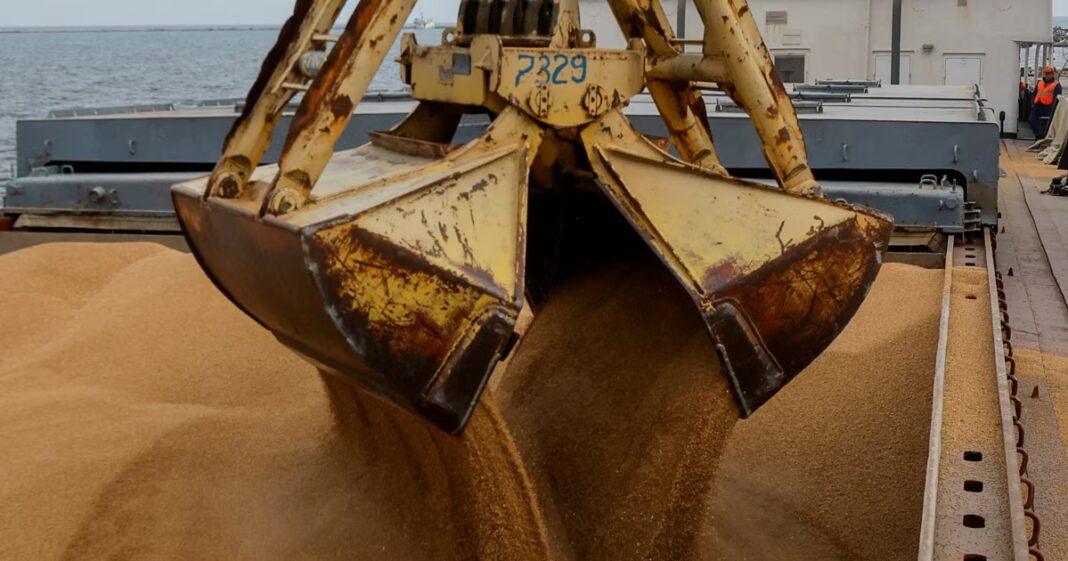

Latvia is preparing to impose substantial duties on grain imports from Russia and Belarus, and measures to support this decision are being discussed at the highest level. The country’s Prime Minister, Andris Kulbergs, has announced plans to impose 300 per cent duties on the import and processing of grain, emphasising the need for coordinated action with the other Baltic states.
The reason for this drastic measure is Latvia’s desire to prevent grain that may have been stolen from the occupied territories of Ukraine from being transported through its ports. In this regard, Latvia plans to work closely with Ukrainian experts and laboratories, who will help determine the origin of the grain.
Kulbergs has already discussed these plans with the Estonian Prime Minister and is preparing for talks with Lithuania. For his part, the Lithuanian Minister for Agriculture, Kęstutis Mažeika, has already initiated checks on the origin of grain imported from Russia and Belarus. Mažeika also sees a need for all countries in the region to join forces to prevent the transit of stolen grain through the Baltic states.
This issue is due to be discussed at a meeting of the Council of Ministers of the European Union at the end of September, where Lithuania will present its methodology and propose it to its counterparts from Latvia and Estonia.
The situation is complicated by the fact that Russian grain exports are not subject to sanctions, and given the instability in the Black Sea, the volume of such exports via the Baltic ports may increase. The Russian publication ‘Vzglyad’ reports that up to 10 million tonnes of grain could be exported via the Baltic ports this year. Against this backdrop, Latvia and its neighbours are attempting to prevent any potential violations relating to the transport of Ukrainian grain.