

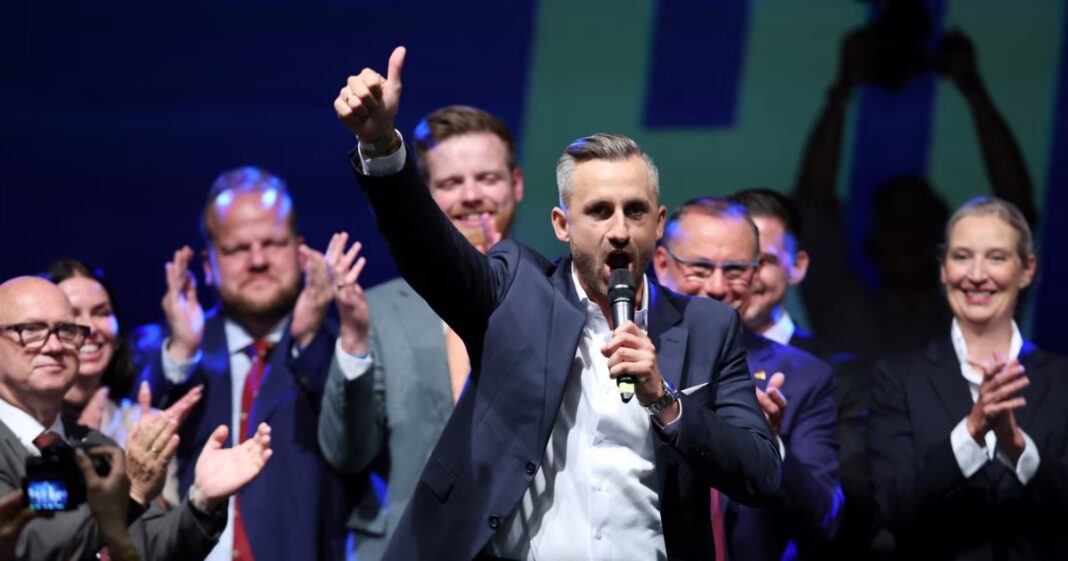

A significant development has taken place on the German political scene: the far-right party ‘Alternative for Germany’ (AfD) has comfortably secured a lead in the Saxony-Anhalt state parliament elections. According to preliminary figures, the party secured a staggering 43.8 per cent of the vote, almost double its result in the previous election in 2021.
This success came as a shock to the region’s long-standing leaders. The Christian Democratic Union (CDU), led by Chancellor Friedrich Merz, came second with a result of just 17.2 per cent. The Social Democrats, the Greens and the left-wing parties also trailed significantly behind, each failing to reach even 10 per cent. Interestingly, even Sari Wagenknecht’s Alliance (BSW) managed to clear the five per cent threshold, securing 5.3 per cent of the vote.
As a result, ‘Alternative for Germany’ will secure 39 of the 83 seats in the state parliament. However, to secure an absolute majority and the ability to govern alone, they need at least 42 seats. This forces the AfD to seek coalition partners. Nevertheless, as early as the beginning of the 2020s, the other parties agreed not to cooperate with the far right.
Voter turnout reached a record 76.5 per cent, underscoring the importance and significance of these elections for the region’s residents.
The election result sparked strong reactions on the international stage. Former Hungarian Prime Minister Viktor Orbán described the event as the beginning of major changes for Germany and Europe. Matteo Salvini, leader of Italy’s League party, described the AfD’s victory as a triumph, whilst Polish Prime Minister Donald Tusk sharply criticised the result, stating that only “idiots or traitors” could rejoice at it. Even Elon Musk weighed in, congratulating the AfD on its victory.
The political platform of ‘Alternative for Germany’ includes ending support for Ukraine and forging closer ties with Russia, as well as tightening migration policy and introducing more conservative standards in education. The party has repeatedly faced accusations of having ties to the Kremlin, which is causing concern amongst many political observers.