

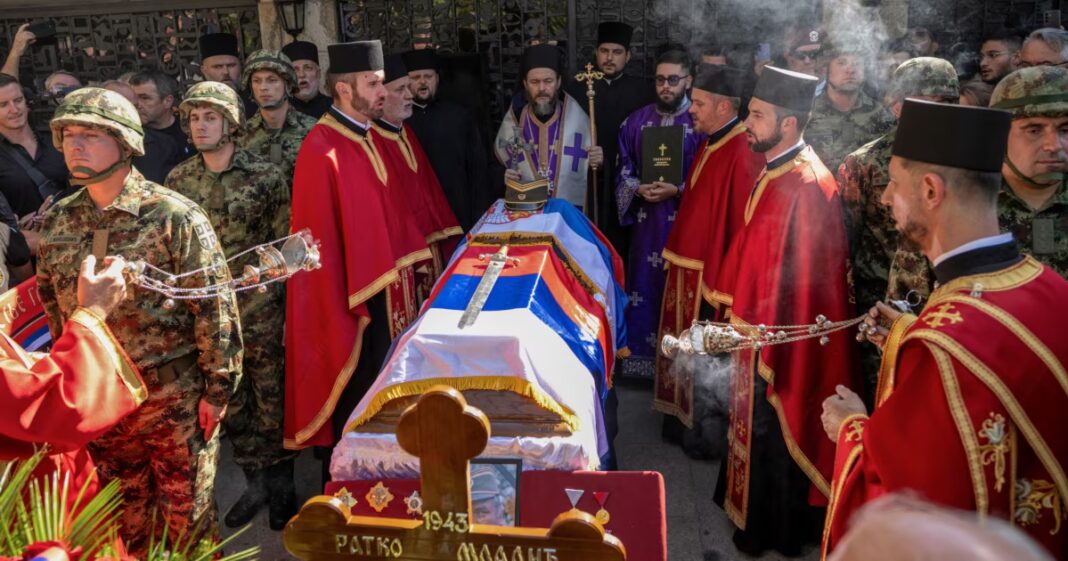

Ratko Mladić, a figure who left a profound mark on the history of the Balkans, was buried in Belgrade with full military honours on 7 September. This event sparked a wave of mixed reactions and heated debate on the international stage.
Mladić, who commanded the Bosnian Serb army during the brutal conflicts of the 1990s, died on 27 August at the age of 84. He spent the final years of his life in detention in The Hague, where he had been convicted by the International Tribunal for genocide and crimes against humanity, including the tragedy in Srebrenica, where thousands of Bosnian Muslims were killed in 1995.
His funeral took place at St Luke’s Church, and the ceremony was marked by a host of official honours. The event was attended by thousands of people, including war veterans and high-ranking representatives from Serbia, Montenegro and the Republika Srpska. Many of those present showed their support for Mladić by chanting his name and applauding as his coffin was taken to the cemetery.
Despite protests from the US and the European Union, which had called for the convicted war criminal not to be honoured, the Serbian Orthodox Church, represented by its Primate Porfirije, stated that Mladić’s name would remain in the memories and prayers of many Serbs. This ceremony once again highlighted the depth and complexity of the historical and political conflicts in the Balkans, which continue to divide society to this day.