

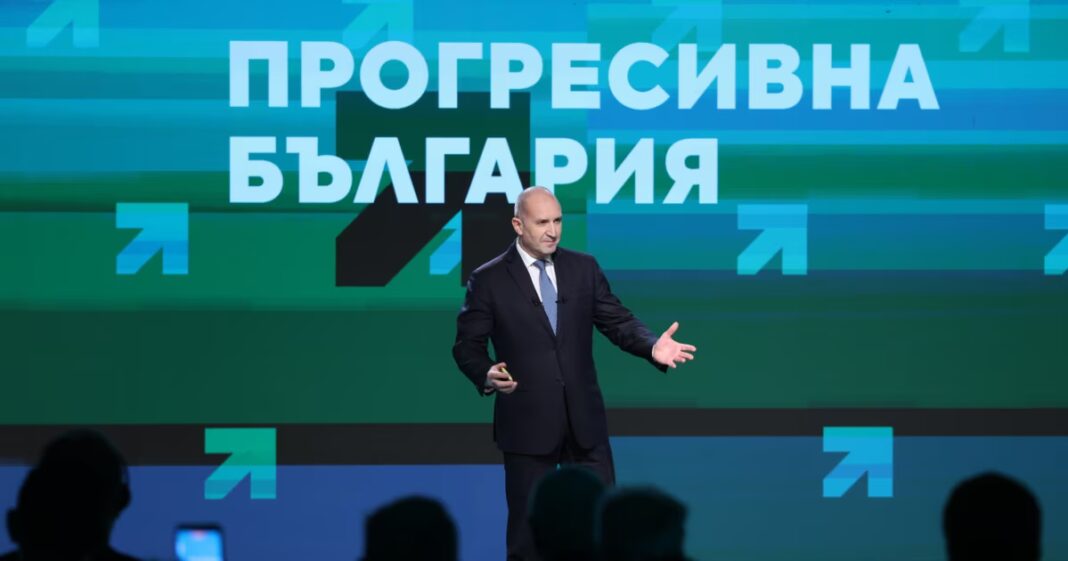

Former President Rumen Radev’s political force is leading in Bulgaria’s parliamentary elections on 19 April, according to exit polls.
According to a poll conducted by the Alpha Research sociological service, the Progressive Bulgaria coalition is gaining about 37.5 per cent of the vote. The GERB party, led by former Prime Minister Boyko Borisov, is in second place with 16.2 per cent.
Despite the advantage, Radev will probably have to seek allies to form a government, as his political force will not be able to secure a parliamentary majority on its own.
Radev, who is considered a Eurosceptic, previously served as president and left office in January to run in the election. He opposes military support for Ukraine in its war with Russia.
The election took place amid political instability, with the previous government resigning after mass protests in December. The vote was the eighth in five years in a country where voters are growing weary of frequent snap elections and a prolonged political crisis.
In Bulgaria, the government of Rosen Zhelyazkov has resigned. The prime minister announced this at an extraordinary briefing on 11 December. The resignation came amid thousands of protests over the past fortnight across the country.
“Their demands-the resignation of the government. Both young and old, people of different ethnic groups, different religions have raised their voices for resignation, so this civic energy should be supported, it should be encouraged,” Zhelyazkov said.
The protests were sparked by the 2026 budget proposed in November and then withdrawn. It included tax and social security increases for private sector workers, as well as higher wages and public spending. The government rejected it, but protests have already turned into demands for resignation and a radical change in Bulgaria’s governance model.
The resignation came a day after Boiko Borissov, leader of the ruling GERB party, said the government would not resign before the country formally joins the eurozone on 1 January.
Rosen Zhelyazkov’s government had been in power since the beginning of 2025.