

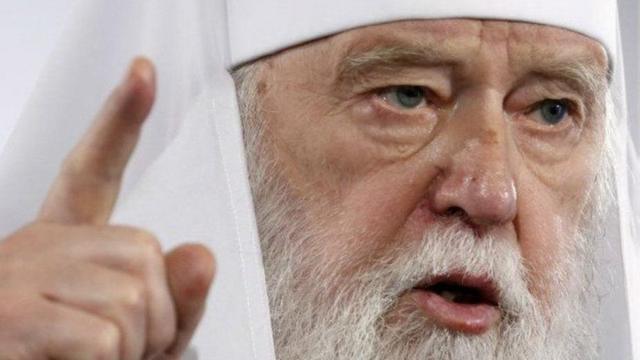

The former head of the Ukrainian Orthodox Church of the Kyiv Patriarchate, Filaret, has died in Kiev at the age of 98. This was reported to BBC News Ukraine by the Orthodox Church of Ukraine. Subsequently, deep sadness and regret about the death expressed the Primate of the Orthodox Church of Ukraine Metropolitan Epiphany.
The long-time leader of the UOC-KP, Filaret, held the highest positions in the Russian hierarchy during the Soviet era, and during the years of independence he became a symbol of Ukrainian Orthodoxy’s struggle for independence from Moscow. For this he was anathematised in 1997.
For decades Filaret worked on the recognition of the Ukrainian church and achieved the goal in 2019 – Constantinople granted autocephaly.
However, due to various circumstances and at the request of the Ecumenical Patriarchate, he refused to head the autocephalous Orthodox Church of Ukraine.
This step laid the foundation for the future conflict between Filaret and the autocephalous Orthodox Church of Ukraine, which lasted for the last years of the ruler’s life.
Before his death, though, Filaret reconsidered his attitude towards the WCU and Metropolitan Epiphanius and made a visit of reconciliation.
At the time of his death, for the VCU, Filaret was an honoured patriarch and hierarch at rest.
Born in the Donbass
Filaret – in the world Mikhail Denisenko – was born at the beginning of collectivisation – on 23 January 1929 in the village of Blagodatnoye, Amvrosievsky district, Donetsk region. Since 2014 it has been under occupation first by pro-Russian militants and then by Russia.
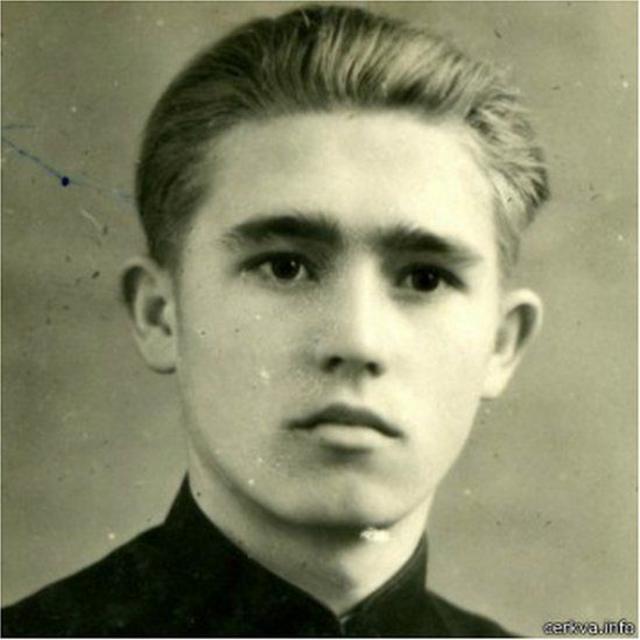
Author of the photo, CERKVA. INFO.
After the end of World War II, he finished school and entered the Odessa Theological Seminary in 1946.
After its graduation he entered the Moscow Theological Academy, where in 1950 he took monastic tonsure with the name Filaret.
Soon Patriarch Alexy I of Moscow ordained Filaret to the rank of hierodeacon and hieromonk.
In 1952 Filaret completed his studies at the Moscow Theological Seminary with the degree of Candidate of Theology and remained there to teach.
The next five years he lived in Russia, and after receiving the dignity of hegumen in 1957 Filaret returned to Ukraine, where he soon became rector of the Kiev Theological Seminary.
Subsequently, he became head of the Ukrainian church and rector of St Vladimir’s Cathedral in Kiev.
Author photo, cerkva-krs.io.ua
Church career
These were the times of restoration of the structures of the Russian Orthodox Church after almost complete destruction by the Bolsheviks, and then restored on the instructions of Stalin. Guys from Ukraine then made up the lion’s share of the entire clergy of the Russian Orthodox Church.
After a few years in Ukraine, Filaret began a meteoric career in Russian Orthodoxy. He worked a lot abroad.
In 1961 he was appointed rector of the ROC sub-church at the Patriarchate of Alexandria (Egypt), later he was transferred to the Leningrad diocese, where he became bishop in 1962.
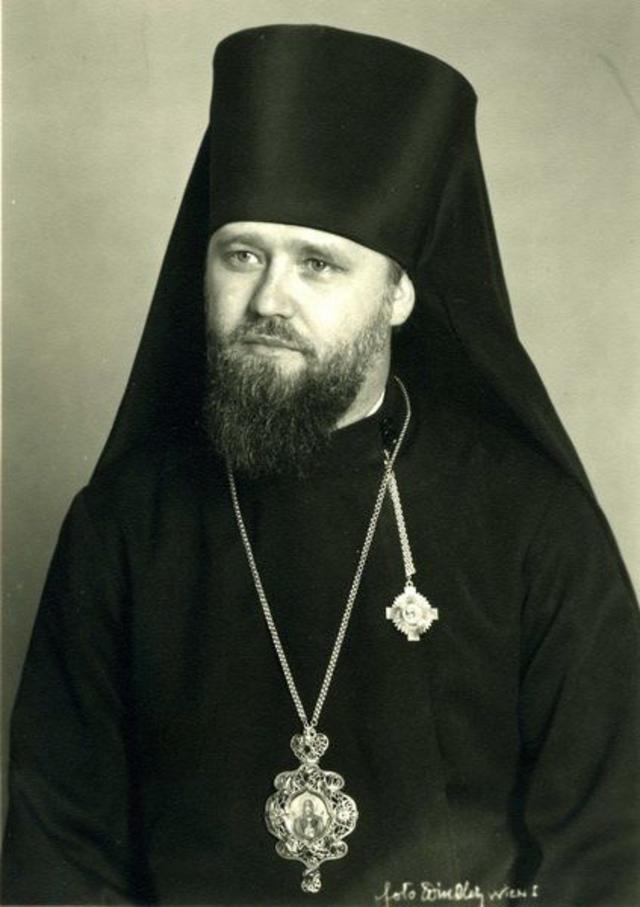
After that, Filaret was Bishop of Vienna and Austria for two years.
In 1964 he became rector of the Moscow Theological Seminary, two years later he was elevated to the rank of archbishop and appointed head of the Ukrainian church and a member of the Holy Synod of the Russian Orthodox Church.
Author photo, Ukrinform
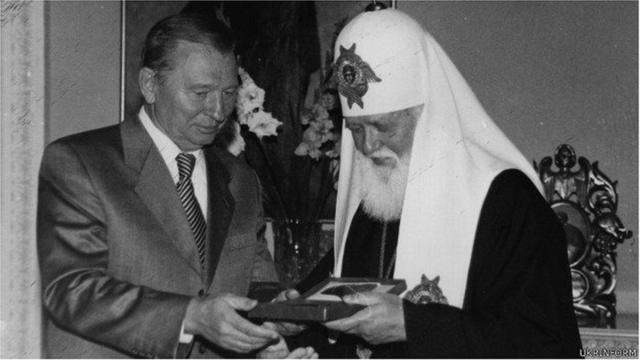
In 1968 Filaret overcame another career step – Patriarch Alexy I elevated him to the rank of metropolitan – the highest rank of the hierarchy, except for patriarch.
In 70-80 years Filaret strengthened his position in the ROC, headed a number of delegations to various international events and received several honorary titles in Soviet and foreign spiritual institutions.
The celebration of the millennium of the baptism of Kievan Rus in 1988, which was extremely pompously celebrated at the state level in the USSR, was also led by Filaret on the part of the church.
The Struggle for the Ukrainian Church
By 1990, Filaret’s ecclesiastical career in the Russian Church was at its peak. After the death of Patriarch Pimen, it was he who was elected by the Holy Synod of the Russian Orthodox Church as the locum tenens of the patriarchal throne for the Council to elect a new leader.
Filaret was considered as the main contender for the highest ecclesiastical post, but the hierarchs of the ROC elected Patriarch Alexy II. As historians said later, the choice of the leader could not have taken place without the influence of the KGB.
Filaret himself claimed in the future that the main church decisions in the ROC were under the control of the KGB, and all bishops worked with the special services.
“All bishops of the Russian church in Soviet times had contacts in the KGB, there were no other bishops and could not be,” the patriarch later told me.
Filaret himself, after his defeat at the council, became the Primate of the Ukrainian Orthodox Church with the title Metropolitan of Kiev and all Ukraine. Before that, the Russian Orthodox Church granted partial autonomy to the Ukrainian church.
Author photo, UNIAN
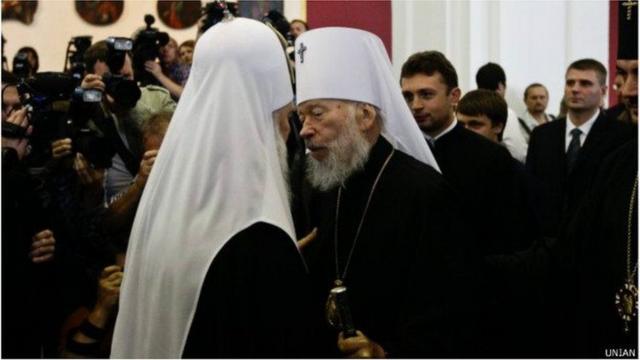
On 26 October 1990, in Kiev’s Sofia Cathedral, Patriarch Alexy II announced the decision of the ROC Council of Bishops and presented Metropolitan Filaret with a patriarchal charter to lead the UOC.
With the proclamation of Ukrainian independence, Filaret demanded greater autonomy from the ROC.
In November 1991, a local Council of the UOC was held, which decided on canonical independence. The hierarchs appealed to Alexis II with a request to approve this decision and grant autocephaly, but in April 1992 they received a refusal. It is noteworthy that the appeal for autocephaly was signed by the current head of the UOC-MP, Metropolitan Onufriy.
Such steps of Filaret angered the leadership of the Russian Orthodox Church, so they initiated a new Council to remove the metropolitan from the throne.
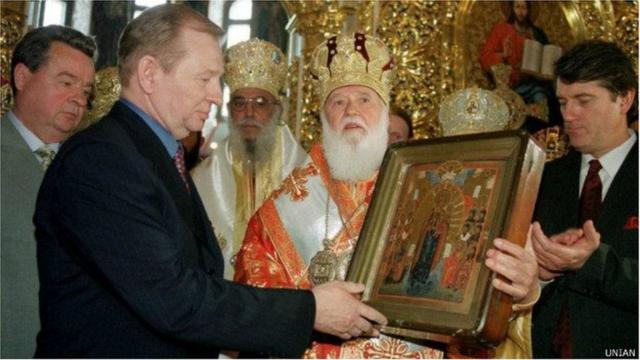
They refused to hold it in Kiev. Filaret’s position in Kiev was strong – he was supported by both the then president Leonid Kravchuk and the parliament.
According to the statute, only the Primate could convene the council, but this was done by the Bishop of Kharkiv. The meeting was held on 27-28 May 1992 in Kharkiv.
Author photo, UNIAN
At this meeting Filaret was removed from the throne because of accusations of schismatics, and in his place was elected more loyal to Moscow Vladimir (Sabodan), who led the UOC-MP for the next 22 years.
The decision of that Council was never recognised by official Kiev, which adopted a special statement of the Presidium of the Verkhovna Rada on 15 June 1992.
Moscow then won the first major battle for Ukrainian Orthodoxy and stalled the autocephaly issues for many years, while the church itself became one of the levers of Russia’s political influence on Ukraine at the time of independence.
Filaret was then unable to retain control over the Kiev-Pechersk Lavra, of which he was the first abbot after the restoration, but retained the main temple of the UOC-MP at that time – St Volodymyr Cathedral, as well as the residence on Pushkinskaya Street (now – Yevgeniya Chykalenko).
At the head of the UOC-KP
It was with these events that the open schism in Ukrainian Orthodoxy began. Already on 25 June 1992, the All-Ukrainian Church Council was held, which united part of the UOC-KP and the Ukrainian Autocephalous Orthodox Church into a single Ukrainian Orthodox Church of the Kyiv Patriarchate.
This Council called the ROC’s decision against Filaret illegal and elected Metropolitan Mstislav (Skrypnyk), who had returned from the diaspora, as Patriarch of Kyiv and All Russia-Ukraine. Filaret was then elected his deputy.
After Mstislav’s death in 1993, Volodymyr (Romaniuk), who also returned to Ukraine from the diaspora, was elected head of the church. And after Volodymyr’s death and his funeral at the entrance to St Sophia of Kyiv in 1995, the Council of the UOC-KP elected Filaret as the head of the church.
For the next two decades there was an irreconcilable struggle between the UOC-MP and the UOC-KP for the flock, churches and commitment to power in Kiev.
1997 Council of the Russian Orthodox Church even issued a special “Act of excommunication of monk Filaret”, imposing an anathema on him. It was abolished by the Ecumenical Patriarch in 2018.
Until 2019, the UOC-KP Filaret was an unrecognised church by anyone.
Author photo, Ukrinform
Supporters of the Moscow patriarchate have since called Filaret no other than a non-canonical schismatic and citizen of Denisenko, while believers of the Kyiv patriarchate – a fighter for ecclesiastical orthodoxy.
The change of president from Leonid Kravchuk to Leonid Kuchma somewhat worsened the situation of the UOC-KP, and the UOC-MP actually became a state church with a facilitating regime. Although Filaret’s church was also developing, and the state helped to rebuild St. Michael’s Cathedral in the centre of the capital and hand it over to the UOC-KP.
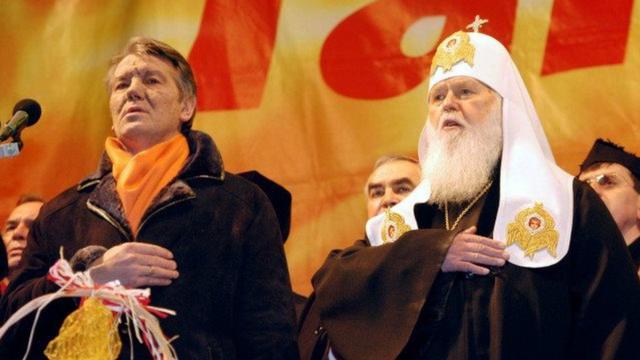
Patriarch Filaret during the Orange Revolution of 2004 repeatedly visited Maidan Nezalezhnosti and held prayer services for peace in Ukraine. In the future, the UOC-KP will also take an active position during protests in the country.
The first attempt at the tomos
During the presidency of Viktor Yushchenko, the UOC-KP and Patriarch Filaret had power and used it to negotiate the recognition of canonicity by the Patriarch of Constantinople.
An important year was 2008, when during the visit of the Ecumenical Patriarch to Kiev, the recognition of the UOC-KP was close. But no decisions were made then.
As participants of the events later admitted – Constantinople was not ready to give autocephaly, but only to restore the Kiev Metropolitanate within the Ecumenical Patriarchate with the promise of autocephaly. Filaret himself did not seem to agree to this.
Since the late 2000s, Filaret had contacts with UOC-MP Primate Volodymyr regarding a possible unification of the churches, but it never happened during Volodymyr’s lifetime.
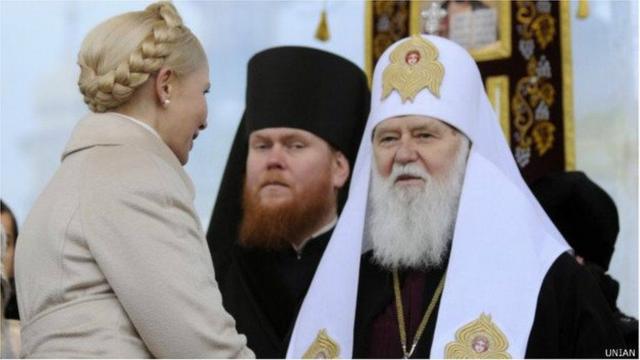
In the 2010 presidential election in Ukraine, Filaret supported Yulia Tymoshenko, and for the next four years of Viktor Yanukovych’s presidency, Filaret and the UOC MP were in a kind of disgrace.
Author photo, UNIAN
“In Ukraine, there is an attempt to implement a large-scale plan to break up and destroy the Kyiv Patriarchate. This plan was created in Moscow and proposed by Moscow Patriarch Kirill and his subordinates for implementation in Ukraine,” he stated.
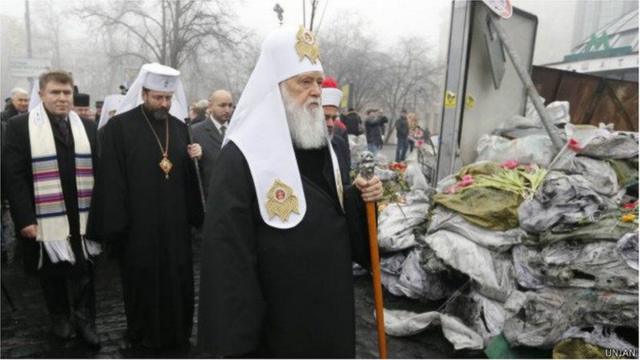
During the events of Euromaidan (2013 – 2014) Filaret supported the protests, and the St Michael’s Monastery of the UOC-KP played a key role in the most dramatic moments of the Maidan confrontations.
“You can’t disperse Maidan by force. If you disperse it once, the next Sunday they will gather again, even more,” Filaret said during a roundtable discussion on resolving the situation in Ukraine on 13 December 2013.
On the way to the local church
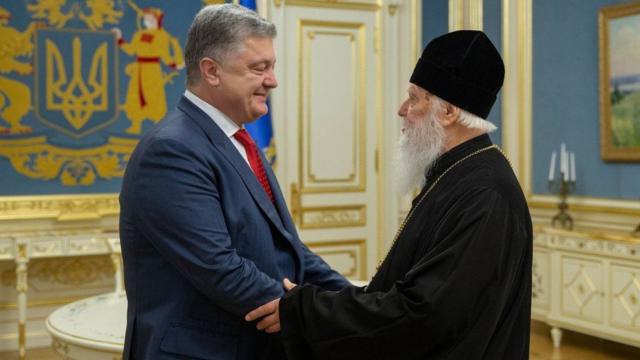
Following the election of President Petro Poroshenko, contacts with Constantinople about granting autocephaly have intensified again.
A special appeal to Constantinople was approved by the Verkhovna Rada, and Poroshenko also appealed on this issue more than once.
However, until 2018 to raise the issue failed.
Author photo, UNIAN
At the end of 2017 there was a scandal over Filaret’s latest attempt to establish relations between the UOC-KP and the Russian Orthodox Church.
In November, the Council of Bishops of the Russian Orthodox Church was held in Moscow. At the request of the Russian side, Filaret sent a special letter with a proposal to establish relations.
Filaret proposed to start negotiating the resumption of “prayerful unity” and reconciliation. However, the Russian media assessed this letter as a repentance and a petition for pardon.
A political scandal arose, after which the Ukrainian church said that the Russian side had rejected the possibility of reconciliation.
At the time Filaret came to power in the UOC-KP, the church had just over a thousand parishes, and in 20 years – as of 2018 – they have become almost five thousand.
Tomos, but without Filaret
The year 2018 was a turning point in the life of Filaret and the entire Ukrainian Orthodoxy.
In April 2018, President Poroshenko unexpectedly announced that Ukraine was closer to creating a local church.
Then the President, the Verkhovna Rada and representatives of the then non-canonical UOC-KP, the Ukrainian Autocephalous Church, as well as some of the hierarchs of the UOC-MP appealed to Patriarch Bartholomew of Constantinople to grant autocephaly.
Author photo, UNIAN
Already in September in Constantinople responded positively. At the same time in Kiev appointed two exarchs from Bartholomew, who were to prepare the autocephaly.
On 11 October, the Synod of the Ecumenical Patriarchate made several historic decisions along the way.
In particular, it restored Filaret’s canonical status as a bishop, lifting the anathema against him. It also recognised the canonical status of all hierarchs and churchmen of the UAOC and UOC-KP, which were to create a new Orthodox Church of Ukraine.
Constantinople returned the subordination of the Kiev Metropolitanate, which it had temporarily transferred to the control of the ROC in 1686. This decision opened the way for the unification of the Orthodox of Ukraine and the obtaining of a tomos.
Later it became known that one of the important requirements of Constantinople in the process of granting autocephaly was Filaret’s refusal to head the new church. He even gave such a promise in a special letter.
The logic of the Ecumenical Patriarchate could be simple – the figure of the former head of the UOC-KP could interfere with the unification process in Ukraine and the recognition of the Ukrainian Orthodox Church by other local churches.
However, publicly Filaret in numerous interviews until the last still did not give a clear answer whether he would run for office, indicating that his decision will be announced at the unification council.
29 November 2018 synod of the Ecumenical Patriarchate approved the draft charter of the new church and approved the text of the tomos on autocephaly. Even then, the date of the council was already agreed – 15 December, as well as the date of delivery of the tomos – 6 January.
Author photo, VIDOMOSTI. KIEV. UA
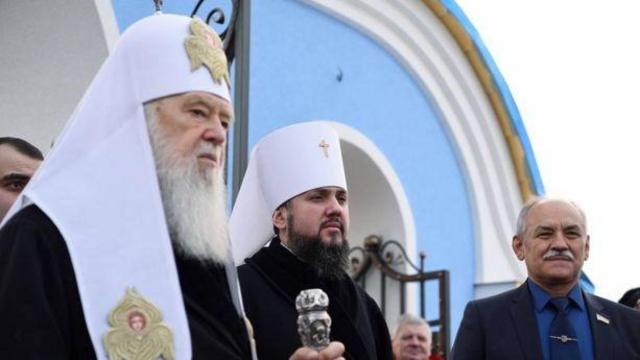
Even then, those knowledgeable in the negotiation process predicted also the name of the new Primate – Epiphanius – Philaret’s deputy and his right-hand man in the UOC of the Kyiv Patriarchate. At the time, it seemed that Epiphanius could be an obedient executor of his mentor’s will.
The day before the unification council in Kiev, a meeting of bishops of the former UOC-KP decided that they should discipline themselves to support Epiphanius in the election, and this was the condition for Philaret’s refusal to run.
During the council, Metropolitan Michael of Lutsk and Volynsk disagreed with Filaret’s will, but after lengthy negotiations he withdrew his candidacy, and Filaret’s protégé won.
At the unification council, the UOC-KP decided to dissolve itself and join the new local church.
But the creation of the UOC did not overcome the split in Ukrainian Orthodoxy. Most bishops of the UOC-MP ignored the council, so these churches remained competitors, if not enemies. This division continues to this day.
The WTO is recognised by only a part of the local Orthodox churches.
An honourable patriarch
After the unification council, Filaret continued to call himself patriarch, although formally the UOC-KP no longer existed. Constantinople recognised Filaret as just one of the bishops of the Orthodox Church of Ukraine and the former Metropolitan of Kiev.
It is noteworthy that neither Filaret nor the former UAOC head Makarii were admitted to the ceremony of the presentation of the tomos in Istanbul on 6 January.
Constantinople realised Filaret’s possible too great influence on both the new church and the elected Metropolitan of Kyiv and All Ukraine, Epiphanius.
“I ask Filaret, give Epiphanius the opportunity to be the primate of the church,” former Exarch of Constantinople in Ukraine Archbishop Daniel told the BBC at the time.
Author photo, UNIAN
Constantinople’s position was simple – Filaret can be the “spiritual grandfather” of the church, and for “internal use” and honourable patriarch.
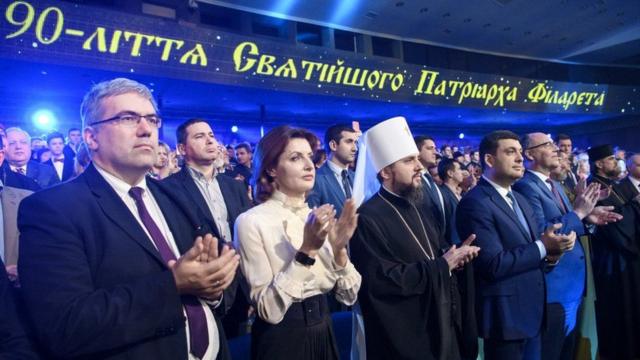
Although in Ukraine Filaret was called no other than patriarch and spiritual father of the church, and the celebration of his 90th birthday on 23 January 2019 turned into a grand event with the participation of the state leadership.
President Poroshenko after receiving the tomos travelled with the document a large number of regions of the country in the run-up to the elections, and Filaret was sure to accompany him.
On Filaret’s anniversary, the President gave him the title of Hero of Ukraine.
At the enthronement of Metropolitan Epiphanius on 3 February 2019 in Kiev Filaret was not present. Officially – for health reasons, although various versions were put forward in the press, including the position of the delegation of Constantinople.
The charter of the autocephalous church secured for Vladyka Filaret permanent membership in the Synod of the PCU and retained control over the richest Kiev diocese with all its major revenues and St Vladimir’s Cathedral.
Filaret’s schism
However, such an honourable status did not satisfy Filaret. Already in the spring of 2019, he went on the offensive and tried to seize power.
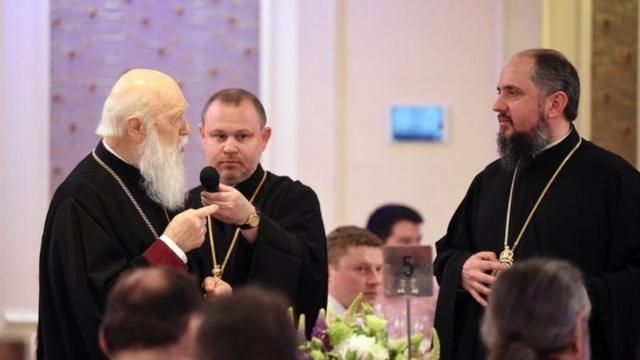
First, Filaret demanded from Metropolitan Epiphanius to actually hand over control to him, not to fulfil the terms of the tomos and then even to proclaim the WTO patriarchate.
Author photo, Pomisna.info
Epiphanius did not support such plans and said in an interview with the BBC that Filaret’s ultimatums were a humiliation for him as Primate.
When Epiphanius refused to comply with the honourable patriarch’s instructions, Filaret tried to enlist the support of the bishops, convene a local council and depose the young primate.
In numerous statements Filaret insisted that he had been deceived, because before receiving the tomos he was promised to retain influence over the church. Petro Poroshenko had promised him during the process of granting the tomos that Filaret would be the actual head of the church, while Epiphanius would represent the PCU in relations with the outside world.
BBC sources speculated at the time that such promises may have been made, but there is no formal evidence of this.
On 14 May 2019, Filaret tried to gather the bishops for the traditional celebration of the day of St Macarius, whose relics are kept in St Vladimir’s Cathedral. The situation was serious, because Filaret at that time still controlled the main financial flows of the church.
There were reservations that Metropolitan Michael of Volyn and Lutsk, who had been Epiphany’s main rival during the election of the Primate, might support Filaret.
However, the church perceived this as a de facto rebellion against Epiphanius, so only two low-influence bishops from Russia came to Philaret.
Constantinople also made it clear at the time that such a change of power in the WTO would halt the process of other local churches recognising its autocephaly.
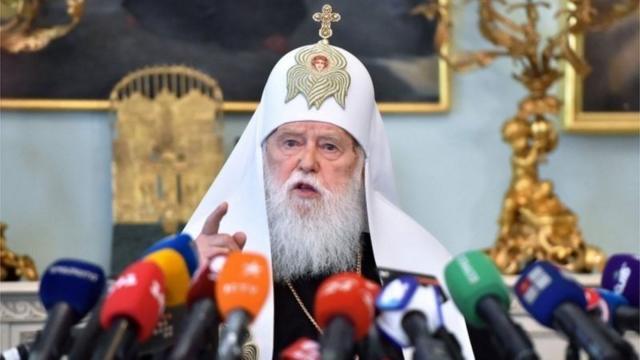
Author photo, Getty Images
After this setback, Filaret changed tactics – he decided to revive the UOC-KP. But at one point it seemed that he could reconcile with Epiphanius.
On 25 May 2019, he came to the celebration of the name day of the VCU Primate Epiphanius, which was attended by a representative of Constantinople. His behaviour at the service indicated that he recognised Epiphanius as the leader of the church, and at the festive part he even wished him “God’s help”.
But in just a few weeks he put his intention into action – on 20 June he gathered his few admirers in St Vladimir’s Cathedral and announced the revival of the UOC-KP.
Over time, he even ordained more than ten bishops and said that there was a whole synod of this church, but it never made any impact.
Filaret sharply criticised the PCU and even began to repeat many theses of Russian propaganda about its unauthenticity and dependence on Patriarch Bartholomew. It got to the point that in July 2019 he even gave an interview to the Russian propaganda channel Russia 24.
Eventually the PCU stripped Filaret of his synod membership, and only St Vladimir’s Cathedral in Kiev and his residence in the centre of the capital remained under his control.
He succumbed to a coronavirus pandemic at the age of over 90 and continued to work and conduct services at St Vladimir’s Cathedral during the full-scale war.
Author photo, https://www.cerkva.info/
From time to time he met with foreign visitors, with whom he spoke about the war and opposition to the Russian invasion.
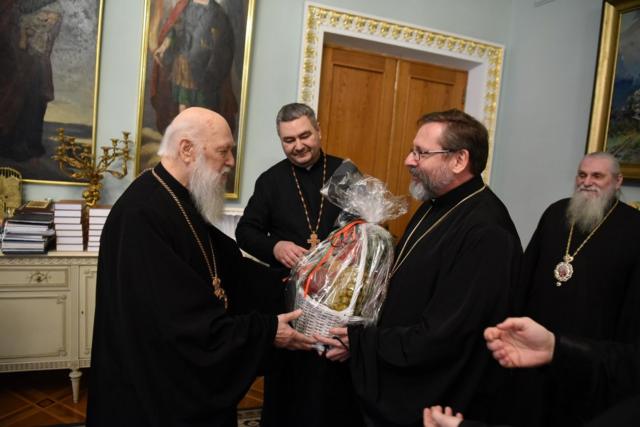
Before his 95th birthday in January 2024, Filaret even met with the leader of the Ukrainian Greek Catholic Church, Sviatoslav.
It is telling that when the PCU and Greek Catholics switched to the new church calendar in 2023, Filaret and his small revived UOC-KP remained on the old one on principle.
During the Russian invasion, he no longer made loud political statements and supported the people’s struggle against aggression.
“We are confident that Ukraine will defeat Russia, because God is with Ukraine, not Russia. God is with the truth, not with lies. God is with David, not with Goliath. Ukraine is David, and its victory will be a victory not only for Ukraine, but for the whole country.” The last of his extensive interviews.
Reconciliation before peace
Author photo, VCU
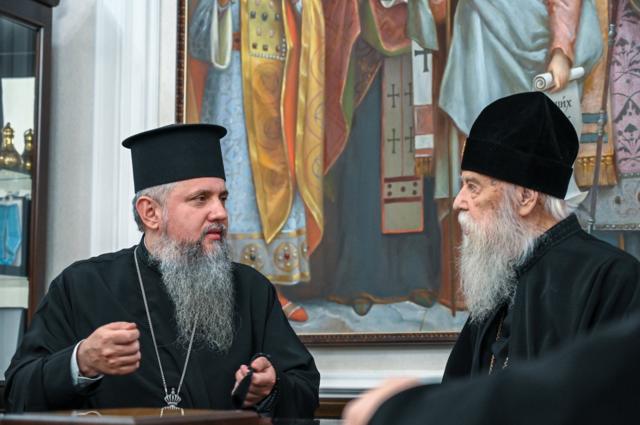
In the last half year of his life, Filaret still made a step towards reconciliation with Metropolitan Epiphanius and lastly embraced him again.
It all started on 19 October 2025, when during a service in Vladimir Cathedral Filaret’s entourage presented him allegedly his spiritual will and forced him to sign it. The document repeated all the previous theses about non-recognition of the PCU and a number of other negative theses that emphasised the split between Epiphanius and Filaret.
However, the published videos clearly showed that Filaret saw that document for the first time, and a close aide and relative urged him not to sign the text without reading it.
But being in difficult physical shape and somewhat confused, the vladyka signed it with difficulty. It was noticeable that in Filaret’s entourage there was a certain discrepancy in how he should behave, and there were definitely different groups of influence.
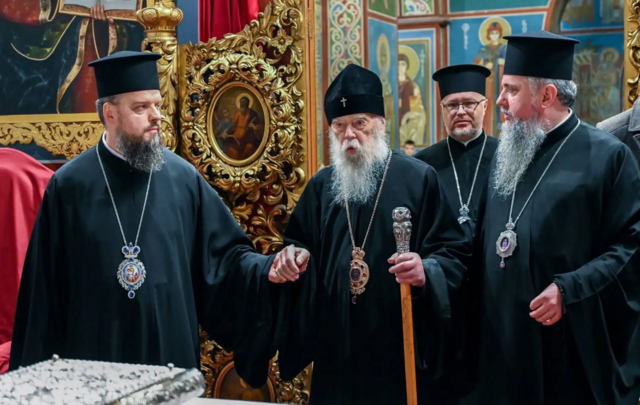
And already on 5 November 2025 the situation changed radically – Filaret paid a friendship visit to Metropolitan Epiphanius in St. Michael’s Cathedral.
The two vladyks had a long and friendly chat, there were shots of handshakes and kisses, and the press releases were full of warm words.
Author photo, VCU
The Orthodox Church of Ukraine told the BBC at the time that they regarded the visit as evidence of mutual understanding and reconciliation.
There until the last they considered him their honourable patriarch and hierarch in repose.
The Ukrainian Orthodox Church also noted that after the reconciliation Filaret did not make any more scandalous or anti-church statements, and therefore the conflict was considered to be over.