


When I set out to explore the world of people preparing for the global collapse of civilisation, I didn’t know what to expect – part of me imagined something theatrical, like zombie apocalypse kits or nuclear bunkers.
But as I delved deeper into the Welsh countryside, it became clear that I had fallen victim to stereotypes.
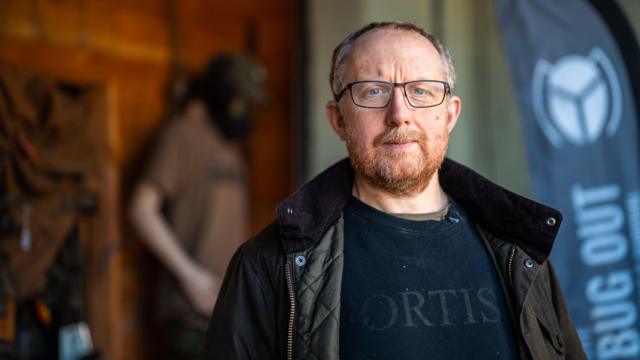
Lee Price, 51, from Bilt Wells, says he is not preparing for mobs of the living dead roaming the area, as many might think, but for more real threats.
“Everybody thinks a nag is some weirdo in a tinfoil hat, I don’t dispute that, there are some of those out there too. But a lot of stereotypes about preppers come from America, it’s very different in Britain,” he says.
Prepping is a global movement of people who prepare for the possibility that society may partially or completely collapse.
It often involves stockpiling food and learning the skills needed to survive on their own.
Lee, a father of three, served in the army and now runs a speciality shop for examples and runs survival courses.
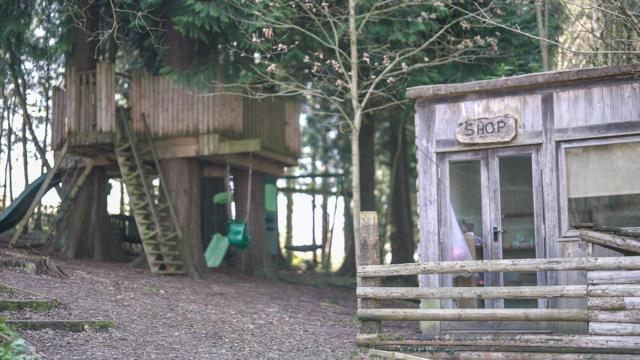
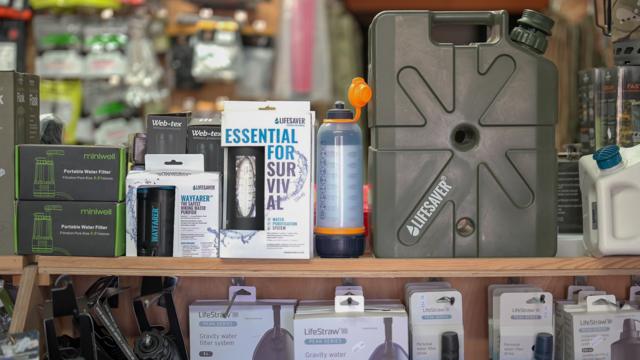
Surrounded by trees in rural Powys, his shop is a place with everything imaginable for surviving the end of civilisation – including crossbows and walls of knives.
“Some people prepare for the end of the world or a nuclear attack or something like that, and I always say, look, when it comes to a nuclear attack – it’s not impossible, but it’s very unlikely,” Lee says.
“It’s better to prepare for things that you’re more likely to face,” he adds.
“The world is getting a little more dangerous. Societal tensions are on edge, there are a lot of things going on in the world, country against country,” Lee says.
To the list of possible threats, he adds cyberattacks that “could take out the national power grid,” disrupting all aspects of modern life.
“If the electricity disappears – we’ll go back to the Stone Age. At least for a few days,” he says. – You can imagine that when people panic, they start doing desperate things.”
“The worst that can happen is that people will start looting houses, there will be fights, fires… So how do you prepare for that?” – Lee adds.
I assumed I could just grab a first aid kit and a tent and run away to the mountains in such a situation, but Lee says that’s the biggest mistake people make.
“They think they can survive like John Rimbaud in the wilderness, but after a few days of wind, rain and cold, they change their mind,” he says.
The key is to protect your shelter or move to a safer one, such as a friend’s house, he explains.
Lee says many people think the naggers have bunkers full of guns and ammunition, but in fact they are “ordinary people from different walks of life, with different political views” who have enough basic supplies to survive for weeks without supermarkets or government assistance.
To gauge how prepared I was, Price gave me a test. After a few questions about stocking up on food, water and first aid kit, he said I scored a 7 out of 10.
It turns out that my habit of making large purchases and having camping equipment – I grew up in rural Cornwall, after all – make me quite prepared.
But to boost that score, I need to buy a better first aid kit, a water filter and more food – a lot more food.
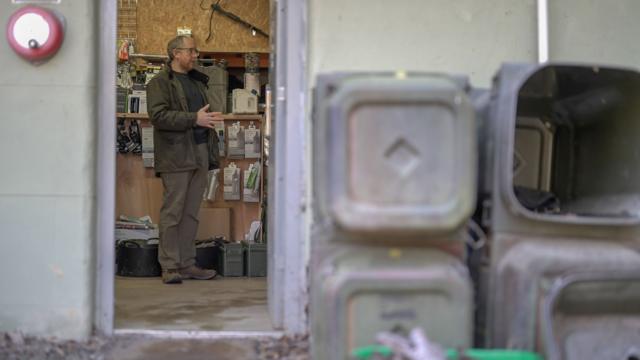
Regarding Lee himself, he says he has always been prepared for emergencies, but considers it just common sense.
He opened his shop, particularly after the Covid pandemic, to be prepared if something like that happened again, because he had to close his previous business.
I thought, well, I’ll do something else, even if it happens again, so I can continue to run the business and feed my family,” he adds.
Running the shop allows him to buy survival gear at wholesale prices. He says he won’t even venture to say how much he’s spent on training, but reckons it’s several thousand pounds.
He adds that he is not obsessed with briefing and only spends about an hour a week checking his gear is in good condition.
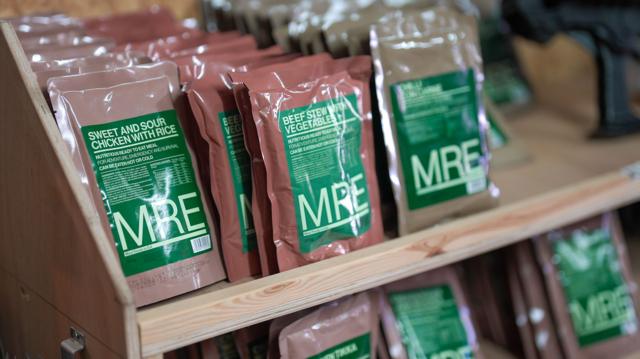
Lee’s supplies come in handy in all sorts of emergencies, he says, and living in a rural area he gets his water from a borehole, so any power cut means not only no light, but no drinking water – unless it’s purified.
Which he can do, of course, because he has a pump with a water filter that allows him to access groundwater through the borehole.
I don’t prepare for any one thing. I always think: if you’re well prepared and have things set up in your home, then no matter what happens, you’ll be able to handle it.
That means a different approach depending on where you are.
Shel. Probably would have a scarf of some kind – if there’s a fire, for example, you can use it to cover your mouth. Torch, notepad and pen, good rain gear.
Lee says one of the main things he advises is to find a community: We as humanity have thrived by living together, no one can survive on their own just by running off into the wilderness. In a critical situation, we are better off acting together.
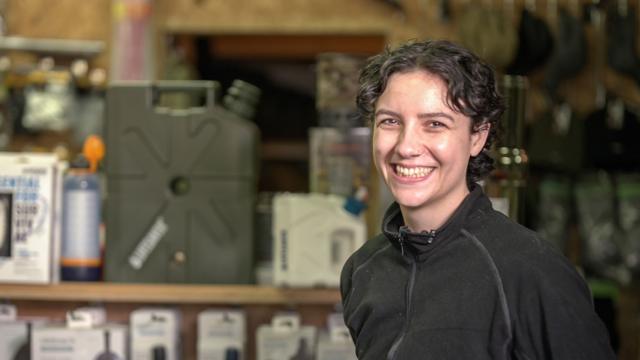
She runs a Facebook page about prepping and started gathering supplies after she lost power during the lockdown
She and her wife live in Povesa and couldn’t even make tea, so.
It was a moment of epiphany, I felt vulnerable and a bit daft,’ she says. I can do that,” Donna adds.
Donna, who used to be in the army and now works in education, stocks water, tinned food, tea, coffee, milk powder and a first aid kit.
Like Lee, Donna doesn’t prepare for anything in particular – she just recognises that something might happen.
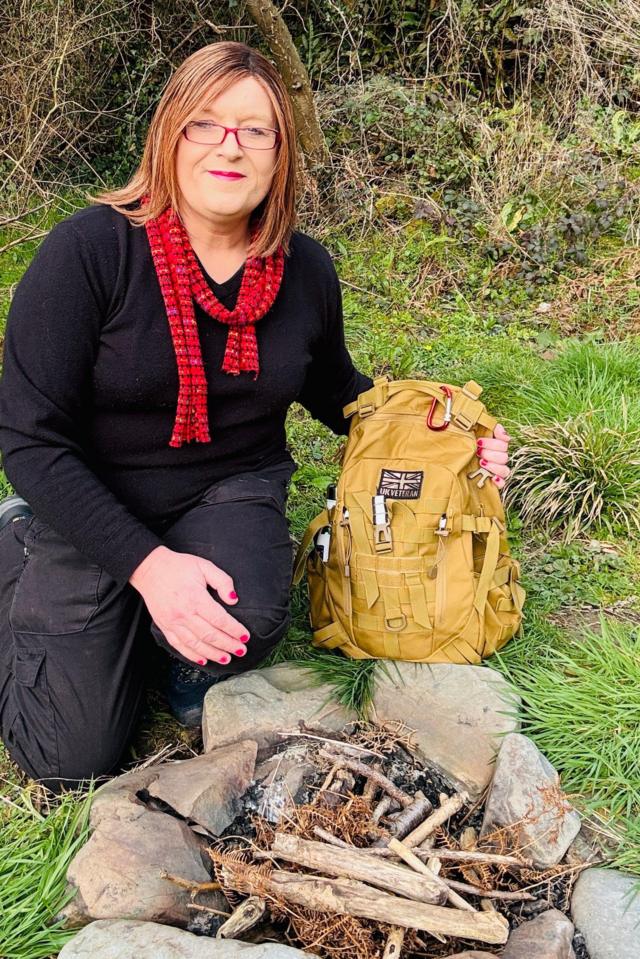
Author photo, Donna Lloyd
She thinks there’s a stereotype of what a prepper looks like, but it’s actually a whole spectrum of different people.
From those who have their own radiation shelters to those who just carry a torch in their bag.
“I’m somewhere in the middle,” she says.
The prep ing world can be a very closed world. At the same time, others are focused on building communities.
But according to Donna, this way of thinking doesn’t stop her from living a normal life, and she still goes on holidays.
There are ways to be prepared so that even far from the usual things you can use or improvise with what you have.
I always carry a small credit card-sized tool with different functions – like a screwdriver or bottle opener.
She says another way to feel confident is to learn how to start a fire.
“It’s not necessarily about the kindling itself, but the skill of identifying the things that help make it happen. It helps a person feel confidence, control, better able to handle situations and be more aware of their surroundings,” says Donna.
She adds that she doesn’t do it for fun – pre-ping helps her feel more confident and safe.
That’s a sentiment shared by Lee: “Having basic supplies will make you feel better than someone who has nothing.”