


According to the Experts Club think tank, citing data from the ‘A-95 Consulting Group’, Ukraine imported around 196,000 tonnes of petrol in July 2026, the highest figure since August 2025.
Meanwhile, data from an infographic published by the ‘A-95 Consulting Group’ shows that, compared with June, the volume of supplies increased by approximately 51 per cent. In June, the main supply routes accounted for around 130,000 tonnes of petrol, whereas in July the figure rose to around 196,000 tonnes.
This sharp increase in imports occurred despite the Ukrainian market’s transition, from 1 July, to the E10 standard, which requires the mandatory addition of bioethanol to petrol. The new requirement has temporarily narrowed the list of available foreign suppliers.
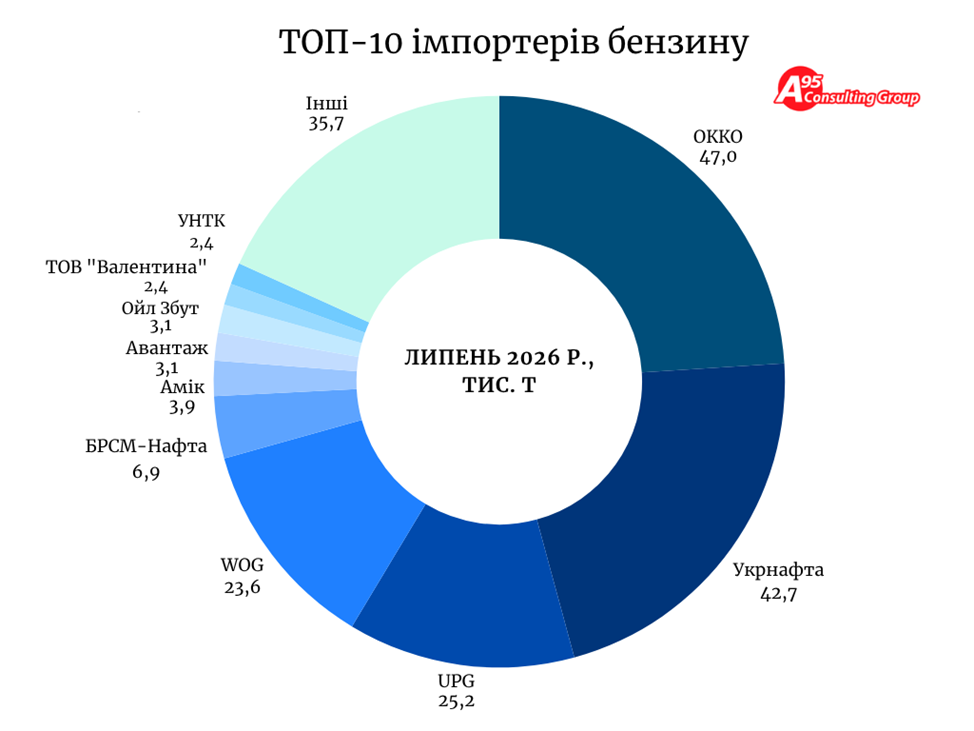
In particular, the Greek refinery Hellenic Petroleum does not produce petrol to the required standard; its products were previously used by Ukrainian traders during periods of heightened demand.
At the same time, the start of July coincided with a rise in the cost of petroleum products on the global market and increased domestic demand.
A-95 notes that the situation was most tense in the first half of the month, but an increase in supplies helped to stabilise the market in the second half of July. Importers also secured the necessary volumes for August in advance.
Poland and Lithuania became the main sources of additional supplies. Imports from Lithuania rose from 40.5 thousand tonnes in June to 56.1 thousand tonnes in July, whilst those from Poland increased from 30.7 thousand to 51.7 thousand tonnes.
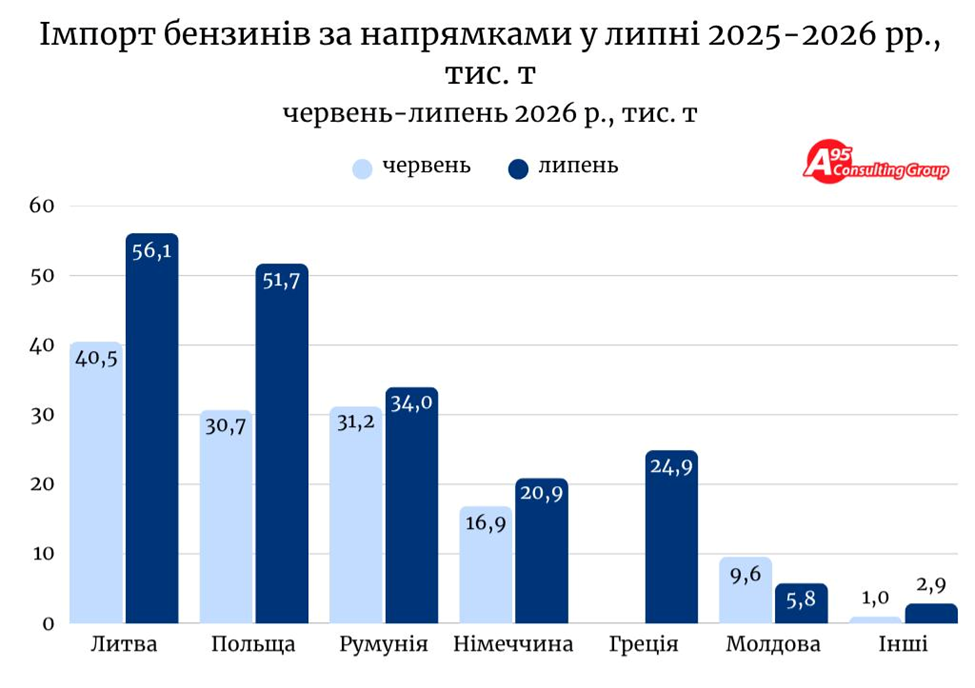
Supplies from Germany also rose significantly – from 16,900 to 20,900 tonnes. Around 34,000 tonnes were received from Romania, compared with 31,200 tonnes a month earlier.
Meanwhile, imports from Moldova fell from 9.6 thousand to 5.8 thousand tonnes.
July thus served as a test for the Ukrainian market’s ability to rapidly restructure external supplies following changes to petrol quality requirements. Despite an initial reduction in the available supply base, importers managed to increase supplies by approximately one and a half times within a single month.