

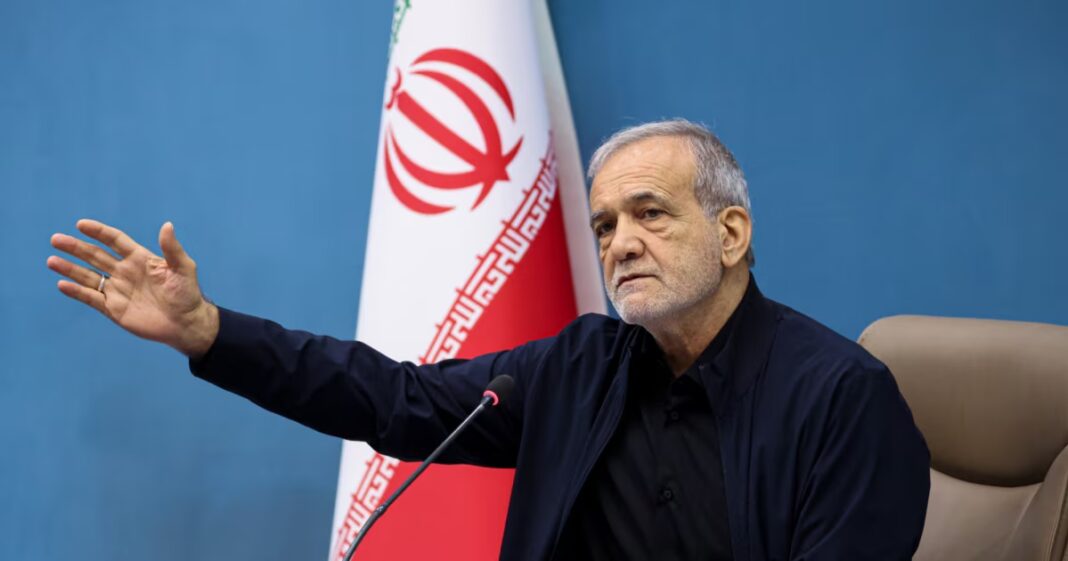

Iranian President Massoud Pezeshkian accused US negotiators of “double standards”, saying it was the main obstacle to a possible agreement to end the conflict, according to a statement released by the Iranian presidential administration on 12 April.
“During the Islamabad talks, the United States continued to observe double standards and its power-political ambitions were the biggest obstacles,” Pezeshkian said during a telephone conversation with Russian President Vladimir Putin.
He added that Tehran remains ready to achieve a lasting peace in the region, “An agreement is certainly possible, but the US must abide by internationally recognised rules and international law.”
Earlier in the day, US President Donald Trump accused Iran of breaking promises to open the Strait of Hormuz and said he was ordering his armed forces to begin a blockade of the key waterway and intercept every ship that paid a toll to Tehran.
Trump also suggested on Fox news that Iran would return to the negotiating table and “they will give us everything we want.”
“They haven’t left the negotiating table. I assume they’re going to come back and they’re going to give us everything we want, and I told my people I want everything. I don’t want 90 per cent, I don’t want 95 per cent. I told them I want everything. They don’t have the cards,” he said.
Iran’s Islamic Revolutionary Guard Corps (IRGC) responded by saying it had full control of the strait. It also warned that Tehran’s enemies would be caught in a “deadly vortex” at any miscalculation.
Talks between US and Iranian representatives in Islamabad on 11 April ended in failure as the two sides failed to reach agreement on several key issues. Vice President J.D. Vance said Iran’s nuclear ambitions were a major obstacle.
It’s unclear how the failure of the talks will affect the truce that Trump announced last week.
Iran has effectively halted all shipping traffic through the Strait of Hormuz, causing global energy prices to skyrocket. Tehran has said it will begin charging a toll on ships seeking to pass through the waterway.