

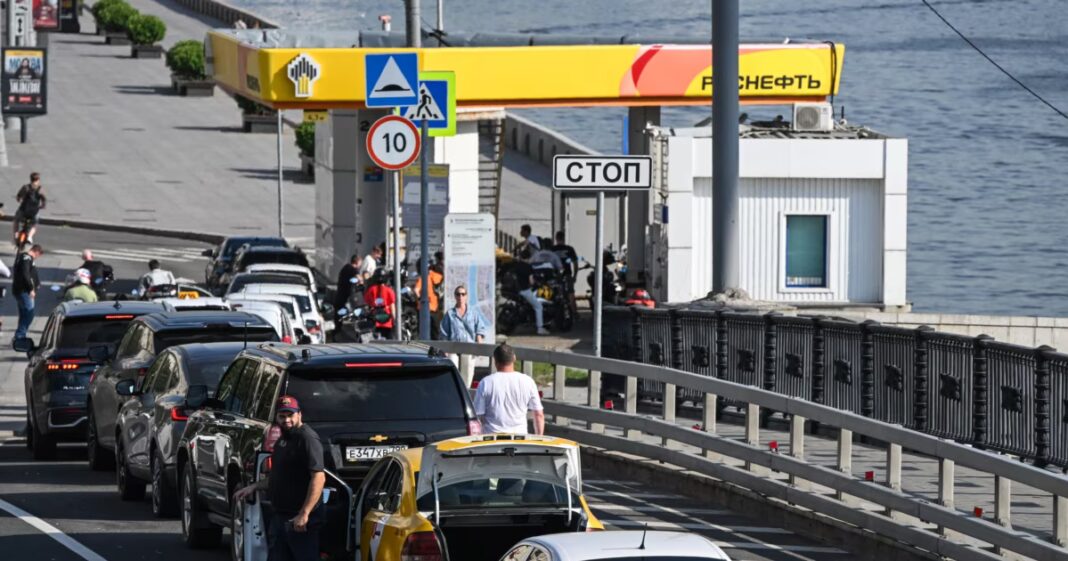

The ban on petrol exports will be extended until the end of 2026, according to Russian Deputy Prime Minister Alexander Novak, as quoted by the Russian state news agency TASS.
According to Novak, the ban on diesel exports will be lifted “as the market recovers”.
“The Russian authorities had previously banned diesel exports against the backdrop of a fuel crisis and a shortage of fuel. Restrictions on the export of petrol and aviation kerosene had also been introduced earlier. One of the reasons cited for the shortage was a reduction in production following attacks by Ukrainian drones on Russian oil refineries,” he emphasised.
It had previously emerged that an attack on the Moscow oil refinery in mid-June had caused a fuel shortage and long queues at petrol stations, but, according to regional fuel traders and those surveyed by Reuters, by mid-July the supply situation in the Russian capital – home to the political and cultural elite – and in the Moscow Region as a whole had stabilised, and petrol and diesel for vehicles had become available in sufficient quantities.
According to industry sources, total petrol production in Russia fell in early July to a level representing approximately 65 per cent of average seasonal consumption, after production had failed to keep pace with demand for several months.
According to industry sources, total petrol production in Russia fell to a level representing approximately 65 per cent of average seasonal consumption in early July, after several months during which production had failed to keep pace with demand.
The Ministry of Energy did not respond to a request for comment regarding fuel supplies to the Moscow Region.
The fuel crisis has been felt to some extent across all 11 time zones in Russia since May, when Ukraine stepped up attacks on oil refineries in an attempt to undermine Russia’s military efforts.
According to analysts’ estimates cited by the Financial Times on 5 July, Ukrainian drones successfully attacked Russian oil refineries 16 times in May – a record monthly figure since the start of the full-scale war; since the start of 2026, Russian refineries have come under attack at least 194 times – 11 times more than during the same period last year.
On 28 June, Russian President Vladimir Putin acknowledged fuel shortages in some regions, but stated that Russia was addressing the issue.
The fuel crisis in regions of Russia and in the Ukrainian territories it occupies has arisen against the backdrop of attacks by the Ukrainian army on Russian oil facilities. According to Reuters, major oil refineries in central Russia were forced to suspend operations due to strikes by the Ukrainian Armed Forces; by mid-June, the country had already lost around 25 per cent of its petrol production compared with the average daily output in June 2025.