

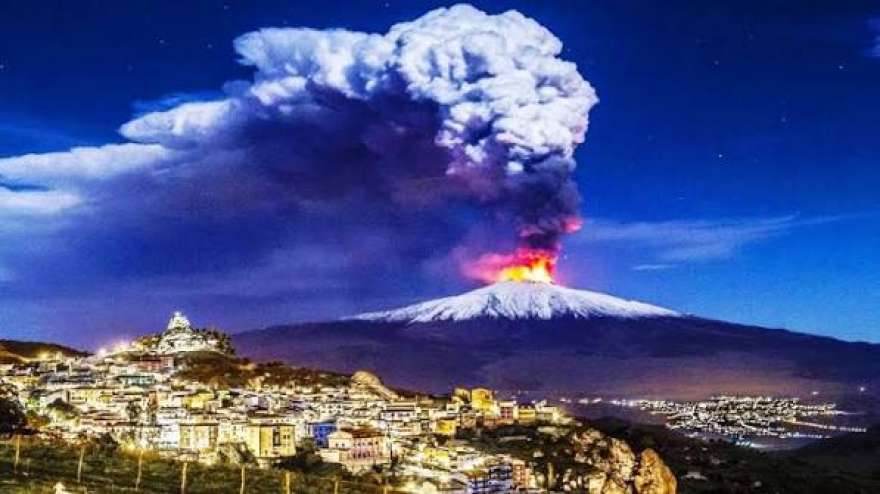

According to Open4Business, the ongoing eruption of Mount Etna has gone from being a local problem in Sicily to a major transport crisis for the central Mediterranean. As of the evening of 14 August 2026, Catania Airport remains closed until at least 02:00 on 15 August; with hundreds of flights cancelled or diverted; the disruption has already directly affected Serbia and Malta, whilst the main burden has shifted to other airports in Sicily and southern Italy.
The current crisis is the most serious to hit Catania Airport in at least two decades and the longest-lasting since the 2002 eruption. Between 6 and 12 August, more than a third of the 1,974 flights scheduled for Catania were cancelled, and around 630 aircraft were diverted to other airports. Italian sources estimate the total number of cancelled flights at around 700. Thousands of passengers found themselves stranded in Sicily at the height of the summer season.
The reason for the restrictions is not the lava itself, which remains mainly in the vicinity of the volcano, but the prolonged ash emissions. The Italian National Institute of Geophysics and Volcanology (INGV) is monitoring the ongoing effusive and explosive activity of Mount Etna, in particular ash emissions from the Voragine crater. In recent days, volcanic ash has been spreading mainly southwards. It poses a particular danger to aviation, as fine particles can enter engines and damage aircraft systems.
Etna has affected more than just flights in the immediate vicinity. On 11 August, a cloud of volcanic ash moved approximately 220 km south and reached Malta. As a result, Malta Airport had cancelled 19 flights by midday, whilst a number of other departures and arrivals were subject to significant delays.
Most aircraft unable to land in Catania are being diverted to Palermo, Trapani, Comiso and Lamezia Terme. However, the backup system has also proved vulnerable. Comiso Airport in south-eastern Sicily had itself temporarily suspended operations due to volcanic ash, so part of the traffic had to be diverted even further afield.
As a result, the aviation crisis quickly turned into a ground transport crisis. Passengers are forced to travel from one end of Sicily to the other by bus, train and hire car.
Demand for taxis and car hire has risen sharply. Following complaints from passengers about price hikes, the consumer organisation Codacons announced its intention to refer the matter to the Italian competition authority.
The eruption occurred at the worst possible time for the tourism industry – just before Ferragosto on 15 August, the traditional peak of the summer holiday season in Italy. Catania is the main aviation hub for eastern Sicily and handles over 12 million passengers a year.
The losses extend across the entire tourism supply chain. A cancelled flight means more than just a refund for the ticket. A tourist may not check into a hotel, may cancel a car hire, a restaurant booking, an excursion or a transfer. On the other hand, tourists who are already on the island and cannot fly out are forced to pay extra for accommodation and transport.
Paradoxically, the eruption itself has simultaneously become a tourist attraction. In the evenings, crowds of people head to the viewing points on Mount Etna to see the lava, which further congests the local roads. However, this local interest cannot be compared to the damage caused by the disruption to the main air hub in the eastern part of the island.
If the wind direction changes again, the geographical scope of the flight restrictions may also change.
Etna’s current phase of activity began on 6 August and is characterised by unusually prolonged ash emissions.