

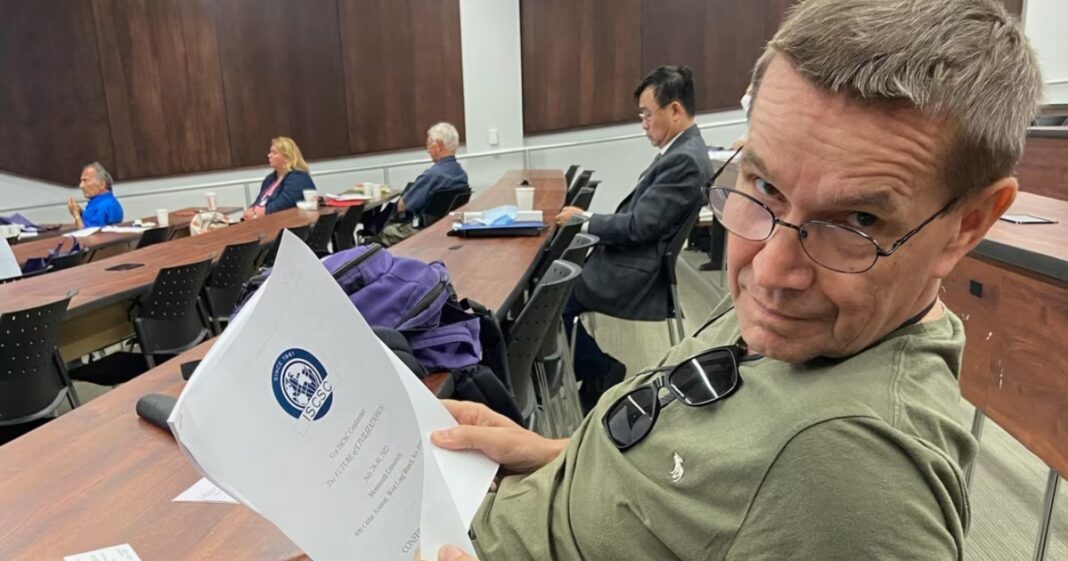

A high-profile court case has unfolded in the Komi Republic of Russia: the Supreme Court has sentenced Nikolai Zyuzev, a citizen of Russia and Canada, to seven years’ imprisonment in a maximum-security prison. He was charged with treason, and the case has attracted the attention of both the Russian and international media.
Nikolai Zyuzev is not merely a dual national. He is a philosopher, sociologist and recognised expert on the legacy of Pitirim Sorokin, who is known for his work in the fields of sociology and cultural studies. Two books written by Zyuzev about Sorokin were popular amongst academic circles.
Investigators claim that Zyuzev developed and promoted a project aimed at training leaders of national liberation movements for Russia’s small ethnic groups abroad. In addition, he is accused of distributing extremist material and gathering information for European Union organisations.
The financial aspect of the case adds a further layer of complexity: according to the investigation, Zyuzev received over two million euros from 12 international organisations. These include such well-known names as the Hans Seidel Foundation and Chatham House. Interestingly, many of these organisations are classified as ‘undesirable’ in Russia.
According to the FSB, Zusev has fully admitted his guilt and has even exposed other participants in the alleged scheme. This confession has made the case even more intriguing, as the academic was initially charged with collaborating with foreign organisations, an offence carrying a lighter sentence than treason.
Nikolai Zyuzev’s story is made all the more compelling by his international background. In 2008, he moved to Canada, where he obtained citizenship and worked in the media. Upon returning to Russia in 2016, he taught at Syktyvkar State University until 2022, after which he left for Canada again following the outbreak of hostilities in Ukraine. He was arrested in the summer of 2025, but the public only learnt of this in the autumn, which sparked a wave of rumours and speculation.
Now that the verdict has been handed down, Zyuzev’s fate remains a key issue for all those following developments in Russian-Western relations and science diplomacy.