



In the Russian seaside and tourist town of Tuapse, an environmental catastrophe after the AFU attacks: water, land and air are polluted with oil products. What consequences await this resort town?
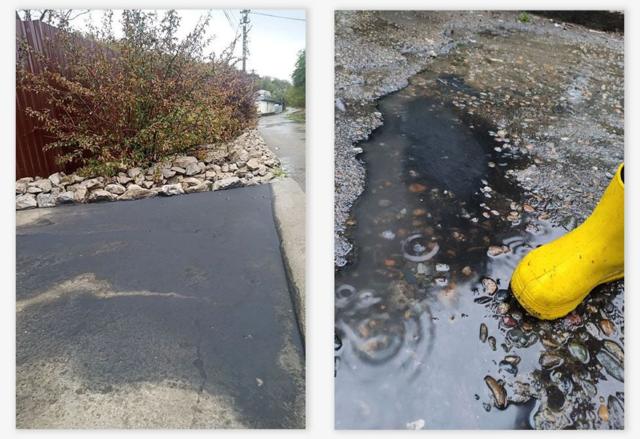
On Wednesday in Tuapse there was an oil rain – that’s how locals describe it. People take pictures of black puddles with oil film in their yards, cars in black dots and divorces. The same mottling – whether from oil or soot and ash in the rainwater – covered dogs and the hands of children playing in the street.
And all this is just one of the consequences of the fire at the oil terminal in the port, the black smoke from which covered the sky in Tuapse. It could even reach other cities, in particular the resorts of Goryachy Klyuch and Sochi.
The fire started because of Ukrainian drone strikes, which hit the port twice. On 16 April, an oil refinery caught fire; the fire was extinguished only three days later. Then, on 19 April, an oil slick was discovered in the sea. And on 20 April, the port was hit a second time, and the fire broke out with renewed vigour.
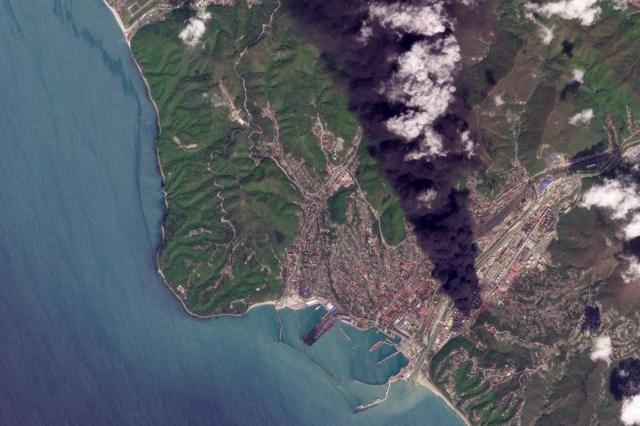
Author photo, 2026 Planet Labs PBC/Handout via REUTERS
Because of the fire, oil products not only burn but also vapourise, environmentalists explained to the BBC. The vapours rise to a certain height and then condense, falling into precipitation and spilling onto the ground along with normal rain.
“We have oil everywhere: in the trough, on the puddles, all the water is black. In short, we are all oligarchs,” describes a local resident filming her own village.
The puddles do show a black film: it can be seen in many photos and videos.
“It’s an oil slick and it’s pouring on us,” the woman comments.
In the sky also flies ash, white on the background of black smoke, Tuapsin residents paid attention.
Toxic smoke and contaminated water
The resort season in the Tuapse region is over before it has started, believes ecologist Yevgeny Vitishko. And this is not the last and far from the main problem. Both water, air and land are polluted at the same time.
“Globally for me, this environmental disaster is like all the others combined [in this region],” Vitishko told the BBC. – “I haven’t seen anything like this in the last 20 years.
“Burning tanks, destroyed pipelines, contamination of the river, the movement of the cloud itself containing oil products towards the main Caucasus mountain range, black rain with oil products – all this will lead to serious environmental consequences. So it is not for a year”, that is, it is not for a year.
Greenpeace’s Central and Eastern Europe branch explained to the BBC that the most serious problem now is the air: “Smoke from such fires will contain a wide range of toxic and acidic gases and harmful chemical vapours, tiny oil droplets and suspended soot particles.
Inhaling such is bad for health, especially for the elderly and children, as well as people with heart and lung problems.
“According to the data as of the evening of 21 April, the exceeding of the permissible concentrations of benzene, xylene and soot in the air has been recorded in intra-fold. This applies to the neighbourhoods of Grozneft, Sortirovka and Zvezdny, as well as partially Central”, – reported the operational headquarters of the Krasnodar region.
These substances are carcinogenic, meaning they can increase the risk of cancer, Greenpeace said.
Authorities advise local residents not to open windows, to wet clean their rooms more often, to rinse their noses, eyes and throats and not to go outside, and if they do have to, to wear masks.
In the comments of the opera headquarters people wondered why the city did not cancel classes in schools. “You can’t go outside, but you can go to school?” – locals did not understand.
By the evening of 23 April came the news that educational institutions were closed after all, but not all of them, but only three: school No. 3 and kindergartens No. 22 and 25. They are located in the areas adjacent to the sea terminal.
Vitishko suggests that oil products will now circulate in nature: It will all fall out [with rain] and remain in the soil, and then it will be washed into the river, and the Tuapse River will flow into the sea. So, in essence, the ecosystem will change. Meaning: everything will be destroyed there.
At the same time, the head of the Tuapse district Sergei Boiko assured that the oil spill in the Tuapse River has been localised.
Author photo, Moy Tuapse Telegram channel
Animals and beaches in fuel oil
The Tuapse prosecutor’s office was caught up in the scandal: prosecutors on camera planted plane trees against the background of smoke from the fire.
“The city is such a disaster, there are not enough volunteers, teenagers are clearing rubble, and healthy men plant trees!!!” – Residents are indignant in the telegram-chat of the city channel.
On 22 April, the operational headquarters of the region reported that the fire is actively extinguished: 276 people and 77 units of equipment are working on the site.
At the same time, oil products are thrown out on the beach: a stain near Tuapse was discovered on 19 April. It is likely that the fuel gets into the sea from damaged tanks in the port.