

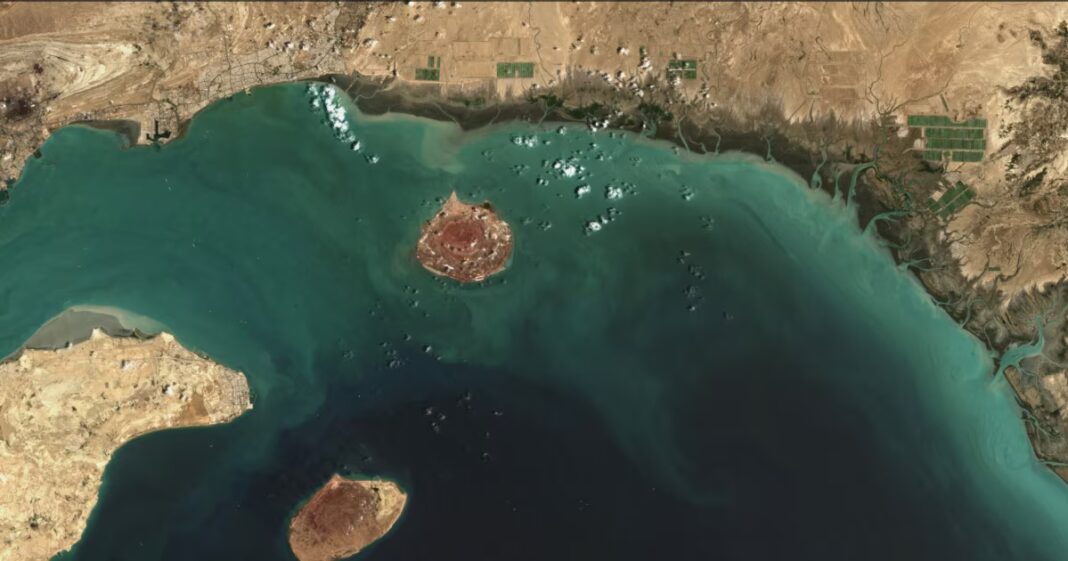

On 30 August, the US military struck two Iranian missile launchers on Larak Island after, according to US reports, the Islamic Revolutionary Guard Corps (IRGC) was preparing to launch missiles equipped with sea mines towards the strategically important Strait of Hormuz. This was reported by a senior US official.
This strike was the first publicly confirmed US attack on Iranian targets in over a month and effectively marked a new wave of escalation following a period of relative calm.
According to a US official who wished to remain anonymous, the launchers were ready for an operation that could have threatened commercial shipping in the narrow strait – one of the key routes for global energy trade.
The attack came just a few days after the US Central Command (CENTCOM) completed an operation to clear mines from international shipping lanes in the Strait of Hormuz.
“The US Armed Forces are closely monitoring the situation in the region and remain ready to defend the free flow of trade through this vital waterway,” a spokesperson said.
Earlier this week, US President Donald Trump warned that a message had been sent to Iran: any ship or vessel attempting to lay new mines in the strait would be “immediately and systematically destroyed”.
The IRGC stated that several Iranian fighters and civilians were killed or injured as a result of the strike. No exact figure for the casualties has been given. In a statement broadcast on Iranian state television, the IRGC blamed the so-called “American-Zionist enemy” and vowed that this attack “would result in the aggressor being punished”.
Larak Island, located near the Strait of Hormuz, has been the target of US strikes on more than one occasion. A similar attack there was reported at the end of July.
The US states that its armed forces will continue to monitor the situation in the region and take measures to ensure the safety of commercial shipping.