

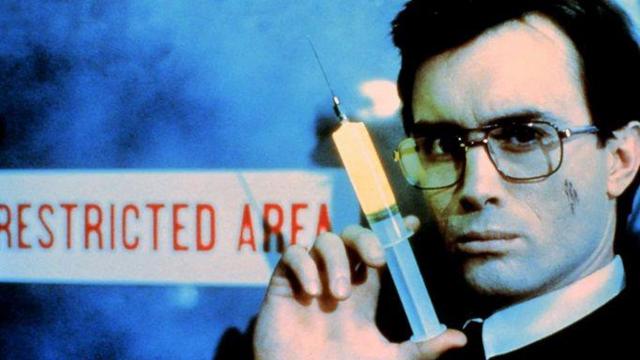

Forty years ago The Reanimator was released, a film about a mad scientist who brings the dead back to life. At first the film collected modest box office receipts, but its shocking brutality and black humour quickly made it an icon among horror fans.
Blood, foam and madness
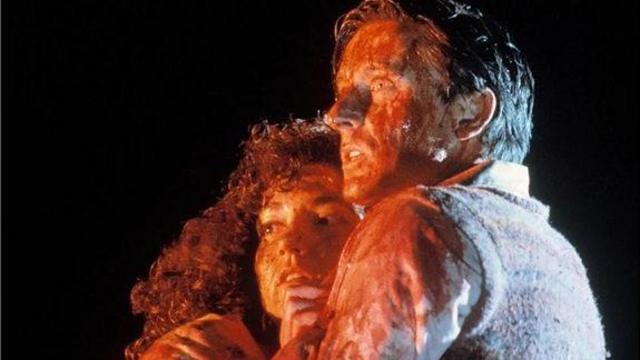
“If you look for one word to describe ” Reanimator “, it would be “wet,” says John Nolin, one of the film’s special effects specialists.
The film, released in the U.S. exactly 40 years ago, is based on a story by H. P. Lovecraft 1922. P. Lovecraft’s 1922 short story “Herbert West the Reanimator.”
There, a medical student finds a way to bring the dead back to life. The film takes Lovecraft’s mad scientist to the 1980s, where experiments become absurd, violent and the director’s blatant cries of “more frothy spit!” we began to worry if it would dilute the actors’ blood,” laughs Nolin.
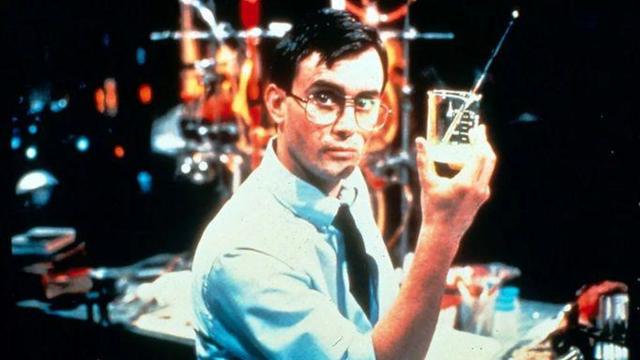
Photo by Alamy
This disgusting redundancy is one of the reasons why Reanimator is so hard to get out of your head, even years after watching it.
Yet beneath the deluge of blood lies a masterful balance of horror and humour, and a groundbreaking cinematic experience that continues to captivate audiences for four decades.
Bloody classic Plateau Mountain
When Reanimator came out in 1985, the horror genre was in a “transitional phase,” says researcher and director Mike Duffy.
The slasher boom (films with lots of blood. – Ed.) came to an end after “Halloween” in 1978, although the release of “Nightmare on Elm Street” in 1984 showed that the genre was ready for experimentation and humour. but also about what happens to them “.
Scenes involving the experiments on the dead cat of neighbour Dan Kane (Bruce Abbott) provoke both fear and laughter. And when West’s decapitated rival threatens Kane’s fiancée, the scene becomes almost farcical, with the audience looking at each other just as they were looking at the screen.
The term ” saucer horror ” was coined by George A. Romero for his 1978 “Dawn of the Dead.” From the ’60s to the late ’80s, such films flourished, focusing on physical violence and almost completely ignoring morality.
But whereas other films were frightening and evocative at once, “Reanimator” shocks so blatantly and endlessly that viewers revel in the absurdity of what’s going on.

Author Alamy’s photo
” It’s difficult to convey the effect on screen like it is in the theatre,” says Combs. “And Stewart has done it!”
The critic ipo, but acts considered. It was unusual at the time.
She quickly assesses West’s bizarre experiments and makes informed decisions, unlike her boyfriend who often gets into trouble.
Crumpton shows a balance between the film’s realism and comedic absurdity.
“Megan understands the material and embraces all the craziness of Reanimator,” explains Lindsey Hallam. – In doing so, she makes the character believable, avoiding the clichés of victimhood or “dumb blonde.”
Even in scenes where Megan is threatened by the villain, her character acts decisively, not as “decoration for the male gaze.”
From festivals to videotapes: how the film became a cult film
At the Cannes Film Market in May 1985, the reaction from critics and audiences was spectacular. But the film grossed only about $2 million at the box office, thanks largely to for its horror films “Bad Taste” and “The Living Dead”, and elements of the film are even reflected in “American Beauty” and “Batman Begins”.
Author photo by Alamy
Four decades on
The influence of The Reanimator is palpable today, with modern filmmakers drawing from it to combine horror, humour and shock scenes.
“That moment when the viewer pulls away from the screen, closes their eyes and says, “Can you believe it?” – that’s the secret to why Re-Animator became Re-Animator,” concludes Combs.