


The UN Security Council will hold an emergency meeting on 28 February following US and Israeli strikes on Iran and Tehran’s retaliatory strikes on regional countries.
The UN said the meeting, due to start at 23:00 Kiev time, would consider “the situation in the Middle East”.
France and Bahrain have called for the meeting. Iran’s Radio Liberty service reports that Iranian Foreign Minister Abbas Araqchi has also made a separate request for such a meeting.
Earlier today, UN Secretary-General António Guterres issued a statement condemning the escalation in the Middle East, noting that “the use of force by the United States and Israel against Iran and further Iranian retaliation in the region undermine international peace and security.”
“I call for an immediate cessation of hostilities and de-escalation. Failure to fulfil this commitment risks a wider regional conflict with serious consequences for civilians and regional stability. I strongly urge all parties to return to the negotiating table immediately,” the UN secretary-general said.
US President Donald Trump said Washington had launched “massive combat operations” against Iran, hours after Israel announced it would carry out what it called a “pre-emptive strike” on 28 February.
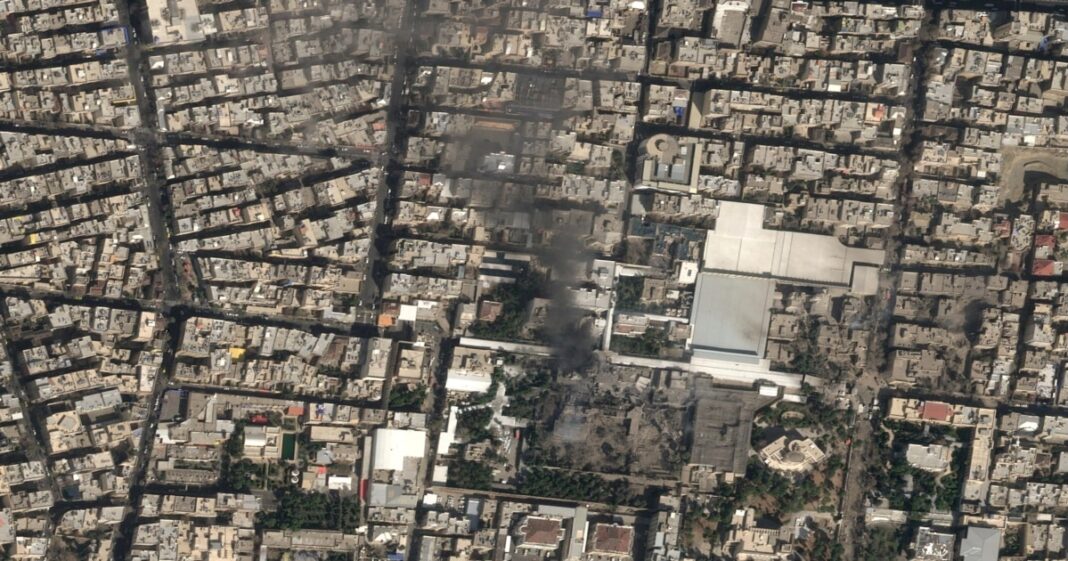
Iranian media reported explosions in several cities, notably Tehran, Tabriz, Isfahan, Qumi, Lorestan and Chabahar. In Tehran, the strikes targeted Iran’s top leadership. Missiles reportedly hit the dwellings of Supreme Leader Ayatollah Ali Khamenei and President Massoud Pezeshkian in the city centre. News agencies citing informed sources say both leaders have been moved to safe houses.
Israeli Prime Minister Benjamin Netanyahu said a joint US-Israeli strike on Iran would “create the conditions for the brave Iranian people to take their destiny into their own hands”.
After the strike, sirens sounded across Israel-the Israel Army (IDF) urged residents to stay close to shelters. Iran’s Islamic Revolutionary Guard Corps responded to the US and Israeli strikes by launching several waves of drones and ballistic missiles at Israel.
Iran has also launched missiles at several Middle Eastern countries where US Armed Forces bases are located. Explosions were reported in Bahrain, UAE, Qatar and Saudi Arabia.
One civilian reportedly died in Abu Dhabi, the capital of the United Arab Emirates, after being struck by falling debris during the first wave of retaliatory attacks from Tehran.
Senior U.S. officials told reporters in Washington that there were no reports of U.S. casualties as a result of Iranian retaliatory strikes on U.S. military installations.
Trump has accused Tehran of trying to rebuild its nuclear programme after the United States bombed key sites during the 12-day war between Iran and Israel last June. He said the United States was also seeking to destroy Iran’s missile capabilities and “flatten” its navy.
In announcing the military operation on 28 February, Trump said his goal was to “protect the American people by eliminating imminent threats from the Iranian regime”.
Amid the strikes, Iran’s internet almost completely disappeared.
The strikes came just days after nuclear talks between the US and Iran, casting doubt on the planned continuation of talks next week in Vienna as Washington steps up its military presence in the region.
Images taken on 28 February show explosions in Iran, Israel and several other Middle Eastern countries after US President Donald Trump said he was launching “massive combat operations” against Iran. UN Security Council to hold emergency meeting after strikes on Iran