


If you were asked to picture a person with autism, who would spring to mind?
The richest man in the world, Elon Musk? Or perhaps Greta Thunberg, who claims that this condition can give you superpowers? Perhaps Robbie Williams, who recently revealed that he has been diagnosed with a mild form of autism?
Or perhaps 34-year-old James Fitzpatrick? He is unable to speak, has developmental delays and requires constant care.
A diagnosis of autism spectrum disorder means that a person exhibits certain key characteristics. These include distinctive ways in which such people communicate and behave.
But it is a broad term covering people with very different life experiences.
In recent years, autism diagnoses in the UK have been reaching record levels. In England alone, there were 700,000 such people three years ago, and now there are around 1.1 million.
And the National Autistic Society (NAS) states: ‘The data suggest that autism is under-diagnosed, particularly amongst women and older people.’
But what if some people with this diagnosis do not actually have autism?
Could it be that they have actually been misdiagnosed?
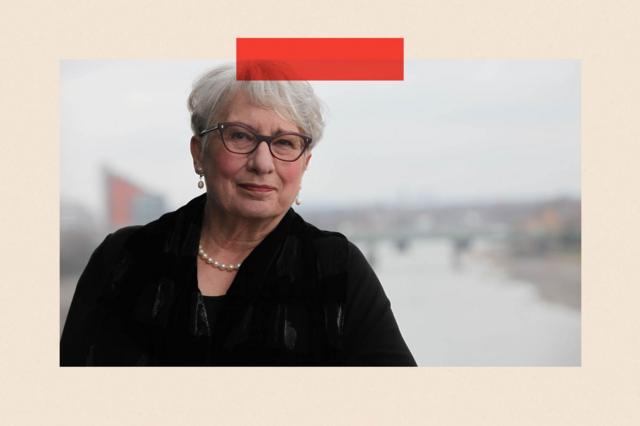
These are the questions most frequently posed by 85-year-old Professor Uta Frith, one of the leading researchers into autism since the 1960s.
And these questions lie at the very heart of a debate that is of vital importance to the self-identity of many people with autism.
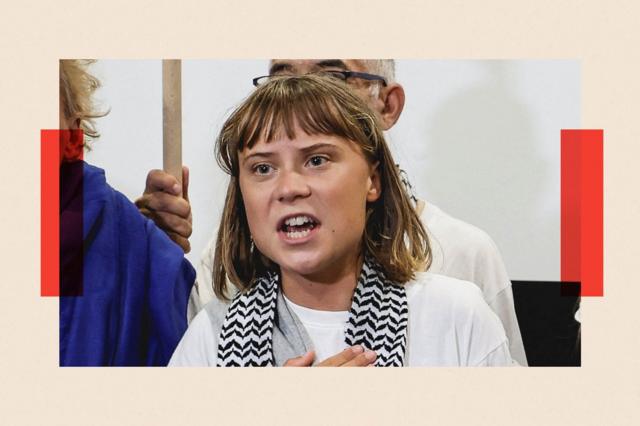
Photo credit: Reuters
Frit, who was honoured by the Queen in 2019 with a damehood for her work, maintains that many people are misdiagnosed with autism.
She does not wish to state an exact figure, putting it this way: ‘At my worst, it seems to me that there are a great many; at my best, that there are fewer.’
The professor fears that, due to overly broad diagnosis, those people with autism who need serious help are not receiving it.
Not everyone agrees with these views.
Many researchers and charities working in the field of autism describe her position as dangerous and misleading, believing that she pits some people with autism against others.
And people with autism themselves often react with anger, claiming that their identity and their rights are being called into question.
The rise in diagnoses of neurodivergent conditions, such as autism or ADHD (attention deficit hyperactivity disorder), along with an increase in reports from patients themselves of poor mental health, have prompted the British authorities to commission an independent review of these diagnoses. Its findings will be published shortly.
But whatever they may be, they will not put an end to a debate that affects the lives of so many people.
What exactly should be termed autism, and does it matter that this definition is applied to such a broad spectrum of people?
Changing definitions
In fact, the definition of autism has shifted and changed since 1911, when it first appeared as a description of one of the symptoms of schizophrenia.
At that time, it referred to excessive fantasies and hallucinations.
By 1943, the term had come to be used to describe children with unusual characteristics, those who were unconcerned with the world around them.
In the 1960s, it was estimated that 0.04 per cent of children had autism, and the majority of them were found to have intellectual disabilities.
In the early 1980s, researchers adopted the concept of autism spectrum disorders, emphasising that people with autism can have both average and very high levels of intellectual ability.
A term was even coined for this new category: Asperger’s syndrome, which originated in a little-known Austrian study from the 1940s.
Now, however, this term has been abandoned.
In 2013, autism spectrum disorder became the official diagnostic term for all people with autism.
And now some experts believe that this definition is too broad.
Uti Frit’s claims that the autism spectrum has buckled under the weight of the very breadth of the reported manifestations and needs of those diagnosed have sparked heated debate.
Such a broad umbrella
A quick look at social media shows that the 85-year-old specialist is described as a pioneer in research, a brilliant mind and the grand dame of autism research.
And yet, at the same time, she is called a traitor, a die-hard and a fraud.
Whilst I am talking to her, she receives an email.
In it, Frit is told, in no uncertain terms, that human lives will be on her conscience.
‘There are people who think I’d be better off stopping,’ says Professor Frit. ‘But I want to get to the bottom of this.
And for many years she refrained from expressing her opinion.
One of the reasons, she says, is that she really, really doesn’t want to offend anyone.
Frit says she is driven almost by a sense of duty to represent the interests of people with autism who have an intellectual disability.
She feels that an overly broad definition of autism leads to them being overlooked.
‘Both in research and in terms of public awareness,’ says the professor.
Intellectual disabilities are found in around 30 per cent of people with autism.
But in scientific studies, their proportion is significantly lower: according to 2019 estimates, only 6 per cent of people with such conditions were recruited to take part in research.
These individuals are in great need of support, and they are completely overshadowed by the general discourse on autism, says Professor Frit.
She believes that this group should remain within the narrower autism spectrum, alongside those whose condition was previously described by the term Asperger’s syndrome, and people with autism who are diagnosed in childhood.
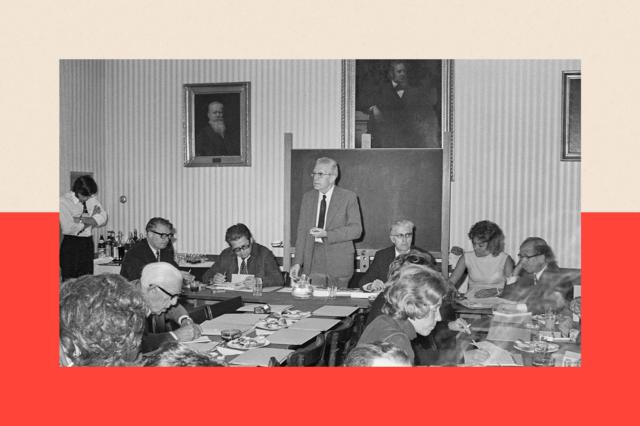
Photo credit: Getty Images
At present, however, says Frit, the rise in autism figures is being driven by another group – those diagnosed in adulthood, predominantly women.
The British National Health Service maintains that it is difficult to identify autism in women, but Uta Frit says: ‘I don’t really believe in adult diagnoses. I think it is precisely in this category that the diagnostic process has become very superficial.’
She believes that many in this group actually have other issues – anxiety, depression or obsessive-compulsive disorder.
‘How will an autism label help them?’ asks Frit. ‘I would like them to receive better support than they do at present.’
Perhaps, she suggests, scientists should define a new category for this group of people living with a diagnosis of autism.
To support her views, she cites a study by the University of Cambridge which found that people diagnosed with autism in childhood often have a genetic profile that differs from those diagnosed in adulthood.
The researchers found that those diagnosed with autism from late adolescence onwards exhibit a genetic profile more closely resembling ASD and depression than early-onset autism.
However, the head of the research team, Dr Varun Warrier, believes that this points to a broadening of the genetic characteristics of autism, rather than poor diagnosis.
Professor Frit believes that a small group of those diagnosed do not have any mental health conditions at all, but rather a desire to identify themselves in some way, influenced by unreliable information from social media.
She does not know how many people have been misdiagnosed, but she is confident that research can shed light on this.
Frit acknowledges that this will upset and frighten some people.
She emphasises: ‘If someone has been misdiagnosed, I wouldn’t want them to suffer as a result. Reversing this diagnosis retrospectively is a terrible decision. I’m concerned about the future: how to make the diagnostic process more accurate, and how to meet individual needs.”
In the midst of the culture wars
Uta Frit first spoke about her views on the issue in an interview with the Times Educational Supplement in March this year.
The National Autistic Society (NAS) reacted sharply to this.
In its blog, the NAS described these views as false narratives and outdated ideas, misinformation and unfounded claims.
Professor Frit believes that dismissing her point of view in such terms is simply unacceptable.
The NAS states that everyone diagnosed with autism has been assessed against strict criteria.
And they all differ from non-autistic people in their communication, behaviour and core interests, which are evident throughout their lives.
Dr Sue Smith, head of clinical services at the NAS, says: ‘We are dealing with a group of people with clear needs. And here we are having strange debates about what to call them.’
In her view, this is not an academic debate, but something with very specific consequences for people with autism.
‘For many years, there have been people who were not given the correct diagnosis of autism; instead, they were given other, completely inappropriate diagnoses,’ she says.
For example, borderline personality disorder or bipolar disorder.
Smith believes that if we start redefining autism from scratch, it will result in some people with this diagnosis losing the support they need.
Dr Monique Bota, an associate professor of psychology at Durham University in England, has criticised Uta Frit’s position in no uncertain terms.
Bota herself has autism and insists that her behaviour was justified.
Many people found this upsetting and infuriating, and I am one of them. Scientists have a duty to point out just how harmful such things can be, directly and without mincing words,’ she says.
She believes that Frit’s views fit into a well-known way of thinking.
There’s this idea of a sort of ‘magical mild autism’, where you supposedly just have a few minor quirks and it will all go away in time, but in reality you’re simply looking for resistance to fuel the notion of your own uniqueness. This view oversimplifies things for a great many people.
Bota says that all people with autism share several key characteristics: sensory sensitivity, a need for predictability, a tendency to become deeply engrossed in specific topics, and difficulties with communication.
‘This doesn’t mean at all that we have similar lives or similar life outcomes,’ she says.
But Uta Frit’s perspective has its supporters even amongst people who are on the autism spectrum themselves.
One such person is Michael Fitzpatrick, a retired GP.
His son James was diagnosed in 1990, shortly after his birth.
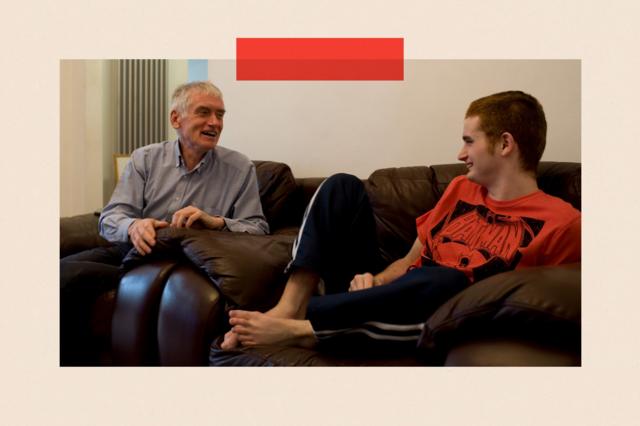
Photo credit: Family photo
Michael says he is shocked by the reaction to Frit’s stance.
‘Such an intolerant, vociferous, abusive way of speaking. It’s the very style of the culture wars,’ he says.
Fitzpatrick senior believes that many of those diagnosed with autism are unaware of what his family has to live with.
James, aged 34, has been non-verbal since birth.
He never developed the ability to communicate with the world. “It’s a source of immense sadness both for his family and for him,” says Michael.
He used to harm himself, bang his head against the floor and bite himself. If you tried to stop him, he’d bite, scratch or bang his head right into your face. And as he grew taller and bigger, it became an even bigger problem,” says Michael.
As he’s got older, James has become calmer, but, according to his father, he can still accidentally lash out at loved ones for no obvious reason.
That’s why Michael doesn’t understand how the same diagnosis can apply to James and to someone who is capable of living independently.
These, he emphasises, are two completely different ways of life.
Different challenges
Dr Rachel Mosley, a researcher at Bournemouth University, was working on a study of autism when she herself, shortly before turning thirty, was diagnosed with autism.
She does not deny that people like James Fitzpatrick receive little support.
But she still disagrees with Uta Frit’s position.
‘There is room for all of us here; we can call for support for people with developmental disabilities without claiming that the current definition of autism is inadequate,’ says Mosley.
She feels that attempts to categorise the autism spectrum in any way fail to take important nuances into account, particularly when it comes to mental health issues.
‘There are still moments that completely disorient me,’ says Mozley of her life, admitting that she still self-harms and has suicidal thoughts. ‘Everyone has their own problems. But we shouldn’t assume that someone who needs more help from others will definitely, definitely… In some cases, not necessarily.’
To support this point, he cites research showing that, although suicide rates are generally higher amongst people with autism, it is most often those without developmental delays who take their own lives.
Michael Fitzpatrick is not convinced by this argument.
‘I very, very much doubt that people with autism who have no developmental delays experience the same level of pathologies and life-threatening problems as those with severe autism,’ he says.
A scientist with real-life experience
It is striking that the parties to this debate accuse each other of not taking a sufficiently rigorous scientific approach.
One illustration of this is the debate over ‘masking’ – a tactic whereby a person with an autism spectrum disorder attempts to conceal their condition and integrate into society.
This is one of the most popular topics in autism research; a recent analysis of scientific statistics revealed around 400 research papers on masking.
Most of these studies examine the behaviour of autistic women who were diagnosed as adults and had no developmental difficulties.
Uta Frit winces at the very mention of this topic: ‘Oh, what a vague definition!
Some of these studies, she says, are frankly of poor quality.
Rachel Mosley says the exact opposite: ‘There are serious, high-quality studies on ‘masking’, and I am both struck by and dismayed that these studies are being disparaged.
Such studies, she says, bring a much-needed new perspective to science, whilst researchers with autism contribute their own lived experience.
Uta Frit is not convinced that scientists with autism can maintain scientific neutrality, nor that there are no conflicts of interest in such research.
However, her views on this are in the minority.
Sir Simon Baron-Cohen, a professor at the Centre for Autism Research at the University of Cambridge, began his scientific career under Uta Frith’s guidance.
But he now disagrees with her.
‘A scientist with a degree in molecular biology possesses one type of expertise. But a person with life experience alone brings a different kind of expertise,’ he says.
In the debate between Frit and his opponents, Baron-Cohen does not take sides.
‘I think the way forward is to sit down and discuss it. And much of what currently seems like irreconcilably different views will, in fact, turn out to be quite open to discussion.
However, he agrees that the term ‘autism’ has become too broad and is being used to describe conditions that are too diverse.
There are distinct subgroups within the autism spectrum.
The first might be autism with developmental difficulties.
Imagine that we have dozens or hundreds of subtypes. Why limit their number? The more there are, the more precisely we can identify the needs of particular individuals, the researcher believes.
Uta Frit agrees that subtypes of autism can clearly distinguish those who have a very significant need for care from those who do not. It is not possible to divide the diagnosis into subgroups ad infinitum. They must have clinical value, diagnostic significance or practical application.
Simon Baron-Cohen says: ‘Let’s invite people with autism and find a definition with which they themselves feel comfortable.’
Whatever the labels, life remains just as difficult
Kaylee is another of those who were diagnosed with autism after the age of 30.
She is convinced that people have stereotypes about how autism might manifest itself.
‘Some people think you can’t say your own name. Others think you’re obsessed with trains. Or that you’re extremely clever. Or that you’re fixated on a very boring hobby,’ says Kaylee.
Since receiving her diagnosis, her classification has been changed several times.
First it was Asperger’s syndrome, then high-functioning autism and ASD-PDD (autism spectrum disorder with pervasive developmental disorder).
“The boundaries of the definitions are constantly shifting,” she says. “I have autism, and I don’t know exactly what I’m supposed to be called.”
All this distracts from the real issues, says Kaylee.
All her life, she’d felt that she was somehow different — strange, abnormal, just very, very different.
It angers her that the people around her didn’t understand how hard it was for her.
And now she’s been diagnosed, yet, she says, she’s received absolutely no support from specialists.
She can only leave the house when her family are with her.
And that’s why she hasn’t been to the city centre for many years.
She needs more help and more understanding.
As for what her condition is called, it doesn’t matter to Kaylee.
Call it a nasty brain disease if you like. I understand what’s happening to me.