

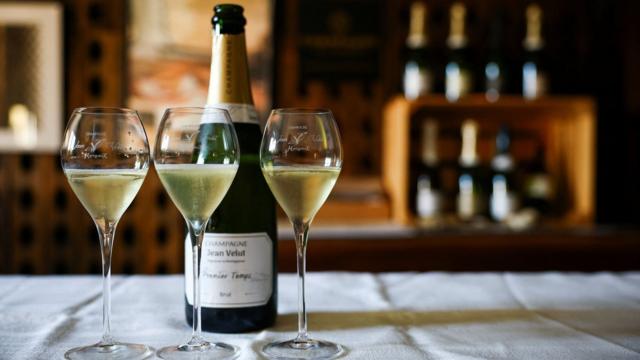

Photo credit: Reuters
French wine production this year is set to be one of the lowest in three decades. Champagne production will be half that of last year. This forecast was announced by the French Ministry of Agriculture.
The main reason for the decline is the heatwave and drought that affected vineyards this summer.
In addition, the situation has been affected by a decline in wine consumption and a reduction in vineyard area, as well as a fall in sales to the US due to tariffs imposed last year by Donald Trump.
In France, as in other European countries, this summer has been the hottest on record. Scientists say that, due to climate change, such heatwaves and other extreme weather events will become increasingly common.
According to the Ministry of Agriculture’s forecast, France will produce 33.9 million hectolitres this year, or 4.5 billion standard bottles of wine.
This is 6 per cent less than last year and 17 per cent less than the average for 2021–2025. Wine production in France had also been declining over the previous two years.
On 4 August, the French government announced that it would allocate one billion euros in emergency aid to winegrowers. Representatives of agricultural organisations say that this is not enough.
France ranks second in the world in terms of wine production – behind Italy – and first in terms of revenue from wine exports.
As well as the drought and Trump’s tariffs, French winemakers are also suffering from a decline in wine consumption. This is due both to economic difficulties and to the fact that potential consumers are, on the whole, drinking less, preferring a healthier lifestyle.
Because of this trend, winegrowers are gradually reducing the area under vines. This year, according to the Ministry of Agriculture, the area under vines has decreased by 2.5 per cent compared with last year.
Half as much champagne
These adverse circumstances have hit Champagne hardest this year: according to forecasts, champagne production will amount to just 49 per cent of last year’s figure.
Wine production in the Burgundy–Beaujolais region will fall by a third, in the Loire Valley by 12 per cent, and in Charente by 6 per cent.
At the same time, in the largest wine-producing region – Languedoc-Roussillon – as well as in Bordeaux, production will increase by 5–10 per cent compared with last year, but will still be below the average for the last five years.