


This sleep technique was invented by a scientist, and social media has made it popular. It has long promised to help people “switch off” an overloaded brain. When it worked for me recently, I wondered how it affects the mind.
If you, like me, are prone to anxious rumination, a night in bed is the perfect time for “self-digging”.
Whether I’m shaking it off or rejoicing – often I just can’t stop the flow of thoughts. Я испытала множество лайфхаков для сна: от дыхательных упражнений до обратного отсчета. But nothing helped until I learnt about cognitive stirring.
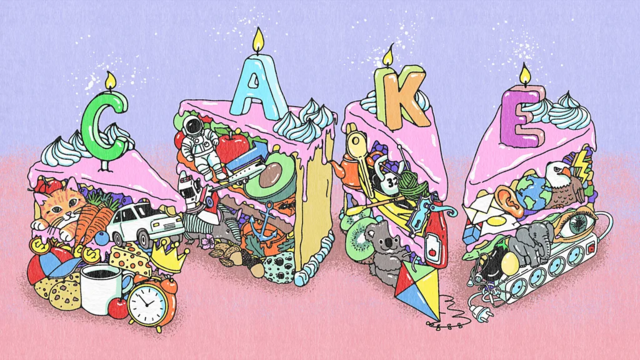
The method involves recalling a random, emotionally neutral word, such as “cake.”
You take the first letter of the word – in this case “T” – and recall as many items or objects on that letter as you can (e.g. “tiger”, “plate”, “tractor”), visualising each one.
When you run out of “T” words, you move on to the second letter. I rarely even get to the third.
It’s not a guaranteed fast way to sleep – sometimes I still take a long time to fall asleep – but the technique has made such a difference that I’ve been practising it for a year now.
Like many other people: over the past few years, users have posted hundreds of videos on social media recommending cognitive stirring, some of which have amassed hundreds of thousands of views.
According to Alanna Gair, a counsellor and sleep specialist at the Royal Brompton Hospital in London, cognitive stirring acts as a “super-performer”. She says the technique triggers a double-action mechanism: it both nudges you to sleep and quietens the intrusive anxieties that prevent you from falling asleep.
But what exactly is it about cognitive stirring that soothes my brain so much? And why does this technique work for me where other methods have proven powerless, and even help me fall back asleep if I wake up at night captive to my thoughts?
Imagine this: how cognitive stirring induces sleep
More than 15 years ago, Luc P. Beaudoin, an associate professor at Simon Fraser University in Canada, developed cognitive mixing.
Baudouin based the method on his own theory of “sleepy information processing.”
He argues that people with insomnia often fixate on disturbing thoughts – such as planning, analysing or worrying about something – and this keeps the brain busy. Such mental processes can be counteracted with exercises that give the brain the sense of “safety” it needs to sleep.
Baudouin said he invented the concept of serial varied imagination (where the brain focuses on a series of neutral random images) through “a long process of assumptions about the mechanisms of falling asleep” as well as “trial and error on himself”.
As he immersed himself in the scientific literature on insomnia management, he became particularly interested in a practice called “imagery training.” It involved focusing clearly on one image for a few minutes before moving on to another. However, he noticed a flaw in this approach: it was too slow.
“I realised: if a person is overcome by obsessive compulsive anxiety, they will find it difficult to focus on one image for several minutes at a time. It’s better to change them faster,” he says.
Author photo, Emmanuel Lafont
In 2016, Baudouin and his colleagues tested the technique during a study involving 154 university students who had sleep problems.
One group was asked to use an app created by Baudouin: the programme voiced random words and the user had to picture them in front of their eyes.
The other group wrote down their anxieties and possible solutions in a diary (this is a standard method of dealing with insomnia with proven effectiveness).
The results showed that the image-mixing method develops sleepiness “just as effectively” as the traditional approach. The technique also has the advantage of being practised right in bed.
Create your own microphone
Cognitive stirring works because it diverts your attention away from sleep-interfering thoughts, explains Eleni Kavaliotis, a graduate psychology and sleep researcher at Monash University in Australia.
“So the method tries to mimic the disjointed, incoherent and random images that the brain naturally starts to generate while falling asleep.”
So, cognitive stirring reflects a natural process called “hypnological sensation” that occurs at the boundary between wakefulness and sleep. Baudouin calls these hallucinatory thoughts and momentary images “microns”.
“The theory is that in cognitive stirring, the state of the brain resembles in some aspects the normal onset of sleep,” he says.
In other words, the varied images are not just a by-product of falling asleep, but a signal for it.
Compulsive or arousing thoughts can break this positive cycle. That’s why Geir advises her clients to choose neutral words, such as animal names or supermarket items, during cognitive stirring, rather than anything that might trigger emotions.
“Topics such as politics or work can stir you up and make it harder to fall asleep.”
Whether this method will work for you
In general, when it comes to methods of falling asleep, what helps one person won’t necessarily work for another.
“Different people respond to different strategies depending on how they experience stress and how they relate to their own thoughts,” says Kavaliotis.
The classic idea of counting sheep doesn’t work for many adults because we are capable of thinking about something else while counting, Geir adds:
“This method doesn’t fight insomnia effectively enough, because we are able to do several tasks at the same time.”
However, Baudouin notes that cognitive mixing is not a “magic wand” that works for everyone.
If cognitive mixing doesn’t work for you, there are other options.
One strategy is “cognitive refocusing.” It involves consciously replacing unwanted anxious thoughts with more pleasant and peaceful ones.
Another way is to practice mindfulness. You simply observe your thoughts in bed objectively and without judgement.
And if you feel like your anxieties are going in circles, research suggests: making a to-do list before bed can help.
Some people don’t like cognitive jumbling at all, Geir notes. Such people find word games confusing and difficult, or simply prefer techniques with numbers.
Despite this, Geir sees successes for his clients in practice. And Kavaliotis believes that sleep strategies can be trained like muscles:
“The more you practice, the stronger the skill becomes and the easier it is to apply.”
A game-changing technique?
Baudouin hopes that the popularity of cognitive stirring online does help people, but notes that the technique needs more research.
He is keen to see research papers that compare the effects of the technique on people with episodic difficulty falling asleep (he calls it non-clinical insomnia) and those with a clinical diagnosis.
He is also looking forward to research where cognitive stirring would be compared to other techniques, such as mindfulness meditation.

Author photo, Getty Images
Although cognitive stirring has become a basic evening method for me, sometimes it works better and sometimes it works worse. When I’m feeling particularly anxious, I have to put in more effort and the process takes longer. However, Geir advises not to get too anxious through single nights when you can’t sleep for a long time.
“No one stays awake every night from the moment they get into bed until the alarm clock rings – that’s not normal,” she says.
“If you fall asleep with only your head touching the pillow and sleep uninterrupted until morning, you’re probably suffering from chronic sleep deprivation.”
However, if you’re experiencing sleep problems regularly and it’s affecting how you feel during the day, there may be a deeper problem that you should see a doctor about.
Chronic clinical insomnia requires more serious measures than just playing with words. But for me, cognitive stirring has really made a dramatic difference.