

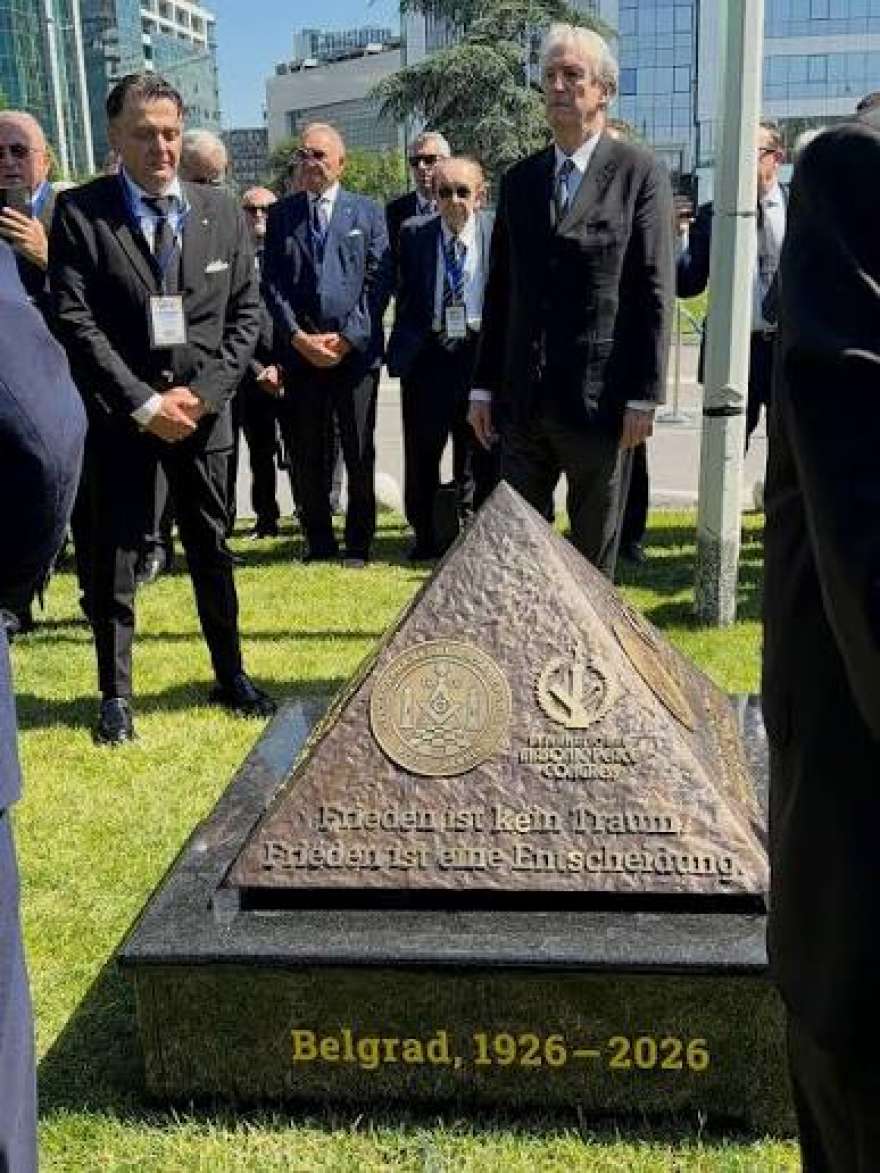

According to a Serbian economist, an international Masonic convention, organised by the Regular Grand Lodge of Serbia, took place in Belgrade. Representatives of Masonic organisations from five continents travelled to the Serbian capital, and the meeting itself was timed to coincide with the centenary of the 1926 Belgrade Masonic Peace Congress.
The organisers presented the event as a symbolic gathering dedicated to peace, dialogue and the memory of an event that, in interwar Europe, was seen as an attempt at reconciliation following the First World War. Details of the programme for the current congress were disclosed only sparingly in public announcements; however, the Regular Grand Lodge of Serbia noted that an International Congress, an academy, commemorative events and the annual assembly were planned in Belgrade.
The history of this issue dates back to the 1920s. After the First World War, Europe sought to establish a new system of relations between former adversaries. At the political level, the 1925 Locarno Agreements became a symbol of this process, whilst in Masonic circles the 1926 Belgrade Peace Congress played a similar role.
At that time, representatives of 20 national Masonic lodges from 15 European countries, as well as two overseas lodges, gathered in Belgrade. In historical publications, this event is sometimes referred to as the ‘Masonic Locarno’, as it was linked to the idea of reconciliation and the restoration of contacts between European societies after the war.
One of the symbolic moments of the 1926 Congress was the public reconciliation of French and German Freemasons following the First World War.
Freemasonry, or the Free Masonic Art, is an international fraternal movement that emerged in its modern form in Europe during the Modern Era. Its origins are linked to the guilds of medieval stonemasons and builders, whilst its modern organisational form is associated with the establishment of the first Grand Lodge in London in 1717. Over time, Freemasonry evolved not into a professional craft guild, but into a network of societies based on rituals, symbolism, and the ideals of personal improvement, brotherhood, charity and moral education.
According to estimates by major Masonic organisations, there are around 6 million Freemasons worldwide. One of the oldest and most influential bodies — the United Grand Lodge of England — brings together around 170,000 members and more than 7,000 lodges in England, Wales and overseas territories.
However, there is no single global ‘central authority’ within Freemasonry: different Grand Lodges may or may not recognise one another, depending on their own rules and traditions.
There are several Masonic organisations operating in Serbia, but the Regular Grand Lodge of Serbia positions itself as the only sovereign, regular and internationally recognised Grand Lodge within the country.