

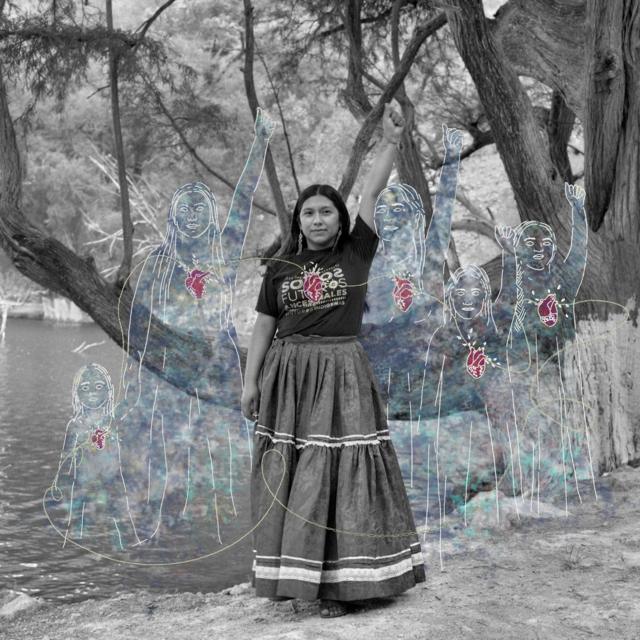

The Sony World Photography Awards 2026 main distinction went to a Mexican visual artist for her series on indigenous women.
Sitlali Fabian won the creative category for her project Bilha, Stories of my Sisters.
Fabian is a visual artist from an indigenous plastic community in the Mexican state of Oaxaca, now based in London.
Her practice combines photography and digital illustration, exploring themes of identity, territory, migration and community connections.
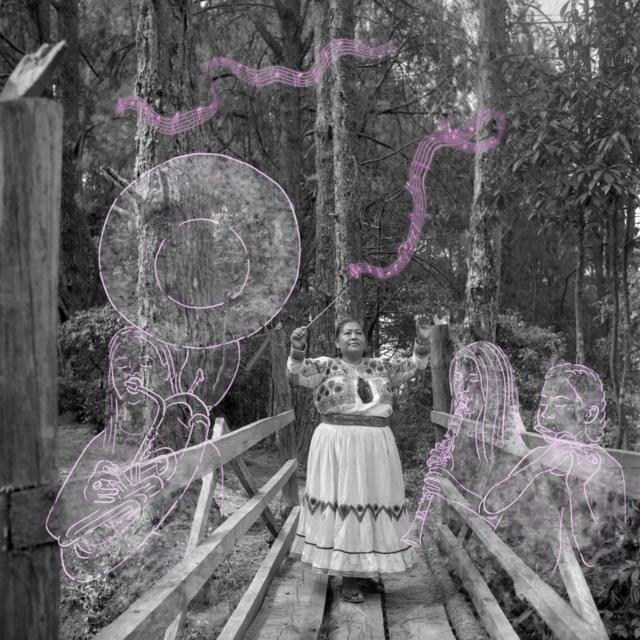
Author of the photo, Citlali Fabián
The project combines portraits with symbolic images and was created in collaboration with activists and artists from different indigenous communities in southern Mexico. The series tells the stories of iconic women from Oaxaca’s indigenous communities, whose social work has a great impact in fields such as law, linguistics, art and ecology.
“In her work, Sitlali Fabian raises urgent questions of visibility and representation,” says Monica Allende, head of the 2026 professional jury.
“In many indigenous cultures, stories are told collectively – they are shaped through dialogue and lived experience rather than through a single voice,” she added.
Talking about the motivation behind her work, Sitlali Fabian said: “Growing up without role models can make it difficult to dream or realise one’s own ability to shape the future. Their stories give insight into the world we live in and how their roles and labour entail their feelings.”
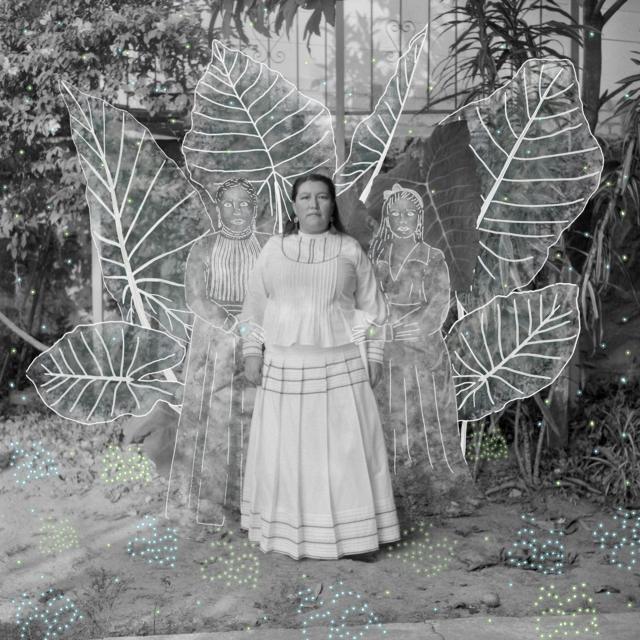
Author photo, Citlali Fabián
The other nine winners of the professional competition, which can be seen below, were chosen from more than 430,000 entries. In addition, three more winners have been chosen in the Open, Student and Youth categories.
The Sony World Photography Awards 2026 exhibition runs at Somerset House in London until 4 May 2026.
Architecture and Design
“Haor’s Dwellings” photo. Kishorganj, in the Haor region of Bangladesh.
Here, houses are built on naturally elevated embankments that become islands during the monsoon season.
Shot from above, the settlements reveal distinctive patterns formed by topography and water.
The photographs highlight the ingenuity and resilience of local people in designing houses and villages that coexist with annual floods.
Documentary projects
“Under the Shadow of Coca” (Under the Shadow of Coca) – Santiago Mesa, Colombia
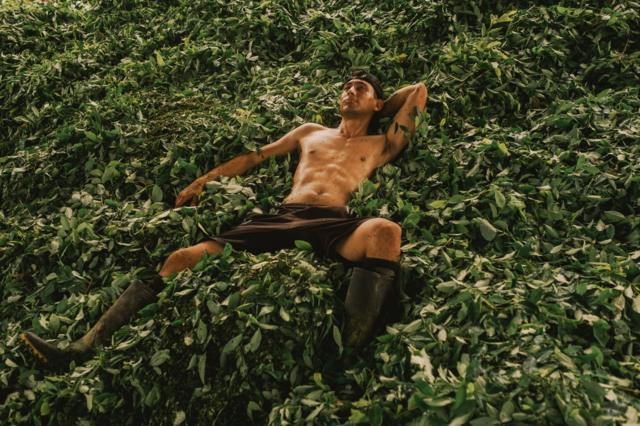
Author photo, Santiago Mesa
Putumayo, where coca cultivation remains one of the few sources of income for rural families.
The series traces the fates of farmers and their families, as well as members of the Comandos de la Frontera, a criminal gang that dominates the territory and the cocaine trade.
The photographs provide an intimate look at the complex realities of life in a region where economic survival is closely intertwined with the shadow of an illegal macro-economy.
Environment
“Notes on How to Build a Forest” – Isadora Romero, Ecuador
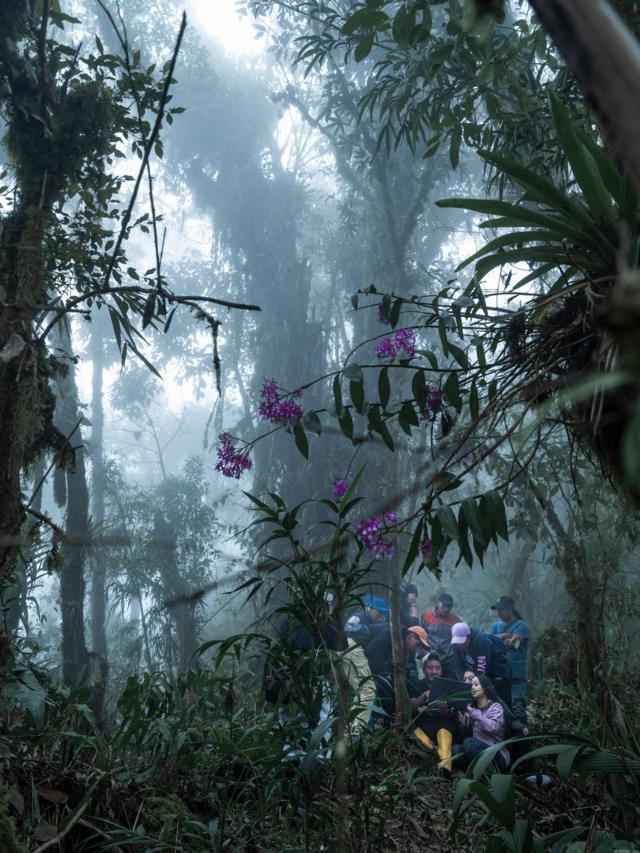
Author photo, Isadora Romero project set in the regions of Mache Chindul and Yunguya in Ecuador.
Using documentary and experimental techniques – particularly infrared, thermal and benzene photography, as well as community archives – the work combines art and science, opening up new ways of thinking about conservation and relationships with the forest.
Landscape
“Constructed Landscapes” – Dafna Talmor, UK
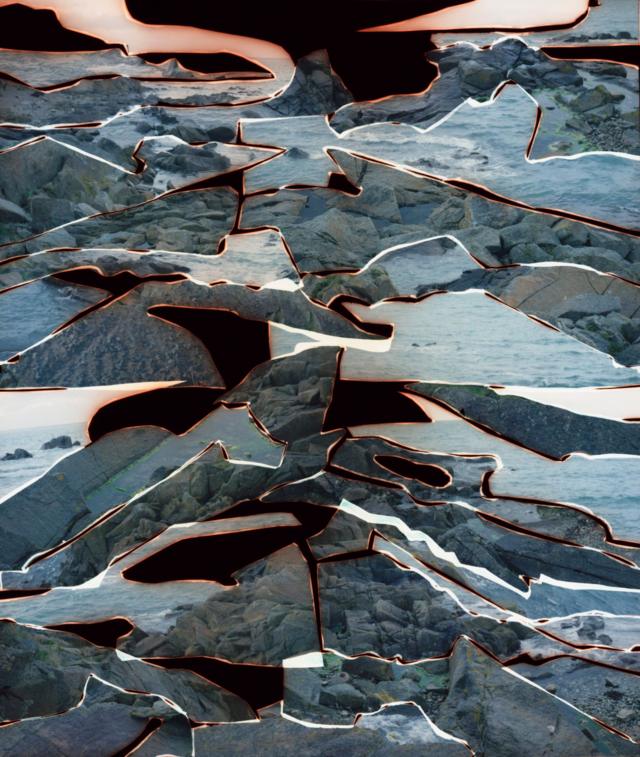
Author of the photo, Dafna Talmor
Personally hand printed and collaged colour negatives to form abstract landscapes.
The project playfully challenges Western pictorial traditions that favour a single fixed point of view, adopting a multiplicity of perspectives.
Perspectives
“Yolk Up: A Portrait of Ordinary Korean Fatherhood Today” (Sunny Side Up).
South Korea continues to face the world’s lowest fertility rates.
For this series in the Perspectives category, Seoul-based photographer Shingo Kim considers the choice between having a child or a pet.
These images are his poignant testimony ahead of the parenting world.
Portrait
“The Faithful” (The Faithful) – Jean-Marc Caimi and Valentina Piccinni, Italy
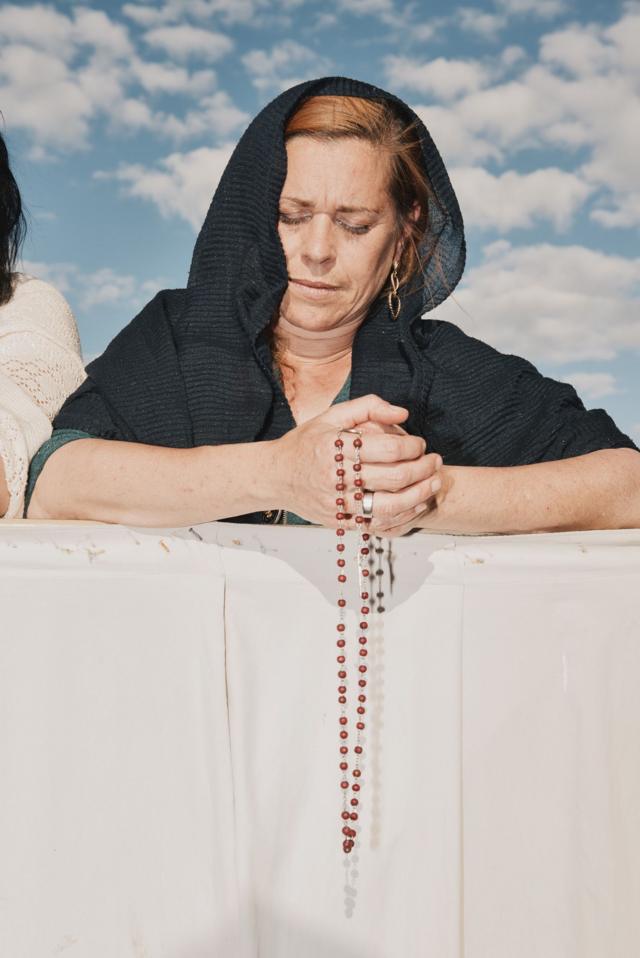
Author of the photo, Jean-Marc Caimi / Valentina Piccinni
and are a photographic duo whose documentary projects focus on how people navigate socio-political and environmental change.
In this series, shot between the death of one pope and the election of the next, the photographers show how pilgrimages have taken on the characteristics of a cunatic movement.
The rosaries, flags and prayer gestures were performed with an awareness of the presence of cameras and media.
Sport
“Lilacs (Buzkashi)” – Todd Antony, New Zealand
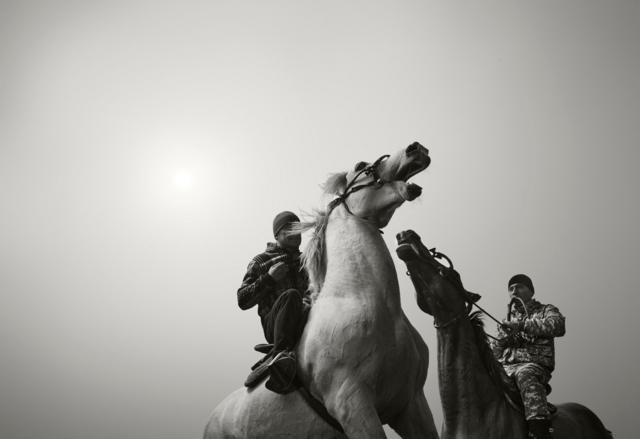
Author photo, Todd Antony
Buzkashi, but without teams and without delineated boundaries. The “ball” is the gutted, headless carcass of a goat.
Born among the nomadic equestrian cultures of Central Asia, the game is still a stern test of strength and horsemanship.
Wildlife
“Crossing Point” – Will Burrard-Lucas, Britain.
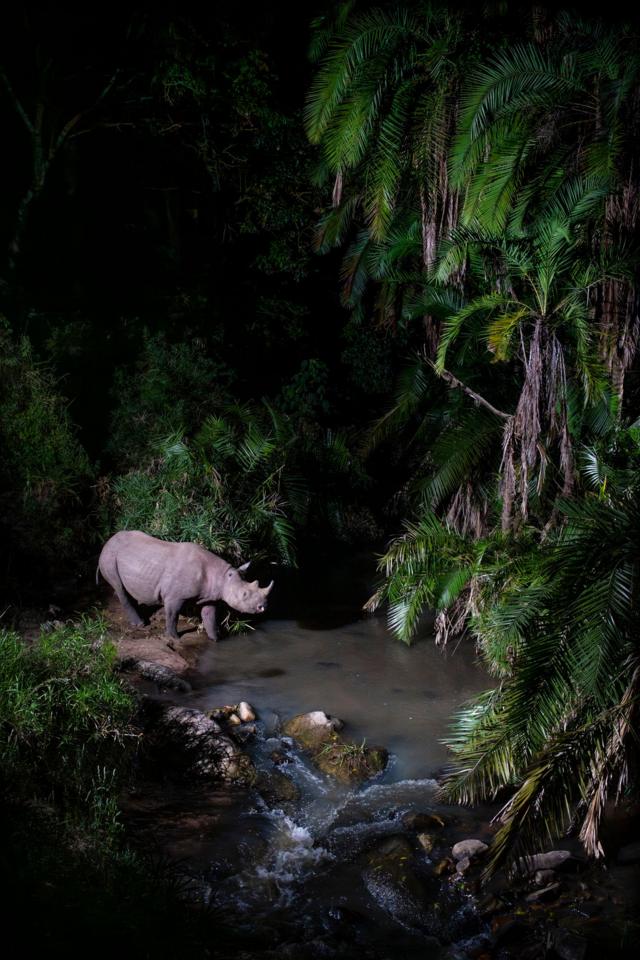
The author of the photo, Will Burrard-Lucas (7:1 Burrard-Lucas used a remote photo trap set up at a forested river crossing in the Masai Mara National Reserve in Kenya.
The camera, placed in collaboration with rhino conservation rangers, was used to monitor the movement of endangered black rhinos through a key corridor, and it operated continuously for three months.
The location was chosen for its evocative landscapes to capture both the movement of the animals and the ecological beauty of an area largely closed to tourism.
Open category
“The Barefoot Volcanologist” – Elle Leontiev, Australia
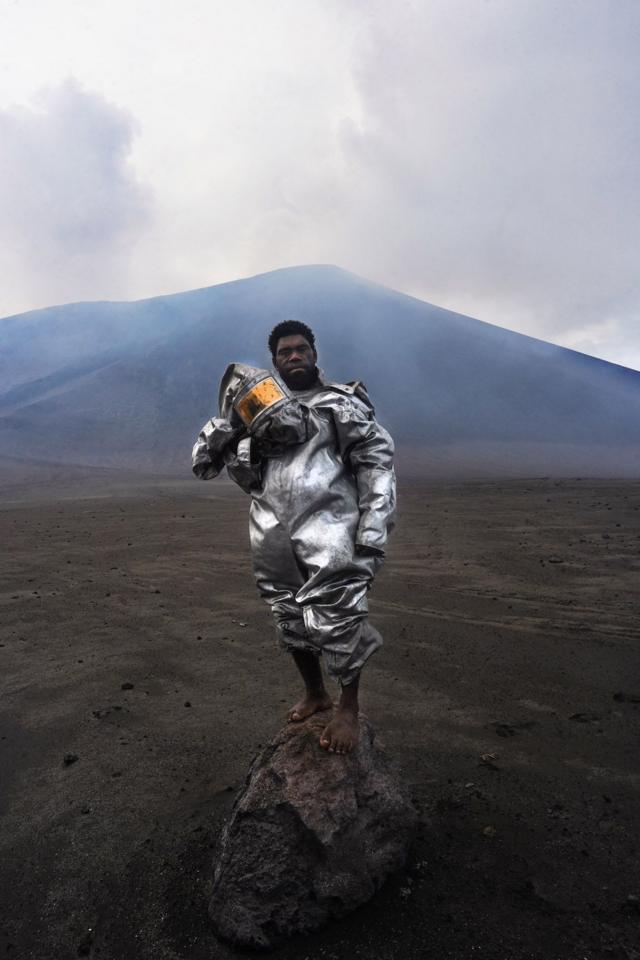
Author of the photo, Elle Leontiev (7:1 shots for their ability to reduce a moment to an image that resonates far beyond it.
On the ash plains of Yasur volcano on Tanna Island in Vanuatu, Phillip – an internationally recognised self-taught volcanologist – stands barefoot on a volcanic bomb.
Wearing a protective lava suit donated by visiting researchers, he poses against the backdrop of the volcano, from which a plume of gas and sulphur rises into the sky.
Student category
“The place where I used to play” – Jubair Ahmed Arnob, Bangladesh
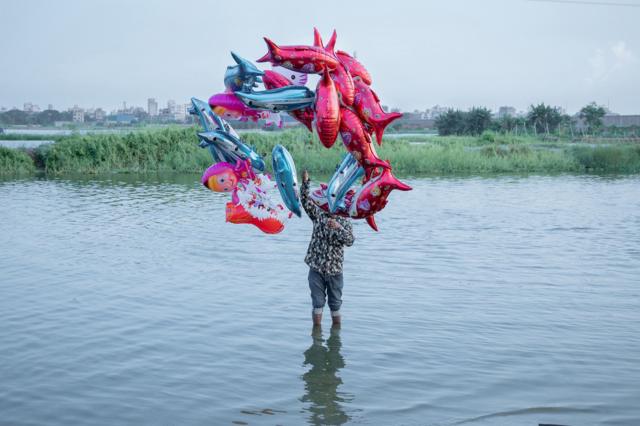
The theme of the student competition was Together, which invited students to submit a series of works about unity.
Over the course of three years, photographer Jubair Ahmed Arnob documented the disappearing landscapes of Dhaka in Bangladesh in a dreamy, surrealistic manner, layering memory and emotion.
Youth Category
“Saving History from the Flames” – Philip Kangas, Sweden
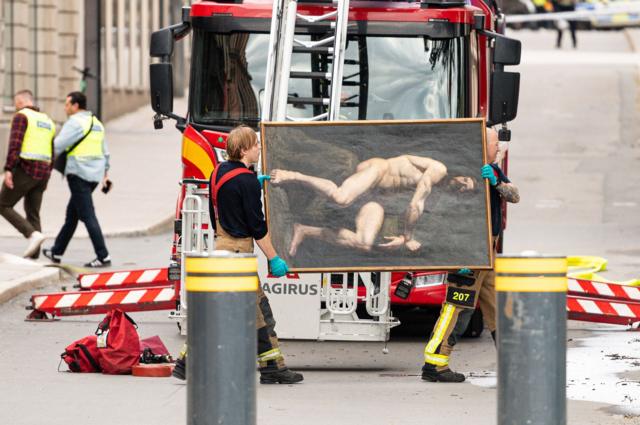
Photo by Philip Kangas (7:1446) A fire broke out at the Academy of Fine Arts in the centre of Stockholm, firefighters worked hard to contain the fire and began removing artworks to safety.
All photos courtesy of the Sony World Photography Awards.