

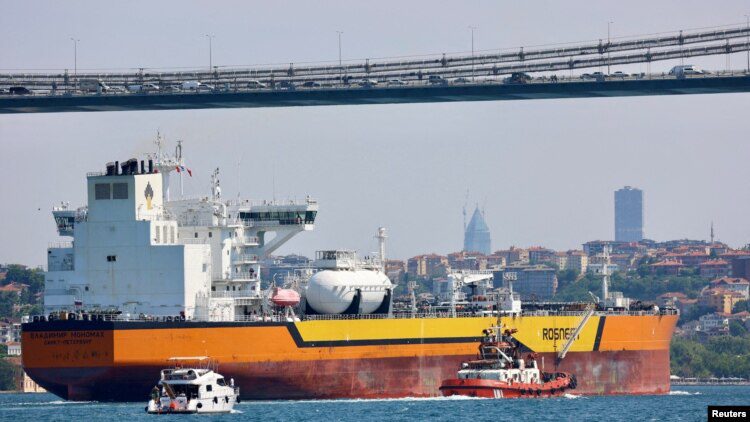

Nearly a billion barrels of oil have accumulated in tankers across the world’s oceans, a “disproportionately large” share of which is from sub-sanctioned countries, Bloomberg writes, citing ship tracking data and analytics from Vortexa, Kpler and OilX.
According to the agency, since the end of August, the volume of such oil has increased by about 40%: almost all of this growth is accounted for crude from Russia, Iran, Venezuela or countries of uncertain origin.
According to Bloomberg’s analysis of data from ship-tracking companies, the growth in the volume of sub-sanctioned oil is due to supplies from Russia. The fate of this oil will determine the dynamics of oil prices in the coming months, traders said.
As the agency points out, this accumulation threatens the revenues of sub-sanctioned Neftegaz and could have implications for the global oil market, which is predicted to be heading towards oversupply.
At the same time, the tanker fleet is overloaded, they noted: daily transport costs have exceeded $100,000.
According to Bloomberg calculations based on data from the Finance Ministry, Russia’s oil tax revenues fell more than 24 per cent year-on-year last month. Based on amendments to Russia’s 2025 budget, the government expects oil and gas revenues to be the lowest this year since the 2020 pandemic, the agency said. At the same time, federal authorities forecast oil and gas revenues to grow over the next three years, expecting a recovery in Urals prices.
The remaining share in tankers is oil from other countries: since the end of August, Saudi Arabia and the United States have contributed the most to the growth of volumes at sea, the agency noted.
Earlier it became known that refiners in India, which accounted for two-thirds of Russian oil imports in 2025, and China, which accounted for almost half of daily imports, excluded Russian fuel from tenders since December.
The refusal of new supplies is linked to fears of secondary sanctions following the announcement of US sanctions against Lukoil and Rosneft, which were imposed on 22 October “due to Russia’s lack of serious commitment to the peace process aimed at ending the war in Ukraine”.