

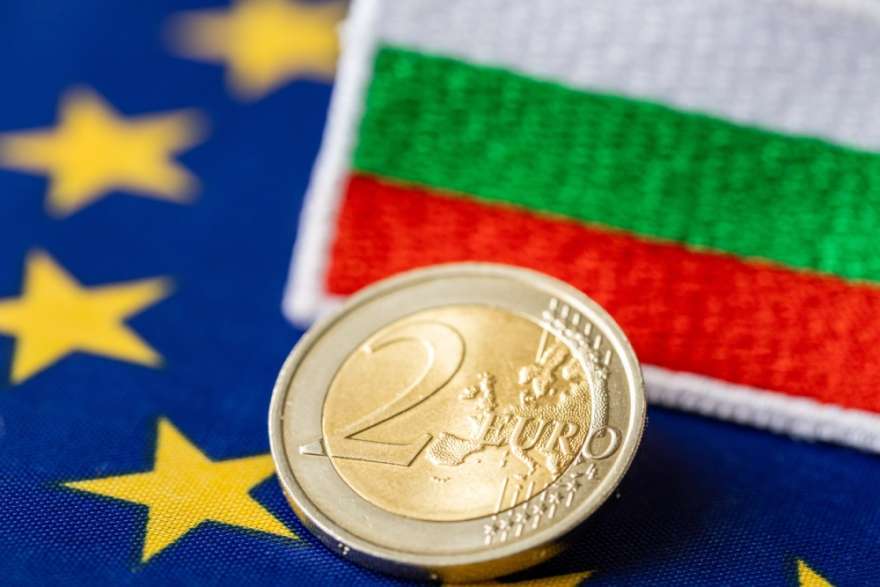

On 1 January 2026, Bulgaria will switch to the single European currency, the euro.
This is a historic step for the country and a boon for individuals and businesses in the euro area. The transition will lead to greater economic stability, smoother transactions and stronger European integration. For Bulgaria, adopting the euro will better support long-term economic growth and strengthen its resilience,” the European Central Bank said in a statement on its website.
The publication said the change could raise questions and concerns.
However, the ECB and national authorities are working closely together to ensure a smooth transition for all through careful planning and a focus on price stability,” the European Central Bank assures.
Bulgaria is parting ways with its national currency, the Leva, 19 years after it joined the European Union. The press of the veteran eurozone countries points out that for tourists and travellers this will provide convenience. However, there are concerns within Bulgaria itself, as the ECB recognises.
Expectations of benefits are overshadowed by fears of likely price increases, as seen in Croatia, which joined the eurozone three years ago. These concerns are all the more serious given that Bulgaria is among the poorest countries in the EU.
However, the European Commission (EC) believed that this Balkan state, which becomes the 21st member of the eurozone, fulfilled the relevant criteria: economic stability, government debt below 60 per cent of GDP and low inflation.
The EC announced on 4 June 2025 its conclusion that Bulgaria is ready to switch to the euro from 1 January 2026.
With the euro, Bulgaria’s economy will be stronger, with more trade with eurozone partners, foreign direct investment, access to finance, quality jobs and real income. And Bulgaria will take its rightful place in shaping decisions within the eurozone,” EC President Ursula von der Leyen said on the occasion.
The Council of the EU in turn announced on 8 July 2025 the approval of the last three legal acts necessary for the introduction of the euro in Bulgaria from 1 January 2026.
This marks the culmination of Bulgaria’s thorough accession process, involving rigorous analyses and intensive preparations, said Danish Economy Minister Stephanie Lose, who held the Presidency of the Council of the EU at the time.
One of the three legal acts sets the exchange rate between the euro and the Bulgarian lion at 1.95583 lion to 1 euro. This corresponds to the current central exchange rate of the Lion in the Exchange Rate Mechanism (Exchange Rate Mechanism II),” the EU Council communiqué said.
After Bulgaria’s accession to the eurozone, there will remain six countries in the EU that do not use the currency: the Czech Republic, Denmark, Hungary, Poland, Romania, Sweden and Romania.
The European Monetary Union – the Eurozone – began functioning on 1 January 1999, when the euro, the single European currency, was introduced into non-cash circulation. On 1 March 2002, the euro became the only legal tender in the Eurozone. Eurozone countries delegate all monetary policy powers to the ECB, including the decision on the amount of currency issuance and the level of the key interest rate.