


The Italian government’s call to restrict the application of Schengen rules in relation to Spain, following a mass influx of migrants from Morocco into the Spanish city of Ceuta, has received support from some European politicians, but has drawn sharp criticism from Madrid and raised questions about the legal feasibility of such a move.
According to the Spanish Ministry of the Interior, around 50,000 people may have entered Ceuta since the morning of 30 July. The head of the local government, Juan Jesús Vivas, estimated the number of arrivals at 60,000. Around half of them subsequently returned to Morocco of their own accord. According to various estimates, between 34 and 41 people died whilst attempting to cross the border.
Spain has deployed the military and additional police units to Ceuta. Prime Minister Pedro Sánchez described the mass border crossing as a violation of the country’s territorial sovereignty and announced that the return of those who had entered Spanish territory illegally would be expedited. Madrid stated that it was acting in coordination with the Moroccan authorities.
Italian Prime Minister Giorgia Meloni stated that Rome is prepared to implement emergency measures to protect its borders, in particular to consider “suspending the Schengen Area with Spain”.
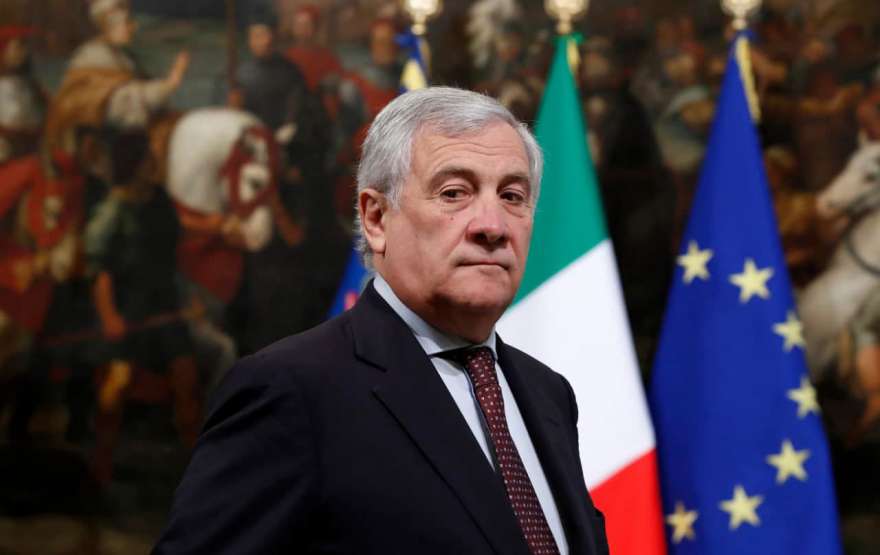
Italian Foreign Minister Antonio Tajani and Transport Minister Matteo Salvini also called for the resumption of border controls with Spain. Tajani linked the events in Ceuta to Madrid’s decision to regularise the status of hundreds of thousands of migrants who had previously been in the country without proper status.
Finland’s Minister for the Interior, Mari Rantanen, backed the Italian initiative, stating that Spain had allegedly failed to fulfil its obligation to protect the Schengen Area’s external border. Danish Prime Minister Mette Frederiksen called for possible restrictions to be considered, but did not announce any specific decision by her government.
Swedish Prime Minister Ulf Kristersson merely stated that Stockholm was prepared to take the necessary measures if events in Ceuta began to affect security or the migration situation in Sweden. This is not the same as supporting Spain’s exclusion from the Schengen Area.
As of the evening of 31 July, there is no reliable official confirmation that Austria has supported the exclusion or suspension of Spain’s Schengen membership. Therefore, the report of a coordinated position by four countries cannot be fully confirmed.
At the same time, France has ordered tighter border checks with Spain. Such measures are legally permissible as a temporary reinstatement of internal border controls, but do not imply Spain’s withdrawal from or exclusion from the Schengen Area.
Spain’s Foreign Minister, José Manuel Albares, summoned the Italian ambassador in Madrid and described Tajani’s statements as unacceptable.
“This statement is inappropriate coming from the foreign minister of a partner country and friend, from whom we expect European solidarity, not party political demagoguery,” said Albares.
The Spanish authorities attribute the crisis to a false interpretation, spread by people-smugglers, of a Supreme Court ruling which restricted the immediate return of migrants intercepted at sea near Ceuta and Melilla.
Critics of the Italian initiative also point out that exploiting the migrant crisis for domestic political gain may fuel xenophobic sentiments and replace the necessary debate on external border security with political statements that cannot be implemented in the proposed form.
Can Spain be excluded from the Schengen Area?
Current EU legislation does not contain a specific procedure that would allow a single state or group of states simply to ‘exclude’ another country from the Schengen Area.
The Schengen Borders Code allows states to temporarily reintroduce controls at their internal borders in the event of a serious threat to public order or internal security. The state must notify the European Commission and the other Schengen members of this. Such controls must be a measure of last resort, temporary and proportionate.
If serious and persistent shortcomings in the protection of external borders threaten the functioning of the entire Schengen Area, the Council of the EU, on a proposal from the European Commission, may recommend that one or more countries reintroduce controls at their internal borders. The initial duration of such a decision is up to six months, and the total duration may not normally exceed two years. This does not constitute an exclusion from the Schengen area.
The special status of Ceuta and Melilla must be taken into account separately. Spain is already obliged to check the documents of passengers travelling by sea or air from these cities to mainland Spain or other Schengen Area states. Therefore, entering Ceuta illegally does not, in itself, allow for uncontrolled movement across Europe.
Consequently, Italy, France or other countries may temporarily step up checks on passengers arriving from Spain. However, there is no legal procedure for unilaterally excluding Spain from the Schengen Area.