

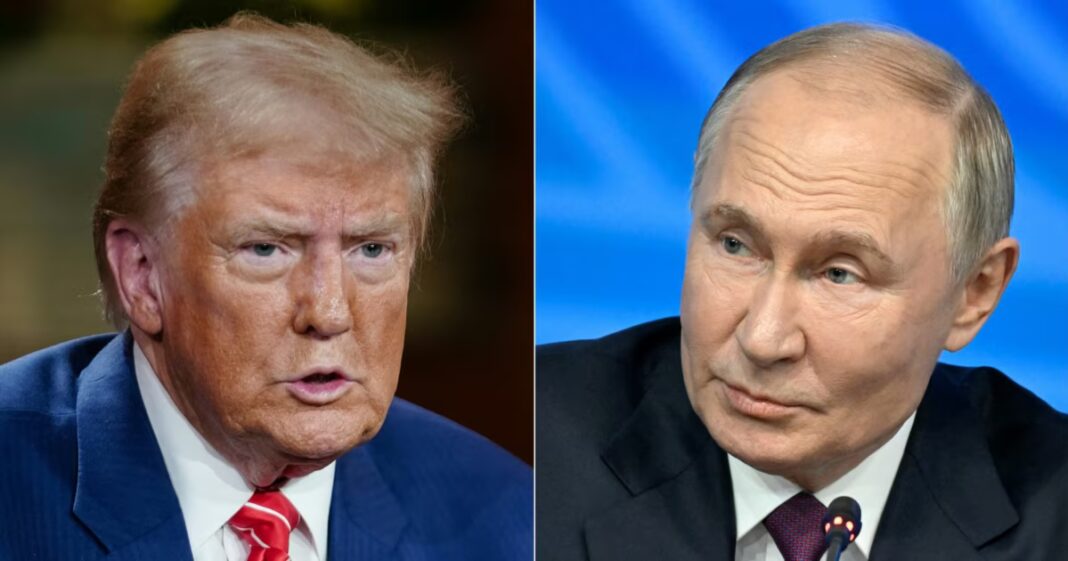

Statements made by Kremlin representatives in the run-up to the trilateral talks between Ukraine, the US and Russia scheduled for November suggest that Moscow intends to reject proposals for a ceasefire, according to a report by the US Institute for the Study of War (ISW).
Analysts have drawn attention to the remarks made by Kremlin spokesperson Dmitry Peskov. He stated that the decision to proceed with the trilateral talks “does not imply any restrictions on military operations” and that Russian troops will continue their operations against Ukraine. Yuri Ushakov, an aide to the Russian President, said that the upcoming talks “will achieve little” and are likely to be nothing more than a “trial run”.
“Kremlin representatives have consistently rejected proposals put forward by the US and Ukraine for a partial or complete ceasefire, whilst Ukrainian officials continually reaffirm their readiness to take such a step. Recent statements by Peskov and Ushakov show that the Kremlin’s position ahead of the forthcoming trilateral talks remains unchanged: a rejection of proposals for a ceasefire,” the report states.
Furthermore, the ISW noted that the Kremlin’s current stance in the negotiations on Russia’s war against Ukraine still includes Moscow’s long-standing demand, put forward even before the full-scale invasion: to amend NATO’s charter and return the alliance to its 1997 borders.
The British newspaper The Telegraph, citing diplomatic sources, reported that Moscow may use the new round of talks to put pressure on NATO. According to the publication, the Kremlin intends to demand that the alliance’s military presence in Central and Eastern Europe be reduced to 1997 levels.
Putin had already made such a demand of the West at the end of 2021 — shortly before Russia’s full-scale invasion of Ukraine. At that time, Moscow’s demand was rejected.
On 23 October, Peskov stated that the European security architecture is one of the most important factors in achieving peace in Ukraine, and that a resolution to the war is ‘impossible’ without Europe’s involvement.
‘The Telegraph report confirms the Institute for the Study of War’s previous assessment: the Kremlin continues to insist on its long-standing ultimatums, put forward in December 2021. In particular, these demands call for an end to the deployment of troops and weapons systems in NATO countries that joined the alliance after 1997, which would give Russia a veto over a wide range of NATO’s internal affairs,” the report states.
According to analysts, senior Kremlin officials have repeatedly reiterated these ultimatum-style demands in the months and years since the start of the full-scale invasion and have shown no willingness to compromise.
“It is highly likely that the Kremlin will reiterate these demands at the forthcoming trilateral talks scheduled for 10 November, and will attempt to use recent US concessions to secure further concessions on NATO and the post-Cold War European security architecture. Putin’s demands, put forward in December 2021, clearly contradict US President Donald Trump’s commitments to maintain the US military presence in Poland and to station American troops in the Baltic states,” the report states.
It was previously reported that an agreement had been reached to resume trilateral talks between Ukraine, the US and Russia. These are most likely to take place after the US mid-term elections, scheduled for 3 November.
Ukrainian President Volodymyr Zelenskyy stated that security guarantees for Ukraine in the event of a cessation of hostilities cannot be dictated by the Russian side. Restrictions on the Ukrainian army and issues of the country’s sovereignty, he said, are not up for discussion. Zelenskyy also spoke out against easing international sanctions against Russia.