

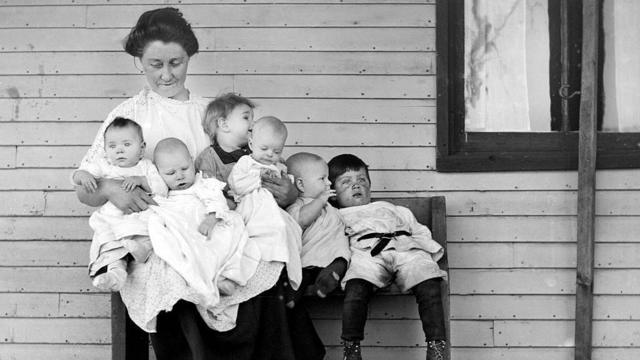

When babies cry hysterically, refuse to eat or stay awake, mums may joke that babies are shortening their lives. But a new study suggests that may not be so far off the mark for women living in austere environments.
An analysis of historical records suggests that some mothers’ lives may have been shortened by up to six months for each child born, with women who lived in the most difficult circumstances seeming to feel the link the most.
Evolutionary researchers examined parish records that contain birth and death data in the population. They are about 4,684 women who lived around the time of the Great Finnish Famine between 1866 and 1868.
It was one of the “worst famines in recent European history,” explains the study’s principal investigator, waiting six months for each child.
The results suggest that this may be because mothers were channelling huge amounts of energy from repairing their own cells into reproduction. This increased the risk of the disease later in life.
However, no association was found between a woman’s life expectancy and childbirth in those who lived before or after starvation.
“We only see this trade-off in women who were in this reproductive period of their lives when the famine occurred,” says Dr Young.
This suggests that the environment in which women lived during their childbearing years was a key factor.
Why does having children affect life expectancy?
So why did this happen?
‘One explanation is that the long-term health effects of childbirth may have been exacerbated between births, [the impact on health] accumulates,’ explains Dr Yang.
However, because the study analysed historical data rather than creating new data in a lab experiment, he adds that he can’t be sure.
‘Trade-off’ between offspring longevity
The results were also more pronounced in women who had many children, but Dr Young’s study shows that not all women were affected in the same way.
“It’s actually a combination of two concepts: very large families … and events like famine,” Dr Young explains.
For decades, scientists have been puzzled by the difference between species that live shorter lives and produce many offspring, such as mice and insects, and those that live longer and have fewer offspring, such as elephants, whales and humans.
One of the main theories is that the energy required is induced and this contributes to aging.
Do modern women suffer in the same way?
But can the lessons learnt from women 200 years ago be applied to mothers in the 21st century?
“It’s important to put this in the context of a time in history when modern medical care was less advanced,” says Dr Young.
“At that time, women had an average of about four or five children, which is much larger than the family size we have today.”
Since the 1800s, the number of children in families has declined dramatically around the world.
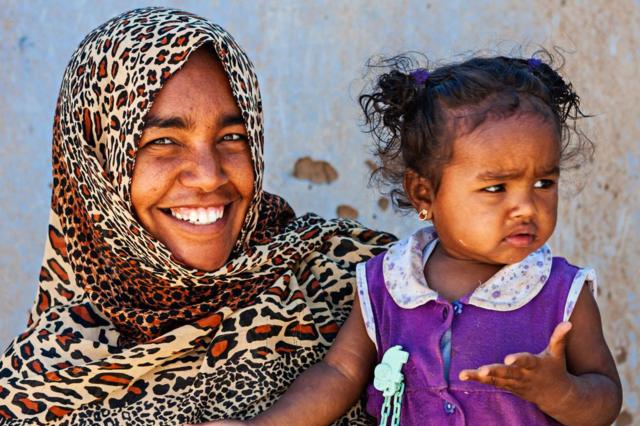
Photo by Getty Images
In 2023, the average woman will have just over two children. This change is due to increased access to education, the labour market and contraceptives, as well as a decrease in infant mortality.
However, there are countries like Niger, Chad, Somalia and the thought that these results can be seen in some parts of the world today.