


The International Atomic Energy Agency (IAEA) will continue to monitor the situation in Japan, said the agency’s Director General, Rafael Grossi.
He said that the IAEA had received a report from Japan’s Nuclear Regulation Authority (NRA) that today’s 7.1-magnitude earthquake had not caused any damage or safety issues at the Sendai nuclear power station, located approximately 100 km from the epicentre – it remains operational.
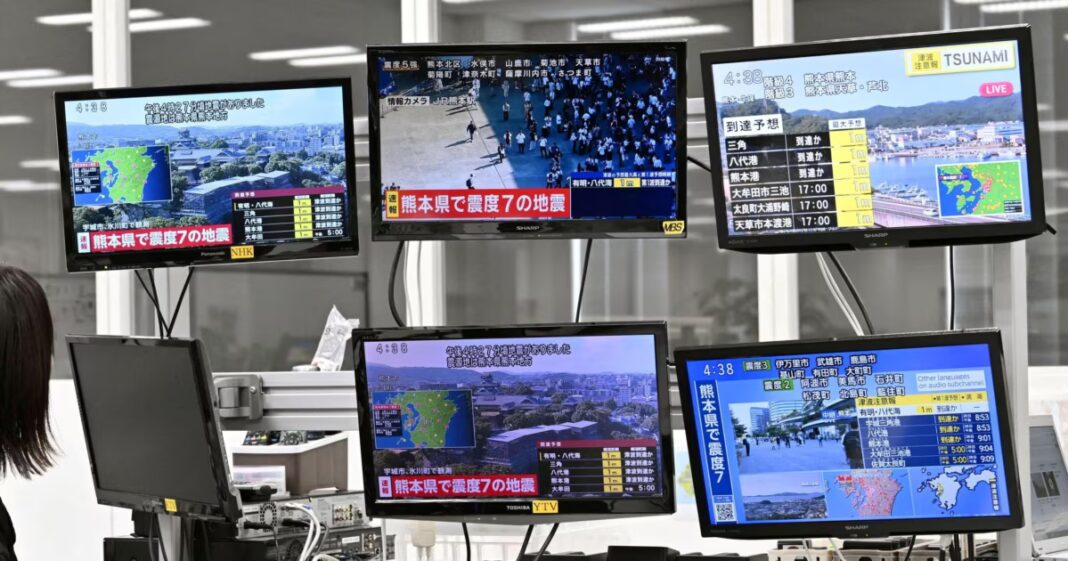
In Japan, at least 50 people were injured as a result of the powerful earthquake on 28 July, according to the public broadcaster NHK.
Japanese Prime Minister Sanae Takaichi stated that the tremors had caused buildings to collapse and fires to break out in south-western Japan. According to her, some areas are experiencing power cuts, fires have broken out, and roads and bridges have been damaged.
Japan’s Nuclear Regulation Authority reported that no abnormalities had been detected at nuclear power stations.
Japan is one of the world’s most earthquake-prone countries. On 11 March 2011, a magnitude 9.0 earthquake struck the country, one of the strongest on record, triggering a powerful tsunami that swept far inland, destroying towns and their key infrastructure and causing a serious accident at the Fukushima Daiichi nuclear power station. More than 18,000 people lost their lives and nearly half a million in the region were forced to flee their homes.
In the Kumamoto region, which has been hit by the current earthquake, 275 people died and around 2,800 were injured 10 years ago as a result of powerful tremors.