

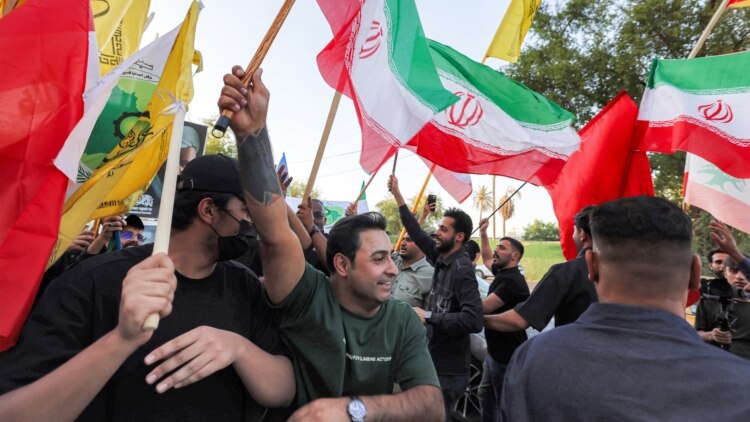

Iran’s military leadership has announced yet another closure of the Strait of Hormuz, accusing the United States of allegedly ‘breaching the agreements on the cessation of hostilities’.
According to the Iranian statement, Washington has allegedly “breached the first clause of the memorandum on ending the war between the two countries, which provided for a cessation of hostilities”.
Tehran also described the closure of the Strait as a “response to Israel’s strikes on Lebanon” and the continuation, as Iran claims, of “the occupation of the south of the country”.
“It should be noted that this first step is a response to the enemy’s breach of the agreement. If the aggression continues, further measures will be planned and taken to compel the enemy to honour its commitments,” stated the Iranian Armed Forces General Staff.
Meanwhile, US Vice-President JJD Vance told Fox News that “there is no evidence” of the waterway being closed.
The Strait of Hormuz is one of the world’s key maritime routes for the transport of oil and gas. A significant proportion of the world’s energy supplies passes through it.
It was previously reported that Iran had introduced compulsory insurance requirements for all vessels passing through the Strait of Hormuz, which, according to maritime industry observers, is the first step towards introducing a broader system of fees and regulatory control over shipping through this strategic waterway.
According to Lloyd’s List Intelligence – a leading provider of maritime transport data and vessel tracking information – vessels entering the Strait must now obtain insurance cover through an Iran-approved insurance scheme administered by a newly established authority.
On 19 June, Lloyd’s List reported that insurance is currently being provided free of charge during a 60-day transitional period linked to the recently signed memorandum of understanding between Iran and the US; however, industry sources expect transit fees to be introduced subsequently.
According to the report, this measure forms part of Iran’s efforts to establish a new system for regulating the movement of vessels through the Strait of Hormuz, following a recent conflict that disrupted shipping and led to restrictions and security concerns in certain sections of the waterway.
Maritime lawyers and shipping company executives have told Lloyd’s List that the insurance requirement raises doubts as to its compliance with international maritime law and could effectively amount to a transit fee.
Shipowners and insurers are closely monitoring developments, as any additional costs or regulatory burdens in the Strait of Hormuz could have significant implications for global trade and energy markets.
The report came as talks between Iran and the US in Switzerland, scheduled for 19 June, were postponed, with no clear timeline for their resumption.
The agreement between Iran and the United States, concluded earlier this week, provides for the opening of the Strait of Hormuz to commercial shipping and the lifting of the US naval blockade against Iran.
Following the signing, both sides undertook to agree on a final settlement within 60 days, which includes restrictions on Iran’s nuclear programme and the lifting of US sanctions against the Islamic Republic.