

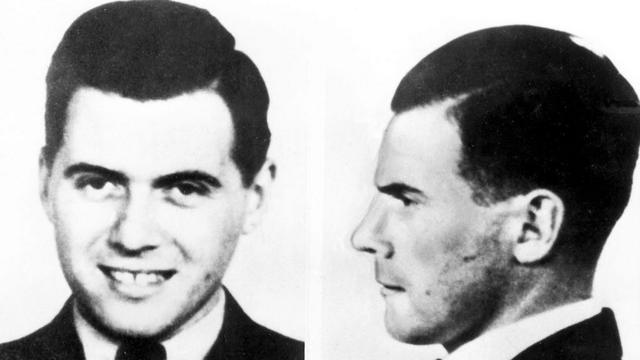

The Swiss Federal Intelligence Service says it will finally reveal long-classified documents about notorious Nazi war criminal Josef Mengele, but did not specify when exactly.
Mengele fled Europe after World War II, but for years it was rumoured that he had been in Switzerland for some time, despite there being an international warrant for his arrest.
Historians have repeatedly demanded access to the files, but so far the Swiss authorities have refused.
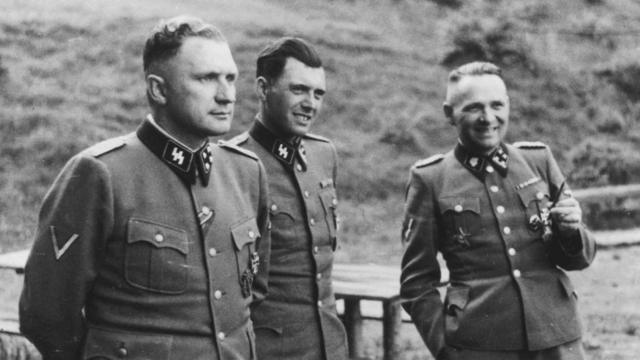
Mengele was a doctor who served in German Waffen-SS units. He was sent to the Auschwitz death camp in Nazi-occupied Poland, where he selected people who were to be sent to the gas chambers. About 1.1 million people, of whom one million were Jews, died at Auschwitz.
Known as the “Angel of Death,” he also selected prisoners, mostly children and twins, for sadistic medical experiments, after which he also sent them to their deaths.
After the war, Mengele, like many high-ranking Nazis, quickly changed both his uniform and his name.
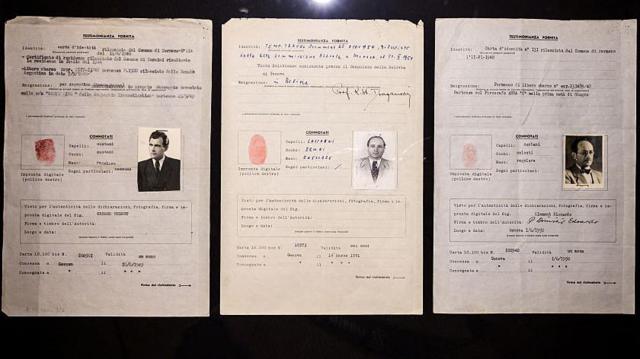
Using a false identity, he obtained a Red Cross passport from the Swiss consulate in Genoa in northern Italy and fled to South America.
The Red Cross assigned these documents to thousands of people across Europe who had been displaced or made stateless because of the war, but Nazis trying to escape persecution were also able to obtain them. For this, the Red Cross later apologised.
Author photo, AFP via Getty Images
But what was Mengele’s connection to Switzerland?
Although he fled Europe in 1949, Mengele spent a ski holiday in the Swiss Alps with his son Rolf in 1956. This information has been known since the 1980s.
Officially after that he lived the rest of his life in South America.
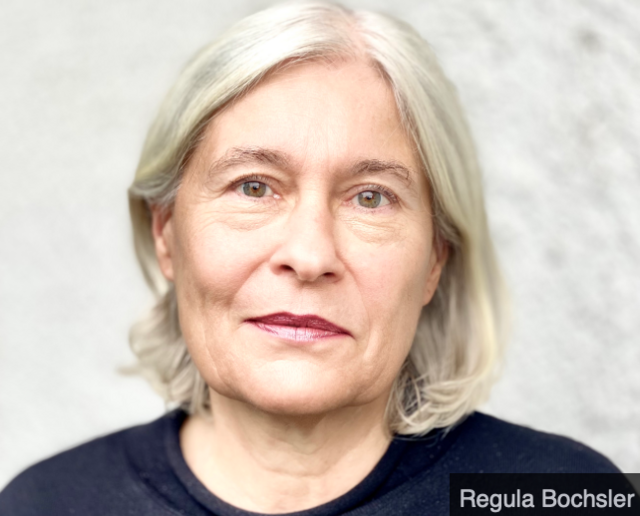
However, the Swiss historian Regula Bochsler has always questioned whether Mengele returned again – and importantly, already after an international arrest warrant was issued for him in 1959.
While researching Switzerland’s possible role as a transit country for fleeing Nazis, Bochsler discovered that in June 1961, Austrian intelligence warned Switzerland: Mengele was travelling under an assumed name and could be on Swiss territory.
Author photo, Regula Bochsler
Meanwhile, Mengele’s wife rented a flat in Zurich and applied for permanent residence.
“There seems to be evidence that Mengele was planning a trip to Europe in 1959,” the historian told the BBC. – Why did Mrs Mengele rent a flat in Zurich?”
The flat was in a modest suburb, although the Mengele family could afford much more luxurious accommodation. But it was located close to the international airport.
Bochsler was able to consult Zurich police files that prove that the flat was under surveillance in 1961. The police even recorded Mrs Mengele driving a Volkswagen, accompanied by an unknown man.
But was it her husband?
Author photo, Universal History Archive
The arrest of a wanted war criminal, as it was of Mengele in 1961, should attract the Swiss federal police. In 2019, Bochsler approached the Swiss Federal Archives to also see their files.
She was turned down. The files were classified until 2071 for reasons of national security and family protection.
Bochsler was neither the first nor the last to be denied. In 2025, her fellow historian Gerard Wettstein tried again. He, too, was turned down.
It seemed ridiculous,” he told the BBC. – As long as they are classified until 2071, it fuels conspiracy theories, everyone says: They probably have something to hide.
Wettstein appealed the decision and. Not cheap and he turned to crowdfunding to raise money for the trial
. The Swiss federal intelligence agency has finally changed its mind.
Sascha Zahl, president of the Swiss Historical Society, is “absolutely certain that there is nothing there concerning Mengele,” but believes there may be references to a foreign intelligence service or foreign informants
By the late 1950s, Israeli Motsad suspects that they may have been in contact with the Swiss. This would have given the Swiss authorities reason to keep the files classified, as sensitive information related to foreign intelligence services is often withheld
. Godah, is that how classified it is?
“This shows the foolishness of the declassification process without historical knowledge,” Zahl believes. – In this way, the administration has fuelled conspiracy theories.”
Other historians, such as Jacob Tanner, say the secrecy of the files tells us more about Switzerland than they could ever tell us about Mengele.
It’s a conflict between national security and historical o.
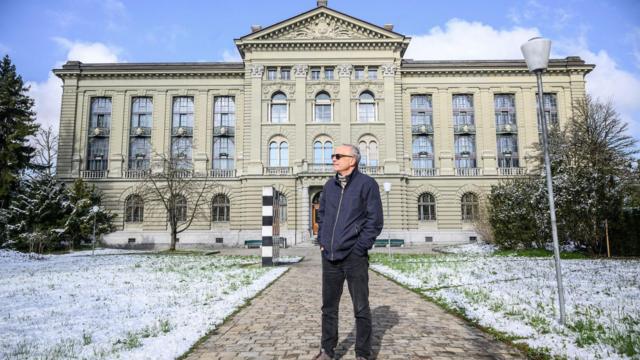
Tanner was a member of the Bergier Commission in the 1990s, which investigated neutral Switzerland’s relationship with Nazi Germany, particularly the role of Swiss banks
He was well aware of the sensitivities and sensitivities of Jewish refugees being kept out of the border while Swiss banks kept the money of Jewish families who later died in Nazi concentration camps
. Was in Switzerland in 1961
Wanted Nazi war criminal Adolf Eichmann was arrested by the Mossad in Argentina in 1960. Could be safer. 1999 He concluded that it was impossible to prove or disprove his presence on Swiss territory. But it was only a few lines in a 24-volume account of the entire war.
Meanwhile, no date has yet been set for the release of the documents, and the Federal Intelligence Service’s statement regarding “conditions and requirements” sounds ominous to Wettstein.
“My fear is that we will get documents that will be dark rather than transparent,” he says.
Bochsler also worries that the files will be heavily obscured. “I don’t trust (the authorities – Ed.) at all. I’m afraid it will be like the Epstein files. Why have these Mengele files been closed for so long?”
Mengele was the subject of secrets, rumours and conspiracies for decades.
He was never arrested, let alone convicted of horrific crimes.
When he died in Brazil in 1979, he was buried under a false name. But rumours continued to spread. In 1985 his body was exhumed, and finally in 1992 DNA testing confirmed that the body was his. The terrible doctor of Auschwitz had passed away. But was he ever in Switzerland? Or did the Swiss simply overlook him?
Did they turn a blind eye to a potentially embarrassing presence to avoid the unwanted attention that an arrest might have caused? Or is it all, like so much else in the Mengele case, just rumour?
“We may never get to the real truth,” Wettstein says. – We’ll never know if he was here or not … but perhaps we can at least get a clearer picture.”