


The door of the private room is duct taped to a notice that reads “GIRLS ONLY”, “boys not included!” and, as a cheeky touch at the end, “don’t worry guys!”.
The lettering is replete with colourful hearts and stars. When I join the girls at a large round table at the DRMH Youth Club in Carmarthen, Wales, a group of about a dozen students are already head over heels in a game of chance card. The conversation flows effortlessly, we chat, and pizza is ordered just in time.
This visit is part of my series on Radio 4 called About The Girls, for which I spoke to around 150 girls, the vast majority of whom are between 13 and 17 years old. What we discussed around the table echoed many of my other conversations.
This project is a continuation of my About The Boys series, for which I also spoke to teenagers from across the UK.
Against the backdrop of the aftermath of Covid-19, the #MeToo movement and all the hype around Andrew Tate, I was curious to find out what they were thinking. I also found them to be great company: thoughtful, eloquent and brave.
Repeating this experiment with the girls seemed a logical and fair step. It happened that just as I was travelling to Carmarthen, the Epstein Files were made public, and this work suddenly seemed even more relevant.
What I didn’t expect was that the same theme would keep coming up in all my conversations: teenage girls still tend to see themselves through the prism of boys. And, importantly, they seem acutely aware of this.
When I So it’s really impossible to talk about it without mentioning boys… And it’s really annoying.
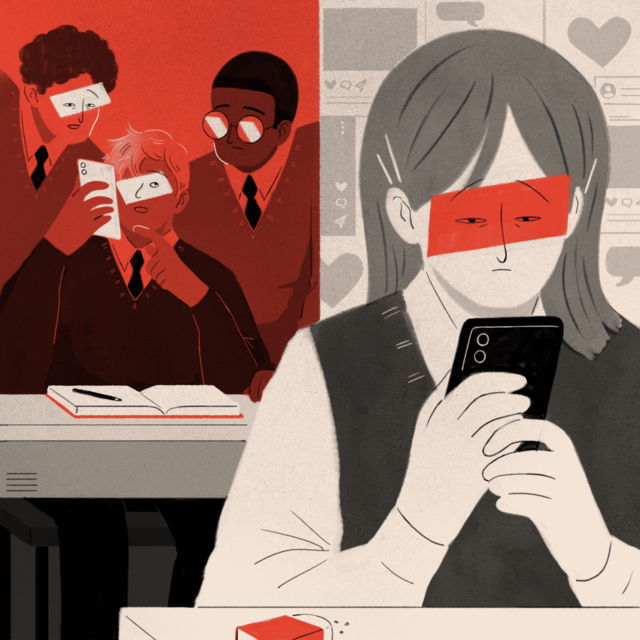
So why does this dynamic persist? The girls I met freely reflected on the burden of gendered social expectations, the influence of boys in the school environment and the endless versions of female ‘perfection’ on social media.
They also described something deeper – how girls learn to behave as they try to navigate the world safely.
“No fuss.”
After all the girls at Carmarthen had gone home, I chatted to Alison Harbour, the youth centre manager. She was delighted that they were all talking so freely.
‘The guys at the club are quite unreasonable,’ she told me, ‘and quite confident in putting out all their thoughts and They described it as not wanting to take up space and trying to be smaller and quieter in mixed company.
The girls’ teachers described them trying to ‘not put themselves forward’, ‘not make a fuss’ or ‘remain inconspicuous’.
As part of her own research, Dr Ola Demkovic, a senior lecturer in educational psychology at the Manchester Institute of Education, talked to young women about issues affecting their mental health.
She notes: ‘We’ve certainly heard from girls about the pressure in this area – it actually means they have to be polite and respectful; they feel the expectations for their behaviour are much higher. So guys can make noise in class and it’s not a problem. Mol, the guys are.
Dr Demkovic argues that society expects girls to “adultify”(adultification) – that is, to present themselves as more mature.
“You have to act like an adult, you don’t have to be playful, express something loudly or show that you’re having a hard time…”.
In other conversations, girls mentioned their fears and experiences of sexual harassment and violence.
Recent research by Girlguiding suggests that 68% of girls change their daily behaviour to avoid sexual advances, and almost every girl I spoke to described experiences of ‘cancelling’.
Dr Anna Yelin of Oxford Brookes University notes that in research conversations with girls, she has found them to be “hurtfully, yet brilliantly and penetratingly aware”: the scrutiny they face often has an undercurrent.
She explains: girls realise how quickly their position becomes dependent on how attractive they appear to men, and also realise that this can compromise their safety.
School environment
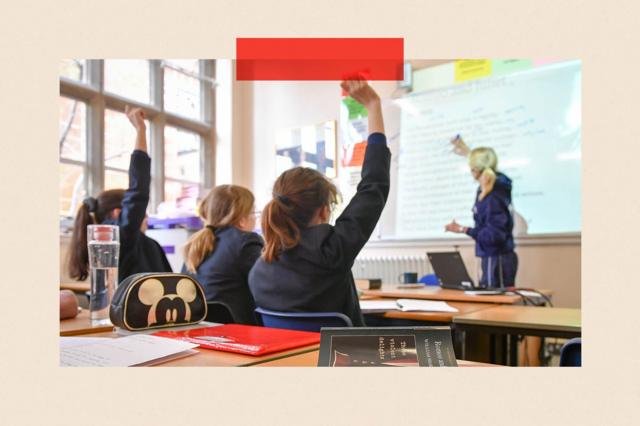
I conducted most of my 150 interviews in schools, where the data on the rise in lysogenic behaviour comes as no surprise to girls.
Recently, the teachers’ union warned that there is a “masculinity crisis brewing” in British schools – after around a quarter of the female teachers it interviewed said they had been subjected to lysogenic images from pupils in the last year.
The girls told me that guys sometimes disparagingly throw them phrases like “make me a sandwich” or “get back in the kitchen”. They are sober about the roots of the problem, though they also feel fear.
“I think this fear comes from looking at social media,” explained one Grade 10 student. – ‘You see that the reason why guys often attack girls is because they want to find someone to blame for their problems. The “main” solution to “this problem becomes simply shifting the blame to the woman.
So at the same time as worrying about their classmates “keeping things to themselves”, girls also feel fearful of how some guys and men might behave, copying the behaviour inherent in the “ionosphere”.
Dr Yelin says: “Their understanding of phylogeny and” rape culture “was so profound and yet painful because they live in it all the time, every day.”
Author photo, PA Media
The same girls said they wanted to protect younger schoolgirls who posted online that they were “seeking a toxic relationship with a guy” in which they would be “told what to do”.
They’ve seen girls try on weird feminine roles to please guys, who in turn display a disgusting version of masculinity.
Their solution is self-organisation. At one school in Rochdale I visited, they set up a hen party to discuss everything from gender inequality, domestic violence and bodybuilding to menstruation, sexuality and friendly companies there.
However, the school’s Birmingham foundation leaders have raised another concern: girls at the school can be alarmingly quiet in class, but that’s only if they come to class at all.
Chronic absenteeism (missing 50% or more of school time) is on the rise.
In 2017/18, only 6% of girls prone to truancy had critically low attendance.
In 2024/25, this proportion more than doubled to 13%. Absence rates were higher among certain groups of pupils, including those eligible for free school meals.
Mental health issues, such as anxiety, were the most common complaint parents of girls made to the charity’s Young Minds helpline. There was also the issue of caring responsibilities for relatives.
I was told of girls, sometimes even Year 6 pupils, who were given the responsibility of looking after younger siblings, causing them to miss lessons. In one town I spoke to a teenage girl who had spent a year out of school “helping mum” with an infant.
Tom Campbell, who heads the ACT Academy Trust (a network of 38 schools in England and Wales), told me:
The alarming situation [among girls] is real. And the data is already glowing red (Number of successful reds). A pass rate of 4, previously matched by a C grade) has fallen by 7 per cent. England football)
I was extremely struck by how clearly all the girls recognised the choices available to them and how different they were to those of previous generations. 15-year-old.
In fact, almost everywhere I went, the girls themselves (without any leading questions) talked about their place in history – how women had recently won the right to vote, work and be independent.
They also described their understanding of the challenges faced by their mothers, sisters, aunts, godparents and grandmothers. Girls noted that they still face the same obstacles, because even when laws change, societal attitudes do not necessarily change with them.
Girls shared that progress in women’s rights, which had “reached a certain point,” is now “slowing down” or even going backwards in some ways. This is all because of social media and the views that are becoming popular there.
They cited the reversal of the Roe v. Wade decision in the US (regarding the right to abortion) and recalled the “anievna” movement, content about “traditional vigilantes” (traditional wives) and the popularity of Ilon Musk’s pro-Catholic views (a system of views – a direction on views, a system of attitudes, behaviour). They told me that they see “older men… Late twenties” freely sharing their thoughts on “what women should look like” online.
I was struck by how well they understand how the online content industry is structured; how clearly girls see the unhealthy ways in which certain lifestyles and beauty standards are imposed on them, and yet still feel the need to conform to these images.
Their annoyance at being confused by this system was almost palpable at times. For example, they resented their “eight-year-old cousins who get hodge-podge make-up for Christmas”, even though they themselves had full make-up on their faces as early as 12 years old.
They know they’re making money from them, but these videos are entertainment for them, which often becomes the basis for socialising with their girlfriends.
Places that can replace social media
After all, it is through social media that their friendships are largely maintained. Girls said they were afraid of falling out of this fast-paced online socialising, because it could lead to ostracism (bullying or being ignored) at school.
They talked about how difficult it was to maintain these ‘hybrid’ friendships ‘daily, all the time’, as well as trying to cope with frustrating instances of online bullying from peers and even worse behaviour from strangers.
One girl expressed the view that as younger children start using social media, her generation will be the last to have a real childhood.
The girls recounted that their parents said they were “growing up at double speed”, but added that even younger girls were already growing up at “triple speed” – “acting like high school girls even though they are only 10 years old”. But the idea of waving a magic wand that would strip them of all that has provoked mixed reactions.
Older teenage girls who are fed up with the norm of “romance via Snapchat” and shocked by lewd photos of genitalia and pornographic sexual communication have expressed a kind of feigned nostalgia – a longing for romantic dating without phones.
However, they also realise how firmly their reality is now intertwined with the virtual world.
Girls of all ages were quick to point out the benefits: the opportunities to find like-minded people who live far away, and at the comfort it can bring. However, some suggested that if social media magically disappeared (for everyone), they would be happier.
After hours of interviews, I keep thinking about the youth clubs I attended. Their numbers dropped significantly in the years before the pandemic.
I particularly remember the netball club and the dance group. These are the so-called ‘third places’ – with real communities and lively activities. In these clubs, the girls I spoke to had a few special things that set these interviews apart from others: places where you can be loud and physically active, not afraid to make noise, take up space and disregard the judgement of the guys or internet critics.
A report published in 2025 by national youth charity OnSide reveals that 76 per cent of young people spend most of their free time in front of screens, and almost half (48 per cent) in their bedrooms.
And I ask myself: while all we’re talking about is getting teenagers off their phones by banning social media (where they now find intimacy and togetherness), have we not thought at all about what worthwhile alternatives we can offer them in reality?