

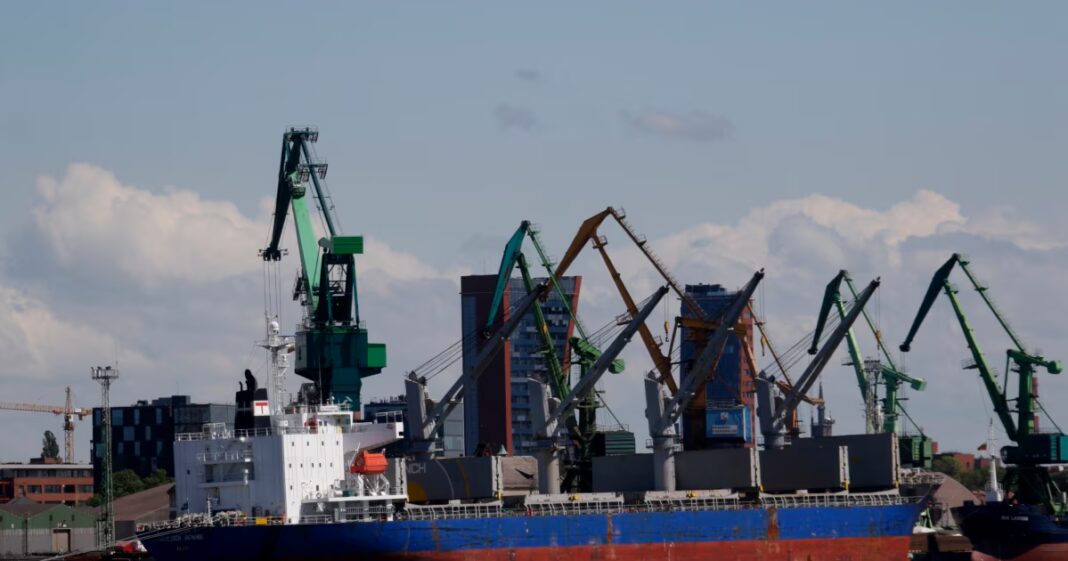

A high-profile initiative to verify the origin of grain imported from Russia and Belarus is continuing in Lithuania. This decision was taken by the Minister for Agriculture, Kęstutis Mažeika, in an effort to prevent the possible transit of grain from the occupied territories of Ukraine. According to him, Russia may use the ports of Lithuania and Latvia to export such grain, passing it off as its own.
Mažeika has asked the State Food and Veterinary Service to carry out urgent checks on all grain shipments arriving at the port of Klaipėda, regardless of their intended use – whether for animal feed or human consumption. The minister explains the need for such measures by the possibility of circumventing existing checks through simplified transit procedures.
Last week, the Food and Veterinary Service had already taken proactive steps and taken samples from one of the grain consignments at the port. Suspicions have arisen that this grain, labelled as Russian, may in fact be Ukrainian grain that has been stolen and transported via Kaliningrad. For this investigation, the samples have been sent to a foreign laboratory in France, where the analysis may take up to three weeks.
Mazeika is calling for cooperation with neighbouring countries to join forces in combating the possible transit of stolen grain. He plans to discuss this issue at the meeting of the Council of Ministers of the European Union at the end of September, proposing that Latvia and Estonia follow Lithuania’s inspection methodology.
Meanwhile, Lithuanian Prime Minister Mindaugas Sinkevičius has given assurances that the country’s infrastructure will not be used for the export of Russian grain. However, it has emerged that small quantities of maize have already arrived at the port of Klaipėda from Kaliningrad, raising further questions. Latvia, for its part, has become the largest transit country for Russian grain and has already begun its own inspections.
It is important to note that the export of Russian grain itself is not restricted by sanctions; however, the situation regarding transport via the Black Sea has become significantly more complicated due to Ukrainian strikes. This is placing an increased burden on the Baltic ports, which Russia makes active use of – including the infrastructure of the Baltic states – thereby heightening the need for strict controls on transit cargo.