


Minister of Agriculture of Russia’s Novosibirsk Region Andrei Shindelov has been dismissed, regional governor Andrei Travnikov announced on 20 May, the Russian service of Radio Liberty reported.
According to him, the reason for dismissal was “accumulated signals and claims in various areas of work.” In particular, “dangerous animal diseases” were recorded in the region “for the first time in many decades” (Travnikov did not say which ones). The governor also noted the “lack of promptness in proving measures of state support for agricultural producers”.
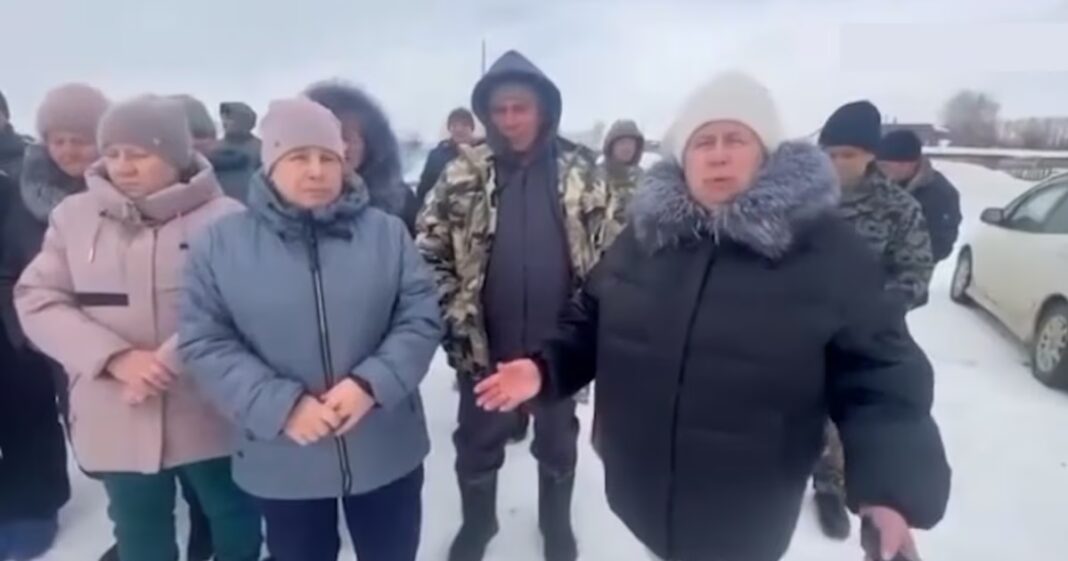
In March, in the Novosibirsk Region and a number of neighbouring Russian regions, authorities began to seize cattle from local residents en masse. This led to protests and caused a significant outcry, including outside the regions. The authorities cited the discovery of epizootic outbreaks of pasteurellosis and rabies.
Local residents claimed that their livestock showed no signs of disease and protested that the authorities would confiscate and kill livestock without the necessary documents and analyses. In the villages of Kozikha and Novopichugovo, local residents blocked roads, but the authorities suppressed the actions and several farmers received administrative fines.
By mid-March, outbreaks had already been reported in ten regions of Russia, including, in addition to Novosibirsk Oblast, Tomsk, Omsk, Sverdlovsk, Samara, Penza, Transbaikalia, Altai Republic, Yakutia, and Chuvashia. In Chuvashia, in particular, quarantine was imposed on a number of territories.
For two incomplete months in Novosibirsk, Omsk, Penza, Tomsk, Samara regions, Khakassia, Kalmykia, Udmurtia and Altai Krai 90.5 thousand heads of cattle were slaughtered, the centre “Analitika. Business. Law.”
Later there were reports that the reason for these measures could be the spread of foot-and-mouth disease. An unexpected outbreak of foot-and-mouth disease in north-west China may indirectly point to this. In an FMD epidemic, mass slaughter of animals is really necessary. But in the official report on the epizootic situation in the Novosibirsk Region this disease was not mentioned.
On 1 April, the local TV channel OTS, owned by the Novosibirsk Oblast government, released a video in which people without names, identified in the subtitles as “farmers”, express full agreement with the seizure of their livestock and assure that everything was done according to the law and they are satisfied with the compensation they received. Residents, however, told the Radio Liberty Sibir, Realia project that the only people who praised the government’s actions on camera were budgetary employees who depend on them.