



“It’s like someone flicks a switch and you instantly feel hungry again,” admits Tanya Hall. She has tried several times to give up weight-loss injections, but each time the so-called “food noise” returned – a persistent desire to eat, which does not go away even when the body has no real need for food.
Weight loss drugs based on the natural hormone GPP-1 – in particular Ozempik, Saxenda and Munyaro – have become a real breakthrough for people for whom diets have not helped for many years.
They mimic the action of the hormone responsible for satiety: they reduce appetite, slow digestion and help control blood sugar levels. Because of this, people start eating less and gradually lose weight.
For many, this has meant not only a new figure, but a complete change in the quality of life.
However, the main question remains: can such drugs be taken for years, and what happens when a person decides to stop?
These drugs are relatively new, their long-term effects are still being studied, and long-term treatment is expensive.
Two women with different stories but the same goal – to lose weight and maintain the results – share their experiences.
“The voice in my head said eat everything.”
Tanya works as a sales manager for a large fitness company.
She started Vegovoy more out of curiosity: she felt like an “outsider” in a professional environment and thought that because she was overweight, she was taken less seriously.
After losing weight, she really changed – her colleagues began to praise her and treat her more attentively.
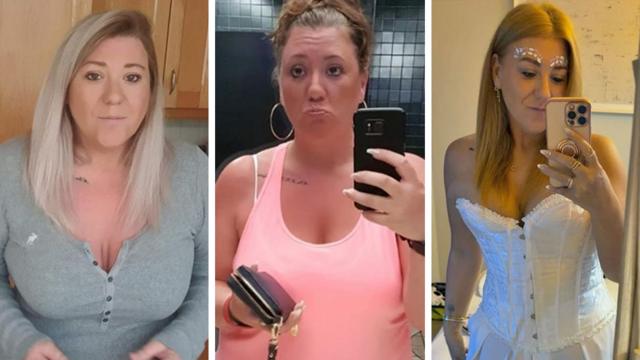
Photo by Tanya Hall
The beginning of the treatment was hard: insomnia, nausea, headaches.
“The hair fell out in strands,” Tanya recalls.
However, the result was amazing: in a few months she lost 16 kilogrammes, and 38 kilogrammes in total.
Several times Tanya tried to refuse injections, but after a few days she lost control over food.
“It was like something switched on in her head and said, ‘Eat everything. ‘ You deserve it because you’ve restricted yourself for so long,” she says.
According to the woman, she was shocked at how strong her appetite had become.
Tanya was faced with a difficult decision: accept the side effects or take the risk and give up the drug altogether.
Family doctor Hussein Al-Zubaidi compares giving up GLP-1-based drugs to jumping into the abyss.
He says many patients stop the injections as soon as they reach their desired weight – and very quickly face a return of uncontrollable appetite.
Studies show that within one to three years after treatment ends, on average, people regain 60-80 per cent of the weight they lost.
The manufacturer of Wegovy, Novo Nordisk, emphasises that treatment decisions should be made in conjunction with a doctor, taking into account all possible risks and side effects.
New start and control
For Ellen Ogle, the weight loss injections were a “last chance”.
Because of her severe obesity, she even had to sign a document before surgery acknowledging the possible risks to her life.
She started taking Mujaro and for the first time felt she could control her eating habits.
“I had always eaten under the influence of my emotions,” Ellen admits. “When I was having fun and when I was feeling bad. It didn’t matter, I didn’t have any internal constraints.”
But as treatment began, the compulsive desire to eat disappeared.
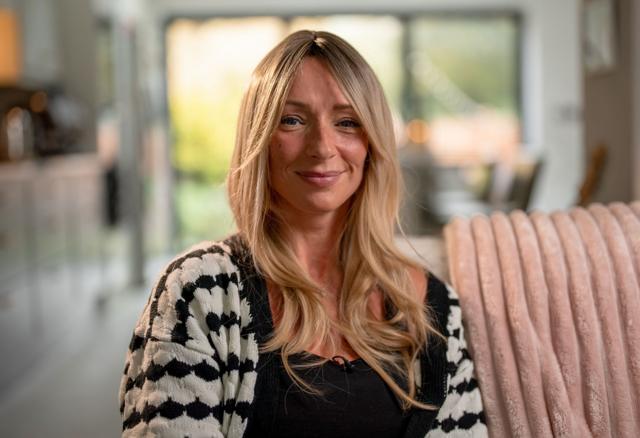
With every pound Ellen lost, she felt she could move more, and when her mood dropped, she went for a run instead of her usual “shoving food in her mouth” routine.
She began learning the basics of nutrition, putting together a diet and exercising.
In 16 weeks Ellen lost 22kg and gradually reduced the dose of the drug.
But after complete withdrawal from injections, the weight began to return, and it became a psychologically difficult moment. However, Ellen decided not to give up.
Life after drugs
Tanya’s weight has remained stable for the past few months, and she says that the drug has had virtually no effect on her health. But she has no plans to stop injecting.
She’s finally reached a weight she feels comfortable with, and every time she tried to stop, the fear of the pounds coming back on quickly was too strong and she had to go back to injecting.
“I was fat for the first 38 years of my life and now I’ve lost 38 kilos,” says Tanya.
“That’s why part of me feels addicted: you have to keep taking it because it gives you a sense of control.”
She pauses for a moment and adds: “Or maybe it’s the other way round… maybe it’s the drug that controls me.”
Ellen, on the other hand, has passed that stage and now weighs 51kg less.
“I want people to know that life after weight loss injections can be stable in the long run,” she says.
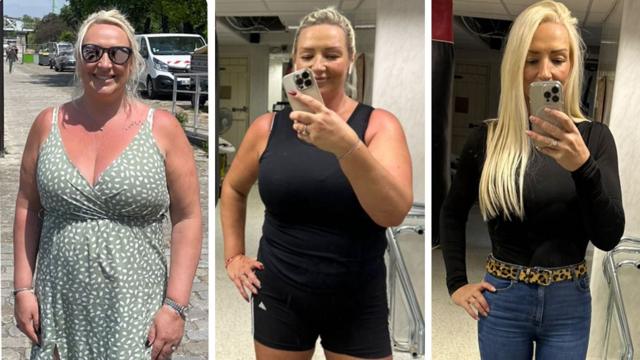
Photo provided by: Ellen
Dr. Hussein Al-Zubaidi emphasises that support after treatment is crucial. Patients should receive clear instructions and an action plan to maintain their results and health.
It’s all about the exit strategy,” she explains. doctor – What matters is the experience people have after stopping injections.
He warns: without proper support, those who stop taking drugs risk falling back into old, unhealthy eating habits.
Stopping injecting often becomes a kind of “weight lottery”. Lifestyle, environmental support, psychological well-being and timing influence the outcome – these are the factors that determine how weight will change after drug use.
The environment in which people live should promote health, not weight. win,” emphasises the doctor.
Drug manufacturers, in particular Eli Lilly, emphasise that patient safety is a priority and actively monitor the effects of their drugs.