

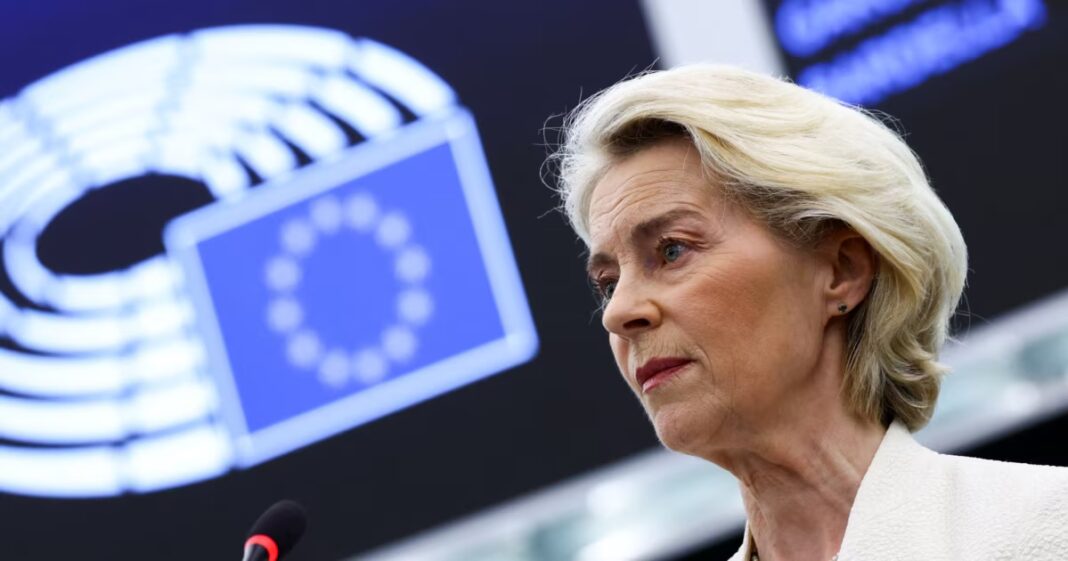

The European Commission has taken an important step towards protecting children and young people by presenting a draft law that could significantly change their interaction with the digital world. This document, known as the EU Kids Act, was presented by European Commission President Ursula von der Leyen on 17 September. It proposes introducing strict restrictions on the use of social media by minors, as well as setting new requirements for the use of artificial intelligence and video platforms.
Under this proposal, children under the age of 13 will not be allowed to use social media at all. For teenagers aged between 13 and 15, access to these platforms will only be possible via accounts created and managed by their parents or guardians. Independent registration on social media will only be permitted from the age of 15. Furthermore, parental controls will allow parents to limit the time their children spend online to one hour a day and to monitor their contacts.
Speaking before the European Parliament, Ursula von der Leyen expressed concern that children spend a time online comparable to a full working day for an adult. She emphasised that many young people start using social media from the age of 10, which leaves them vulnerable to cyberbullying and other threats.
Interestingly, von der Leyen, who is herself a mother of seven, has proposed a fundamentally new approach to the accountability of technology companies. Now it is the platforms themselves that will have to prove in advance that their services are safe for children, rather than the other way round, where regulators previously had to prove that certain features were harmful.
The draft legislation is aimed not only at well-known social media platforms such as TikTok, Instagram and Facebook. It also covers video platforms, online games and AI services, including chatbots and virtual companions. The new rules ban mechanisms that could lead to addiction, such as endless scrolling and push notifications whilst sleeping, and ensure the privacy of minors’ accounts.
EU-certified technology will be used to verify users’ ages. This will enable age verification without the transfer of personal data. The draft legislation is yet to be debated in the European Parliament and the Council of the EU, but it has already garnered widespread support, given that 92 per cent of Europeans believe that strengthening the protection of children online is necessary.